


Math
Side in Math A side in math is one of the first geometry concepts children learn when they begin exploring shapes. It helps students understand how shapes are built, how they are classified, and how different figures are compared. A side is more than just a line on a page; it is a measurable part of a shape that helps define its structure.
When children learn to identify, count, and measure sides, they develop important geometry skills that support future concepts like perimeter, area, angles, and spatial reasoning. Through hands-on activities like tracing shapes, building figures, and comparing lengths, students can understand sides in a meaningful way instead of simply memorizing definitions.
What Is a Side in Math?
In geometry, a side is a straight line segment that forms part of the boundary of a two-dimensional shape. A side connects two points called vertices and helps create the outline of a closed shape.
For example, a triangle has three sides because three straight line segments join together to form its shape. A square has four sides because four equal line segments create its boundary.
A simple way to explain a side to young learners is to ask them to trace the edge of a shape with their finger. The straight path they follow is a side.
Sides are found in flat, two-dimensional shapes such as:
- Triangles
- Squares
- Rectangles
- Pentagons
- Hexagons
Each shape has a specific number of sides that helps identify and classify it.
Read Also: 30+ Another Way to Say “I Look Forward to Meeting You” (With Examples)
Side vs Edge: Understanding the Difference
One common confusion among students is the difference between a side and an edge. Although they are similar ideas, they belong to different types of shapes.
A side belongs to a two-dimensional shape. It is a straight line segment that forms part of a flat figure.
An edge belongs to a three-dimensional shape. It is the line where two faces of a solid object meet.
For example:
- A square has four sides.
- A cube has twelve edges.
- A triangle has three sides.
- A rectangular box has twelve edges.
Helping students understand this difference early makes it easier for them to move from basic geometry into more advanced concepts involving solid shapes.
How Sides Help Identify Shapes
The number of sides a shape has helps mathematicians classify and name different polygons. A polygon is a closed two-dimensional shape made completely of straight sides.
Here are some common polygons:
| Shape | Number of Sides |
| Triangle | 3 sides |
| Quadrilateral | 4 sides |
| Pentagon | 5 sides |
| Hexagon | 6 sides |
| Octagon | 8 sides |
Counting sides is often the first step children take when learning geometry. When they recognize that a triangle always has three sides or that a hexagon always has six sides, they begin noticing patterns and relationships between shapes.
For a shape to be considered a polygon, all sides must connect without gaps. If the lines do not meet and the shape is not closed, it is not classified as a polygon.
Regular and Irregular Shapes
Not all sides in a shape have to be the same length. The length of the sides helps describe the type of polygon.
A regular polygon has sides and angles that are all equal. Examples include:
- An equilateral triangle
- A square
- A regular pentagon
An irregular polygon has sides or angles that are different. Examples include:
- A rectangle
- An uneven quadrilateral
- A non-equal pentagon
The number of sides tells us what type of polygon a shape is, while side lengths provide extra information about its size and appearance.
Why Learning About Sides Matters for Kids
Understanding sides gives children a strong foundation for geometry. Once students can identify sides, they can begin exploring more advanced mathematical ideas.
Building Shape Recognition Skills
Counting sides helps children recognize and name shapes. Instead of memorizing pictures, students learn to identify important features.
For example, a child can understand that a triangle is not just a shape that looks a certain way. It is a shape with three connected sides and three vertices.
This type of thinking builds classification skills and encourages children to look for patterns.
Preparing Students for Measurement
Every side has a length, which makes sides an important introduction to measurement.
Children can compare sides by asking questions like:
- Which side is longer?
- Are all sides equal?
- How many units long is this side?
These activities prepare students for learning perimeter, area, and other measurement concepts.
Connecting 2D and 3D Geometry
Learning about sides also helps students understand three-dimensional objects.
For example, a cube has flat faces that are made from squares. Each square face contains sides, while the cube itself has edges.
This connection helps children understand how flat shapes and solid objects relate to each other.
Fun Ways to Teach Sides in Math
Young learners understand geometry best when they can see, touch, and build shapes themselves. Hands-on activities make the idea of sides easier to remember.
Build and Sort Shapes
Give students different shape cut-outs and ask them to sort them based on the number of sides.
They can create groups such as:
- Shapes with three sides
- Shapes with four sides
- Shapes with five or more sides
After sorting, ask students to count the sides and explain why each shape belongs in a specific group.
Building shapes with materials like popsicle sticks, straws, or pipe cleaners is another effective activity. Students can physically create triangles, squares, and other polygons while counting each side.
Measure and Compare Sides

Once students understand counting sides, they can begin measuring them.
Teachers can use simple tools like:
- Paper clips
- Connecting cubes
- Rulers
Students can compare different shapes and answer questions such as:
- Are the sides the same length?
- Which shape has the longest side?
- Can two shapes have the same number of sides but different sizes?
These activities help children understand that the number of sides and the length of sides are different properties.
Practice Shape Reasoning Games
Games are a great way to strengthen geometry skills.
A simple activity is “Guess My Shape.”
Examples:
“I have four sides, and all my sides are equal. What am I?”
“I have six sides and six vertices. What shape am I?”
Students can draw, build, or identify the shape based on the clues. These activities improve logical thinking and shape recognition.
Does a Circle Have Sides?
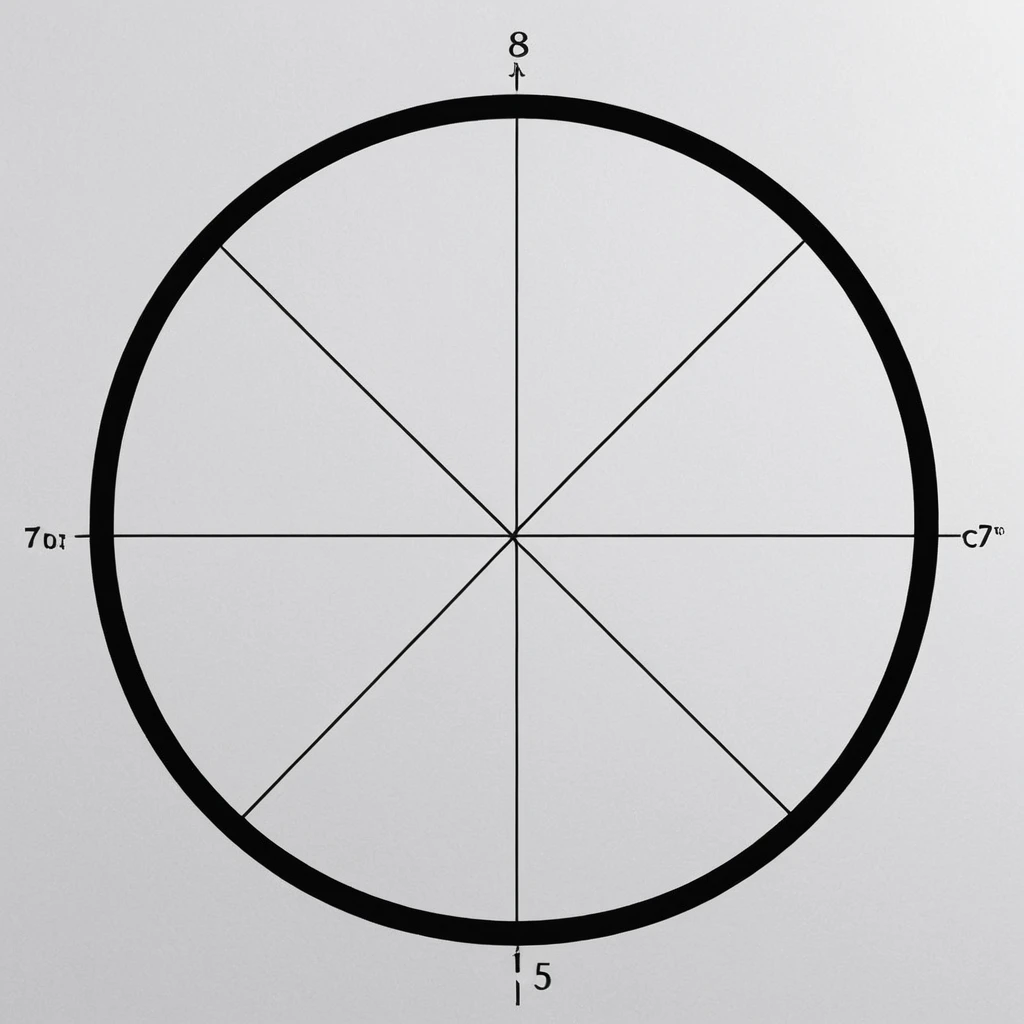
Many children wonder whether a circle has a side because it is a closed shape. However, a circle does not have sides in geometry.
A side must be a straight line segment. A circle has a curved boundary with no straight sections and no vertices.
A helpful classroom activity is to compare a triangle, square, and circle:
- A triangle has straight sides and corners.
- A square has straight sides and corners.
- A circle has a continuous curved line.
When students trace these shapes with their fingers, they can feel the difference between straight sides and curved boundaries.
Common Mistakes Students Make About Sides
Some common misunderstandings include:
Thinking Every Closed Shape Has Sides
A shape being closed does not automatically mean it has sides. The boundary must contain straight line segments.
Confusing Corners With Sides
Corners are called vertices. They are the points where sides meet, but they are not sides themselves.
Believing Bigger Shapes Have More Sides
The size of a shape does not determine its number of sides. A small square and a large square both have four sides.
Teaching these differences helps students build accurate geometry knowledge.
Frequently Asked Questions About Side in Math
What is a side in math?
A side in math is a straight line segment that forms part of the boundary of a two-dimensional shape.
How many sides does a triangle have?
A triangle has three sides and three vertices.
Are sides and edges the same thing?
No. Sides belong to flat 2D shapes, while edges belong to 3D objects.
Does a circle have a side?
No. A circle does not have sides because its boundary is curved and has no straight line segments.
Why are sides important in geometry?
Sides help identify shapes, measure length, calculate perimeter, and understand geometric properties.
Conclusion
Learning about a side in math gives children an important foundation for understanding geometry. By counting, measuring, building, and comparing sides, students begin to see how shapes are created and classified.
The goal is not only to remember that a triangle has three sides or a square has four. The real understanding comes when children can recognize sides in different shapes, explain their properties, and use that knowledge to solve problems.
With hands-on activities and clear examples, the concept of sides becomes simple, practical, and meaningful. Once students understand sides, they are ready to explore more advanced areas of geometry with confidence.

