


“Looking Forward to Meeting You” is a common expression of anticipation, used to tell someone you’re genuinely glad an upcoming meeting, call, or introduction is on the calendar. It blends politeness with warmth, which is exactly why it shows up so often in emails, interview replies, and professional greetings.
But here’s the catch: relying on the same line again and again can flatten your writing and make it sound automatic. This guide breaks the phrase down, digs into its grammar and tone, and hands you another way to say I look forward to meeting you for every context, casual, formal, and everything in between, so your next message actually stands out instead of blending in.
1. Can’t wait to meet you
Meaning: You’re genuinely excited for the meeting to happen. Explanation: A high-energy, informal way to show enthusiasm. Example: “I’ve read your portfolio twice already, and I can’t wait to meet you Friday.” Best Use: Casual business, creative teams. Worst Use: Formal executive correspondence. Tone: Friendly / enthusiastic
2. Excited to meet you
Meaning: You feel positive anticipation about the upcoming meeting. Explanation: Slightly softer than “can’t wait,” still warm and upbeat. Example: “Excited to meet you and walk through the proposal together.” Best Use: Semi-formal introductions. Worst Use: Very traditional corporate settings. Tone: Upbeat / warm
3. Looking forward to our conversation

Meaning: You anticipate the discussion itself, not just the meeting. Explanation: A close, slightly more formal cousin of the original phrase. Example: “Thanks for confirming the call. Looking forward to our conversation.” Best Use: Professional emails, scheduled calls. Worst Use: Ultra-casual chats. Tone: Professional / polite
4. Eager to meet you
Meaning: You’re keen and ready for the introduction. Explanation: Conveys confidence and readiness more than pure emotion. Example: “I’m eager to meet you and hear more about the role.” Best Use: Job interviews, business introductions. Worst Use: Laid-back personal messages. Tone: Confident / professional
5. Anticipating our meeting
Meaning: You expect the meeting with quiet interest. Explanation: Measured and thoughtful rather than emotional. Example: “I’ve prepared the agenda and am anticipating our meeting on Monday.” Best Use: Academic or formal business contexts. Worst Use: Friendly, informal chats. Tone: Formal / neutral
6. Thrilled to meet you
Meaning: You’re genuinely delighted about the upcoming meeting. Explanation: High emotion, best reserved for meaningful introductions. Example: “I’m thrilled to meet you. Your work has shaped my own for years.” Best Use: Mentorship, admired-figure introductions. Worst Use: Strictly formal board meetings. Tone: Emphatic / friendly
7. Counting down the days
Meaning: You’re eagerly tracking the time until the meeting. Explanation: Playful and personal, with a light informal edge. Example: “Counting down the days until we finally meet at the summit!” Best Use: Creative industries, conferences. Worst Use: Formal corporate letters. Tone: Casual / playful
8. It will be great to meet you
Meaning: You expect the meeting to be a positive experience. Explanation: Modest, friendly, and easy to say to almost anyone. Example: “It’ll be great to meet you and finally put a face to the name.” Best Use: New professional contacts. Worst Use: High-stakes executive meetings. Tone: Friendly / neutral
9. Happy to meet you soon
Meaning: You’re pleased the meeting is coming up. Explanation: Warm without tipping into overly casual territory. Example: “I’m happy to meet you soon and learn more about your goals.” Best Use: Professional yet personable contexts. Worst Use: Very informal friend-to-friend chats. Tone: Polite / warm
10. Looking ahead to our meeting
Meaning: You’re mentally preparing for what’s coming. Explanation: Emphasizes planning and forward motion. Example: “I’m looking ahead to our meeting and the roadmap we’ll build.” Best Use: Project planning, strategy sessions. Worst Use: Casual meetups. Tone: Professional / forward-looking
11. Looking forward to seeing you
Meaning: You’re eager for the in-person or visual connection. Explanation: Slightly more personal, ideal after virtual contact. Example: “Looking forward to seeing you at the workshop next week.” Best Use: Follow-ups, known contacts. Worst Use: First formal introductions to senior leaders. Tone: Approachable / friendly
12. Eager to connect with you
Meaning: You want to start or grow a professional relationship. Explanation: Leans into networking and relationship-building language. Example: “I’m eager to connect with you and explore how our teams can collaborate.” Best Use: Networking events, partnership talks. Worst Use: Casual personal meetups. Tone: Professional / friendly
13. Anticipating our time together
Meaning: You value the time you’ll spend together, not just the meeting. Explanation: Thoughtful phrasing suited to longer engagements. Example: “Anticipating our time together at the leadership retreat.” Best Use: Workshops, retreats, multi-day events. Worst Use: Short, transactional meetings. Tone: Thoughtful / warm
Read More:20+ Other Ways to Say “Thank You for Your Generosity” (With Examples)
14. Can’t wait to connect
Meaning: You’re eager for the conversation to begin. Explanation: Casual, modern, and popular in startup culture. Example: “Can’t wait to connect next week and start brainstorming.” Best Use: Startups, creative collaborations. Worst Use: Traditional corporate letters. Tone: Casual / enthusiastic
15. Excited about our upcoming meeting
Meaning: You feel positive and prepared for what’s ahead. Explanation: A slightly more formal cousin of “excited to meet you.” Example: “Excited about our upcoming meeting to review the quarterly numbers.” Best Use: Business review meetings. Worst Use: Extremely rigid formal settings. Tone: Warm / professional
16. Eagerly awaiting our meeting
Meaning: You’re patiently but keenly waiting for the meeting date. Explanation: Formal, slightly old-fashioned, and very polite. Example: “I am eagerly awaiting our meeting and the chance to discuss further.” Best Use: Formal letters, academic correspondence. Worst Use: Informal team chats. Tone: Formal / polite
17. Can’t wait to meet you in person
Meaning: You’ve connected virtually and now want a face-to-face meeting. Explanation: Highlights the shift from remote to in-person contact. Example: “After our video calls, I can’t wait to meet you in person next month.” Best Use: Hybrid or remote-to-onsite transitions. Worst Use: Fully remote-only relationships. Tone: Friendly / enthusiastic
18. Anticipating a great conversation
Meaning: You expect the discussion itself to be valuable. Explanation: Shifts focus from the meeting to its content. Example: “I’m anticipating a great conversation about your design process.” Best Use: Substantive meetings, brainstorms. Worst Use: Brief, routine check-ins. Tone: Professional / focused
19. Can’t wait to finally chat
Meaning: After a wait, you’re excited the conversation is finally happening. Explanation: Informal, personable, and easy to read. Example: “We’ve emailed for weeks, and I can’t wait to finally chat in person.” Best Use: Casual professional relationships. Worst Use: Senior-level formal meetings. Tone: Casual / friendly
20. Looking forward to what we’ll build together
Meaning: You expect the meeting to lead to real collaboration. Explanation: Focuses on teamwork and shared outcomes. Example: “Looking forward to what we’ll build together during this project kickoff.” Best Use: Partnerships, project launches. Worst Use: Simple, one-off introductions. Tone: Collaborative / friendly
21. Grateful for the chance to meet you
Meaning: You appreciate the opportunity itself. Explanation: Adds a layer of humility and respect. Example: “I’m grateful for the chance to meet you and learn from your experience.” Best Use: Meeting someone senior or highly respected. Worst Use: Casual, low-stakes meetups. Tone: Respectful / formal
22. Ready to dive in, see you soon
Meaning: You’re prepared and enthusiastic for the meeting to start. Explanation: Action-oriented and energetic. Example: “I’ve reviewed the materials, so I’m ready to dive in, see you soon!” Best Use: Team kickoffs, dynamic work cultures. Worst Use: Reserved, executive-level settings. Tone: Energetic / casual
23. Delighted to meet you
Meaning: You feel genuine pleasure about the upcoming introduction. Explanation: Polished and slightly formal, without sounding stiff. Example: “I’ll be delighted to meet you at next week’s conference.” Best Use: Polished formal introductions. Worst Use: Very casual team chats. Tone: Formal / gracious
24. Keen to meet you
Meaning: You’re motivated and interested in the meeting. Explanation: A shorter, brisk way to express eagerness. Example: “I’m keen to meet you and discuss the partnership in more detail.” Best Use: Business proposals, quick professional notes. Worst Use: Emotional, personal messages. Tone: Confident / brisk
25. Looking forward to connecting in person
Meaning: You want the relationship to move beyond digital contact. Explanation: Useful once emails or calls have already happened. Example: “Looking forward to connecting in person after all our email exchanges.” Best Use: Long-distance professional relationships. Worst Use: First-ever contact with someone. Tone: Friendly / professional
26. Excited to put a face to the name
Meaning: You’ve only known someone by name or email, and now you’ll finally meet. Explanation: Light, personable, and instantly relatable. Example: “Excited to put a face to the name at Thursday’s meetup.” Best Use: Networking, casual professional events. Worst Use: Very formal board-level introductions. Tone: Casual / warm
27. Anticipating our first conversation
Meaning: You look forward to an initial, foundational discussion. Explanation: Suits the very first exchange between two people. Example: “I’m anticipating our first conversation and hope it’s the start of something great.” Best Use: New client or partner introductions. Worst Use: Ongoing, familiar relationships. Tone: Formal / hopeful
28. Eager for our introduction
Meaning: You’re motivated for the initial meeting specifically. Explanation: A formal, slightly reserved way to show interest. Example: “I’m eager for our introduction and the opportunity it brings.” Best Use: Interviews, formal referrals. Worst Use: Repeat or casual meetings. Tone: Formal / measured
29. Excited to start this journey together
Meaning: You see the meeting as the beginning of a longer relationship. Explanation: Forward-looking and relationship-focused. Example: “Excited to start this journey together as we launch the new product line.” Best Use: Partnerships, onboarding, long-term projects. Worst Use: Short, single-purpose meetings. Tone: Collaborative / warm
30. Looking forward to building this relationship
Meaning: The meeting is a step toward an ongoing connection. Explanation: Signals long-term intent rather than a one-off exchange. Example: “Looking forward to building this relationship over the coming months.” Best Use: Client relationships, mentorships. Worst Use: One-time, purely transactional meetings. Tone: Thoughtful / professional
31. Can’t wait to get started
Meaning: You’re eager for the work or project tied to the meeting. Explanation: Shifts focus from the meeting itself to the outcome. Example: “Can’t wait to get started, see you at 10 AM on Monday.” Best Use: Project kickoffs, new hires. Worst Use: Purely social introductions. Tone: Energetic / practical
32. Anticipating a wonderful introduction
Meaning: You expect the first meeting to leave a strong, positive impression. Explanation: Elegant and slightly formal phrasing for special occasions. Example: “I am anticipating a wonderful introduction when we meet next week.” Best Use: Special formal events, VIP introductions. Worst Use: Everyday routine meetings. Tone: Formal / elegant
Comparison Table:
| Phrase | Tone | Best Use |
| Can’t wait to meet you | Friendly / casual | Informal business, creative teams |
| Looking forward to our conversation | Professional | Scheduled calls, formal email |
| Eager to connect with you | Professional / friendly | Networking, partnerships |
| Thrilled to meet you | Enthusiastic / friendly | Mentorship, admired-figure meetings |
| Anticipating our meeting | Formal | Academic and official contexts |
| Looking forward to seeing you | Approachable | Follow-ups, known contacts |
| Grateful for the chance to meet you | Respectful / formal | Meeting someone senior |
| Delighted to meet you | Gracious / formal | Polished, formal introductions |
Looking Forward to Meeting You: Synonym Options by Context
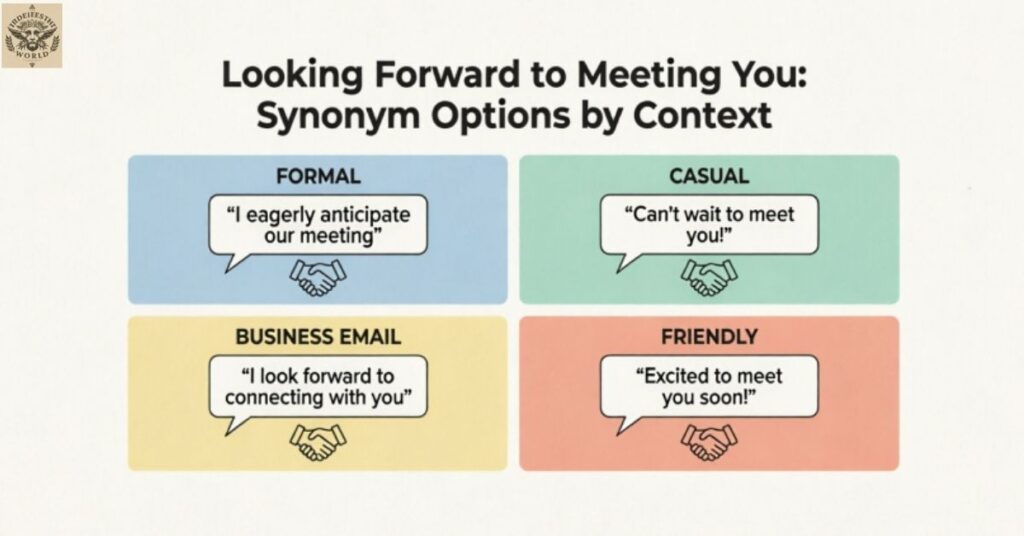
Choosing a looking forward to meeting you synonym really comes down to who’s reading your message. A recruiter, a new client, and a college friend all expect a different register, so the “right” synonym changes depending on the room you’re speaking to.
If you want something safe and professional, stick with phrases like “eager to connect” or “anticipating our meeting.” If your audience is more relaxed, say a startup team or a creative collaborator, options like “can’t wait to connect” or “excited to put a face to the name” land more naturally and still sound genuine.
Looking Forward to Meeting You: Meaning in Everyday Use
The looking forward to meeting you meaning goes beyond politeness. It’s a small signal of respect. You’re telling the other person that the time they’re giving you actually matters, which builds goodwill before you’ve even spoken.
In practice, people use it to soften the end of an email, confirm a scheduled call, or simply show they’re paying attention to the relationship, not just the transaction. That’s why it survives across industries, from corporate emails to casual networking notes.
Looking Forward to Meeting You: Reply Etiquette
When someone tells you they’re looking forward to meeting you, mirroring the sentiment is usually the safest reply. A simple “likewise, looking forward to it as well” keeps the tone consistent and avoids sounding dismissive.
You can also personalize your reply by referencing something specific, such as the agenda, the location, or a shared interest. This shows you actually read their message rather than sending a generic, copy-pasted response back.
Looking Forward to Meeting You: Email Best Practices
In a looking forward to meeting you email, placement matters as much as wording. Most professionals use the phrase near the closing, right after confirming the date, time, or agenda of the meeting.
Keep the surrounding sentence short and specific. Mention the day, the topic, or the platform, whether it’s a call, an office visit, or a video link. A vague sign-off feels generic, but a specific one shows you’ve actually engaged with the plan, not just the pleasantry.
Looking Forward to Meeting You or Meet You: Getting the Grammar Right
A common question is whether it’s “looking forward to meeting you” or “meet you.” The correct form is always “meeting you,” because “look forward to” functions as a phrase followed by a gerund, not a base verb.
This is a classic case of gerund vs infinitive confusion in English. Saying “I look forward to meet you” is a frequent mistake among learners, but native and professional writing consistently uses the -ing form for correct usage in emails and speech alike.
Is “Looking Forward to Meeting You” Correct English?
Yes, “looking forward to meeting you” is correct and fully accepted in both spoken and written English. It follows standard grammar rules in English, pairs a preposition with a gerund, and is used constantly in professional correspondence.
The confusion usually comes from mixing it up with similar-sounding but incorrect versions like “look forward to meet you.” As long as you keep the gerund form, the sentence is grammatically sound in any formal email closing or spoken introduction.
Looking Forward to Meeting You in Spanish and Other Languages
If you’re writing to an international contact, translating the sentiment matters more than a literal word-for-word translation. In Spanish, a natural equivalent is “espero con ganas conocerte“ or the more formal “
Different languages carry different levels of formality, so it helps to check the tone before sending a translated version. When in doubt, a native speaker’s proofread beats a machine translation, especially for client or business introductions.
Looking Forward to Meeting You Soon: Adding Urgency
Adding “soon” to the phrase, as in looking forward to meeting you soon, signals that the meeting is close on the calendar and builds a bit of light urgency without sounding pushy.
It works particularly well in scheduling emails, where you’ve just confirmed a date and want to close on an encouraging note. Pairing it with a specific timeframe, like “soon” or “next week,” makes the sentence feel more concrete than the original phrase alone.
Frequently Asked Questions
Is it correct to say “looking forward to meet you”
? No, the correct form is “looking forward to meeting you,” since “look forward to” always takes a gerund, not a base verb.
How do I professionally say I look forward to meeting you?
Try “I look forward to our meeting” or “I’m eager to connect with you” for a more polished, professional tone.
What to say instead of looking forward to meeting you?
You can use “excited to meet you,” “eager to connect,” or “anticipating our meeting,” depending on the tone you want.
How do you say “look forward” professionally?
“I anticipate our meeting” or “I look forward to our discussion” both sound polished and business-appropriate.
What is a better word for “looking forward”?
“Anticipating,” “eager for,” or “keen on” all work well as more varied, professional substitutes.
Conclusion:
Choosing the right words shapes how a person reads your intent long before you ever meet them. Whether you lean on something energetic like “can’t wait to connect” or something formal like “anticipating our meeting,” the goal stays the same: showing genuine enthusiasm, professional courtesy, and real interest in the person on the other end.
Looking forward to meeting you will always be a safe, dependable default, and it never truly goes out of style. But now you have more than 30 fresh, natural alternatives ready to use, so your next email, introduction, or reply sounds sincere, confident, and nothing like a template.

