

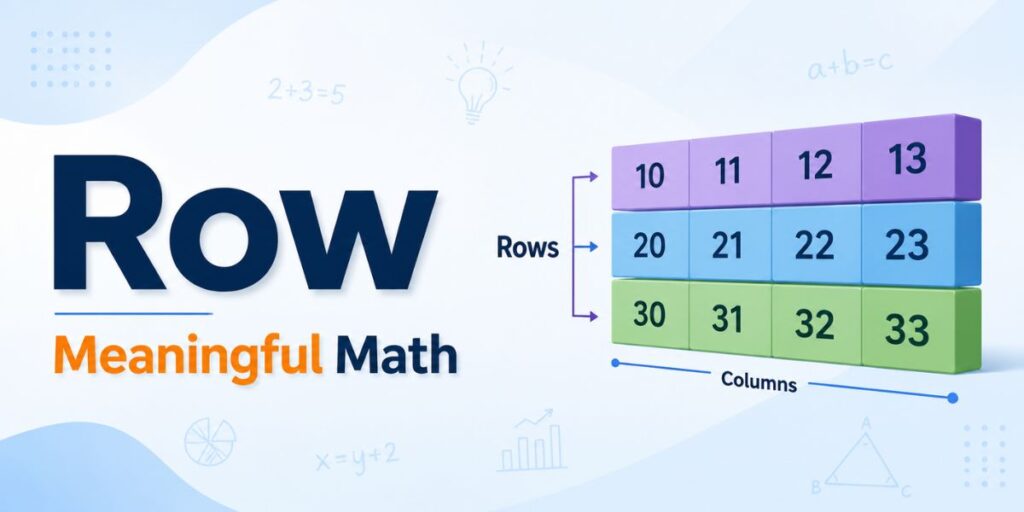
A row is one of the first building blocks students learn when they start making sense of numbers, tables, and arrays. Simply put, a row is a horizontal arrangement of numbers, objects, or information, stretching from left to right rather than up and down. Once students understand what a row is, concepts like rows and columns in math, arrays, and organizing data start to click into place, since so much of early math structure depends on this one simple idea.
This guide walks through everything a row involves, from how rows work inside a 3 x 4 array to how they organize entries in tables, graphs, and spreadsheets. It also covers the common mix-up between rows and columns, along with practical, real-world examples and movement-based activities that make the difference easier to remember. By the end, a row won’t just be a term to memorize. It will be a concept students can spot, compare, and apply with confidence.
What Is a Row in Math?
So, what is a row? In everyday life, a row is simply a line of things placed side by side. Think of a row of chairs, a row of houses, or a row of trees. In math, a row carries the same idea but with more purpose. A row is a horizontal arrangement of numbers, objects, or information, and it shows up constantly in arrays, tables, graphs, and spreadsheets.
Understanding what a row is matters because so much of math depends on organizing information clearly. Whether a student is counting objects in equal groups or reading a data table, recognizing a row helps make sense of the structure in front of them.
Rows and Columns in Math
One of the first things students learn about rows and columns in math is that direction is what separates them. A row runs horizontally, stretching from side to side. A column runs vertically, running up and down. Rows and columns often appear together, working as a pair to build the grid-like structure found in arrays and tables.
Picture a row of seats in a classroom. Each row holds students sitting next to one another. Now picture a column, which would be students sitting one behind another. That same left-to-right versus up-and-down difference carries directly into math concepts, and it is one of the very first distinctions young learners need to grasp.
How Rows Work in Arrays
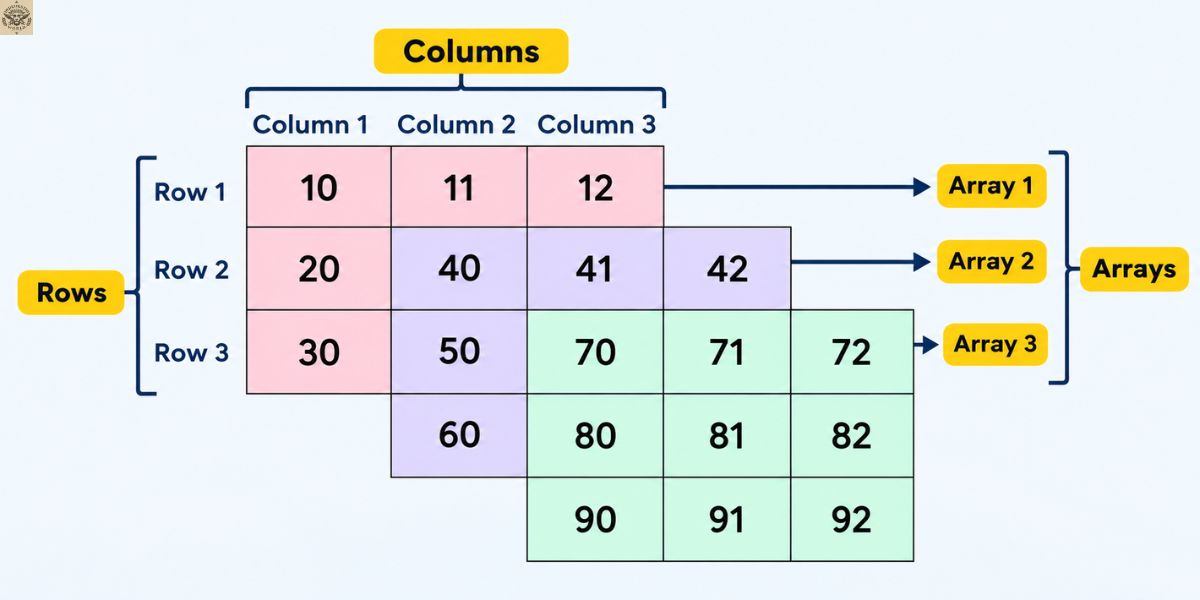
Rows play a major role in arrays, which are arrangements of objects or numbers organized into equal rows and columns. Arrays give students a visual way to understand multiplication, repeated addition, and area models, all built from the simple idea of a row.
In an array, a row is a horizontal group of objects, and every row contains the same number of items. Take a 3 by 4 array of apples as an example. This array has 3 rows, and each row contains 4 apples, for a total of 12 apples. A student can count each row one at a time, add the rows together through repeated addition, or multiply the number of rows by the number of items in each row to reach the same total.
This connection between a row and multiplication is one of the reasons arrays are such a powerful teaching tool. Once a student can identify a row confidently, they can begin to see multiplication not as an abstract fact to memorize, but as equal groups they can actually count and picture.
Read More: Obtuse Angle – Meaningful Math
Rows in Tables, Graphs, and Data
Rows are not limited to arrays. They also organize data in tables, graphs, and spreadsheets, where each row usually represents one entry or one data point. In a table listing students and their favorite subjects, each row would hold the name of one student along with their answer. In a spreadsheet tracking classroom scores, each row might hold one student’s results across several assignments.
This use of rows helps students read and interpret data more easily. Instead of scanning a jumble of numbers, a student can follow a single row from beginning to end and understand everything connected to that one entry. Comparing data across rows also becomes simple, since each row lines up with the same categories in the columns above it.
Graphs and charts often rely on this same row-based structure behind the scenes. Even when data is displayed as bars or lines, the underlying information is frequently organized in rows first, with each row feeding into a single point or bar on the graph.
Why Understanding Rows Matters
Learning to recognize a row does more than help with one lesson. It builds a foundation students use across many areas of math.
- In arrays, a row helps students visualize multiplication as equal groups, which supports repeated addition and later, area models.
- In tables and charts, a row keeps related information together, making it easier to track one entry or data point at a time.
- In graphs and spreadsheets, rows organize values horizontally, which makes comparing and analyzing data far more manageable.
- In problem-solving, recognizing a row helps students break down complex information into smaller, more organized pieces.
Without a clear grasp of what a row is, students can struggle to read arrays correctly, misinterpret data tables, or mix up multiplication problems built from equal groups.
Teaching Strategies for Understanding Rows
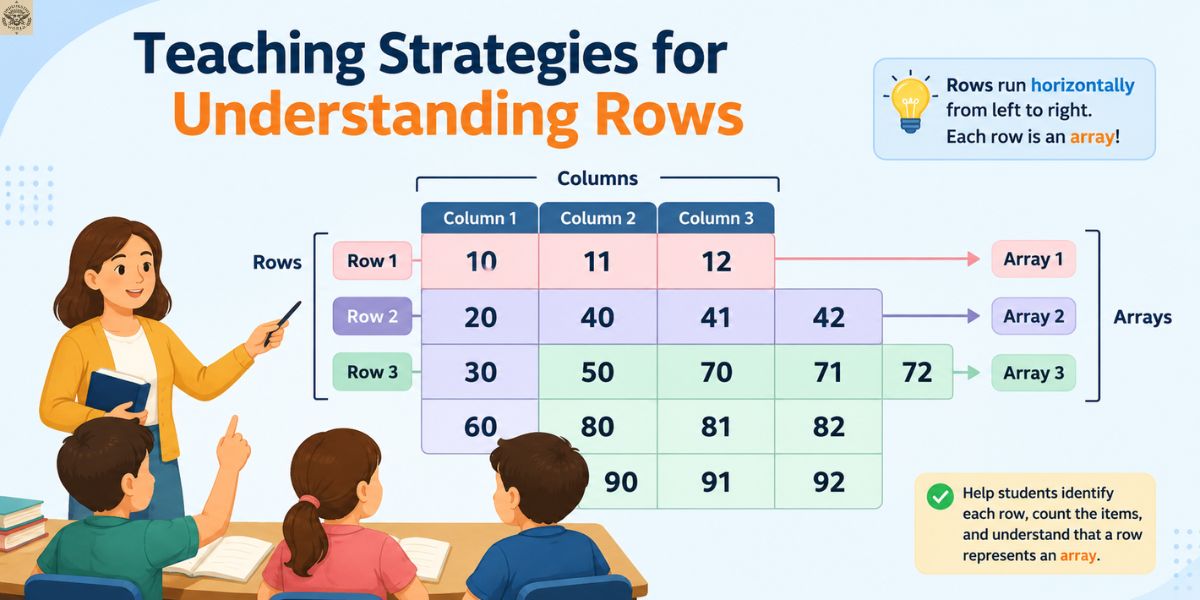
Real-world examples make the idea of a row much easier to grasp. A row of seats in a movie theater, a row of keys on a keyboard, and a row of lockers in a school hallway are all familiar images students can connect to the math concept of a row.
Movement-based activities also work well. Have students physically line up in a row, standing side by side, and then compare that to standing in a column, one behind another. Feeling the difference in their own bodies often makes the concept click faster than a diagram alone.
Hands-on practice with arrays and tables helps reinforce the concept further. Give students objects like counters or tiles and ask them to build their own array, then have them describe how many rows it has and how many items sit in each row. Asking students to point to a specific row in a table or graph, rather than just a column, builds the same skill from a different angle.
Common Misconceptions About Row
Students often confuse rows with columns, mixing up direction and structural role, or picking the wrong one based on which side of a table looks longer instead of understanding that a row runs horizontally. Real-world examples like movie theater seats or keyboard keys, along with movement-based activities like lining up in a row versus standing in a column, help clear up the confusion fast.
Misconception: Confusing Rows With Columns
Because rows and columns usually appear together in the same array or table, students often mix them up. Some assume rows and columns are interchangeable, or they identify a row simply by which side of the table looks longer, rather than understanding the actual direction and function involved.
To correct this, keep coming back to the idea of direction. A row goes side to side. A column goes up and down. Repeating this alongside real-world examples, like the movie theater seats or keyboard keys mentioned earlier, gives students a memorable anchor to return to whenever they get confused.
Misconception: Thinking a Row Must Be Straight or Perfectly Aligned
Some students believe a row only counts if the objects are perfectly straight in a formal grid. In reality, any horizontal grouping, even an informal one like a row of backpacks lined up against a wall, still counts as a row. Reinforcing this idea helps students apply the concept of a row beyond just formal math worksheets and into the world around them.
Row Argument Meaning
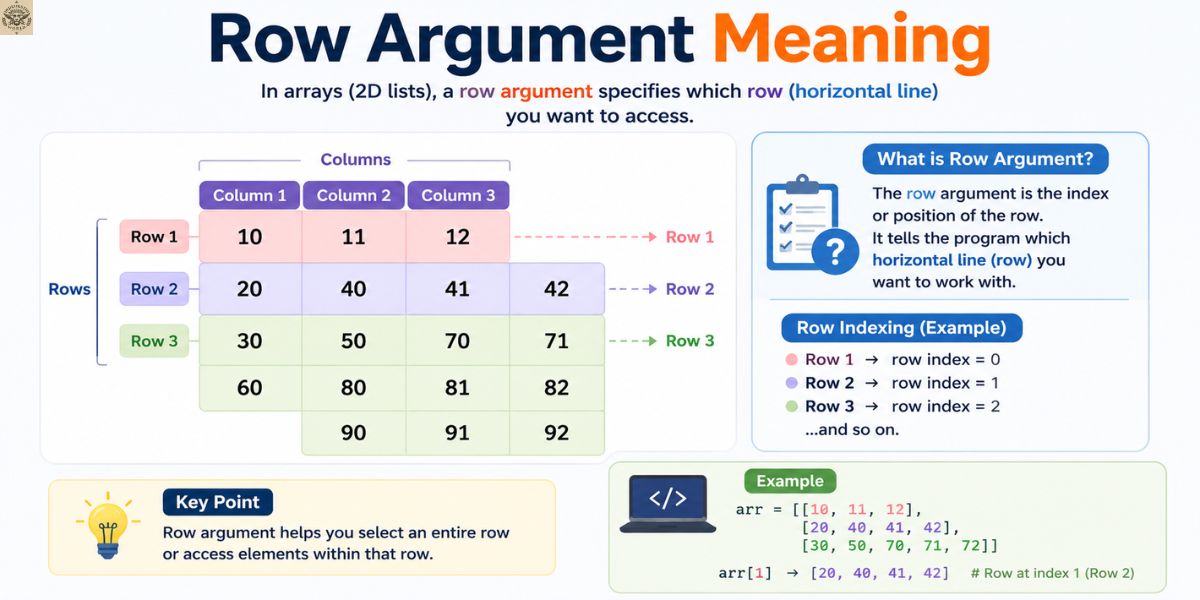
When people ask about a row argument, they are usually asking what it means when someone says they “had a row” with a friend, partner, or family member. In this sense, a row is a loud disagreement or a heated exchange of words, often used in British English the same way Americans might say “fight” or “argument.” A row can start over something small, like leaving dishes in the sink, and quickly build into raised voices and hurt feelings.
This meaning of row has nothing to do with a horizontal line or an array in math. It comes from everyday speech, and context makes the difference clear. If someone says “we had a row last night,” they mean a disagreement, not rows and columns in a spreadsheet.
Row Definition
At its core, a row has a few distinct definitions depending on how it is used. In math and everyday organization, a row is a horizontal line of numbers, objects, or information, arranged from left to right. Think of a row of chairs or a row of numbers in a table.
Outside of math, row can also mean a loud argument, or it can describe the act of rowing a boat using oars. Reading the sentence around the word usually makes it obvious which definition applies, since these meanings rarely overlap in the same context.
Rows Exercise
A rows exercise refers to a strength training movement, most often performed with a barbell, dumbbell, cable machine, or rowing machine. The basic motion involves pulling a weight toward the body, working the back, shoulders, and arms. Trainers often recommend rows as a key exercise for building a strong, balanced upper body.
Common variations include bent-over rows, seated cable rows, and single-arm dumbbell rows. Each version targets slightly different muscles, but they all share the same pulling motion that gives the exercise its name.
Row and Column
In math, row and column describe two directions that work together to build the structure of a table or an array. A row runs horizontally, extending side to side, while a column runs vertically, running up and down. Together, rows and columns in math create the grid pattern used in arrays, spreadsheets, and data tables.
This row and column structure shows up constantly in real classrooms and workplaces. A 3 x 4 array, for example, has 3 rows and 4 columns, and understanding the difference helps with everything from multiplication strategies to reading a spreadsheet full of data.
ROW Meaning in Construction
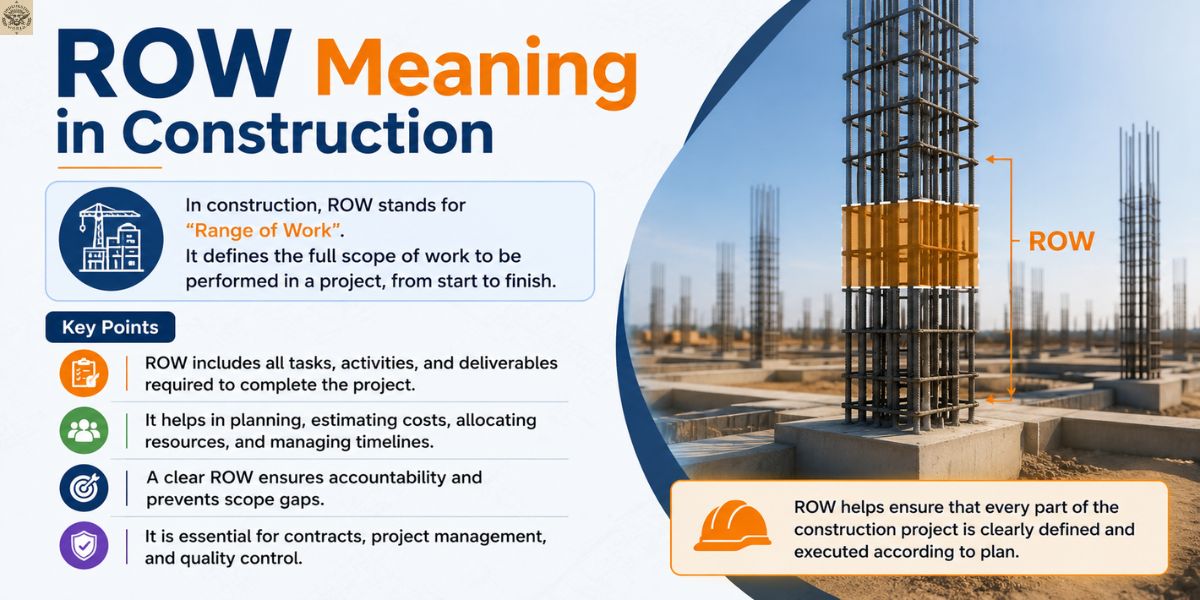
In construction and civil engineering, ROW usually stands for right of way, not the horizontal-line meaning of row. A right of way refers to the legal strip of land set aside for roads, utilities, sidewalks, or railways, allowing access across or along a piece of property.
Construction crews and city planners pay close attention to ROW boundaries before starting a project, since building outside of the designated area can create legal problems. Utility companies also rely on ROW agreements to run pipes, cables, or power lines through private or public land.
Row Verb
Used as a verb, to row means to propel a boat through water using oars, moving them in a steady, repeated motion. A person can row alone in a small boat or row together as part of a team, like in competitive rowing sports.
This verb form of row also appears in fitness settings, where someone might “row” on a rowing machine as part of a workout. In both cases, the verb describes a pulling motion, whether it happens on open water or inside a gym.
Row Pronunciation
Row pronunciation actually changes depending on which meaning is being used, which can trip people up. When a row means a horizontal line, an argument, or an exercise, it rhymes with “go,” “so,” and “no.” When row means a loud argument in British slang, it is pronounced the same way, rhyming with “go.”
However, when row refers to rowing a boat, some regional accents still pronounce it closer to “row” rhyming with “cow” in older or dialect usage, though the standard pronunciation today rhymes with “go” across most contexts. Listening to how a word is used in a sentence is usually the fastest way to confirm which meaning and pronunciation applies.
Row as in Fight
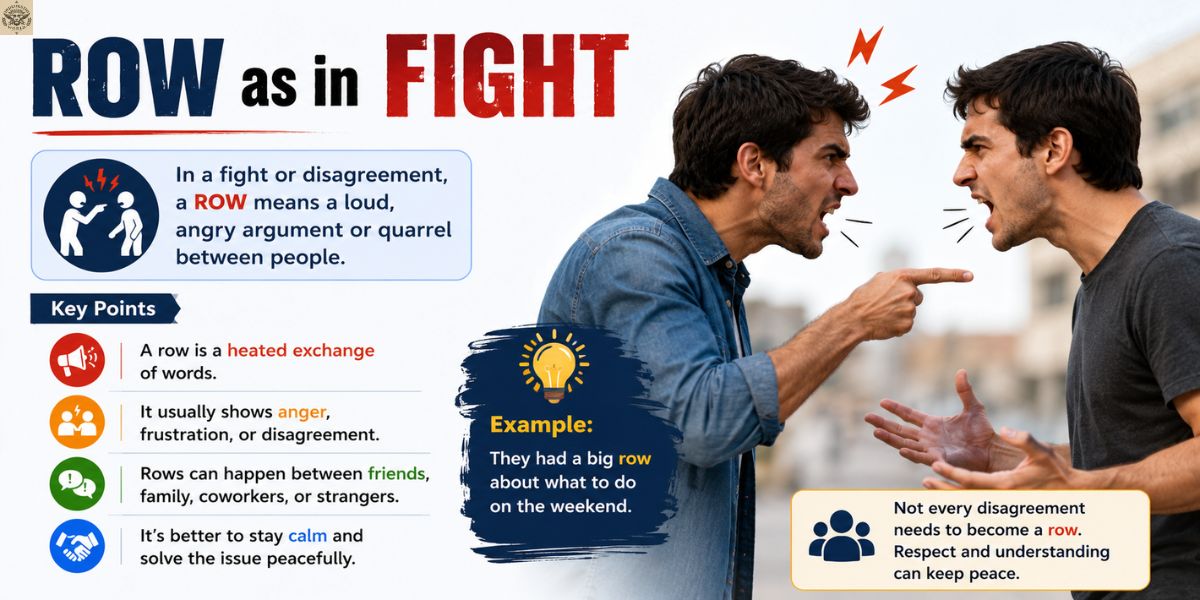
When someone uses row as in fight, they mean a noisy quarrel or disagreement, not a physical brawl in most cases. This usage is especially common in British English, where “having a row” describes raised voices and tension between two people rather than actual violence.
A row in this sense can happen between siblings, coworkers, or couples, and it usually passes once both sides cool down. Understanding this meaning helps avoid confusion with the math definition of row, since the two uses of the word share nothing beyond spelling.
Frequently Asked Questions
What are the two meanings of row?
Row usually means one of two things: a horizontal line of numbers, objects, or information, or a loud argument between people. The context of the sentence tells you which one applies.
What is a row and a column?
A row runs horizontally, stretching from left to right, while a column runs vertically, running up and down. Together they form the grid structure you see in tables and arrays.
What does “row” mean?
Row most commonly refers to a horizontal arrangement of items or numbers placed side by side. It can also mean rowing a boat or having a heated argument, depending on how it’s used.
How do you define a row?
A row is a line of things arranged from left to right, whether that’s chairs in a classroom, numbers in a table, or objects in an array.
What is the full form of ROW?
In construction and engineering, ROW stands for Right of Way, the strip of land set aside for roads, utilities, or pathways.
Conclusion
A row shows up everywhere once you start looking for it, from a horizontal line of numbers in a table to a row of seats in a movie theater. In math, understanding rows and columns gives students a real foundation for reading arrays, organizing data, and building multiplication strategies through equal groups and repeated addition. That same idea of a row extends far beyond the classroom too, whether it’s rowing a boat, doing a row exercise at the gym, or even having a row with someone over something small.
Learning to spot the difference between rows and columns, or between the many meanings of the word itself, comes down to paying attention to direction and context. Once a row makes sense as a horizontal arrangement, structuring tables, arrays, and spreadsheets becomes much easier to grasp. Whether the goal is helping a student read data confidently or simply understanding where a word came from, a clear grasp of what a row is makes everything that follows a little more organized.

