

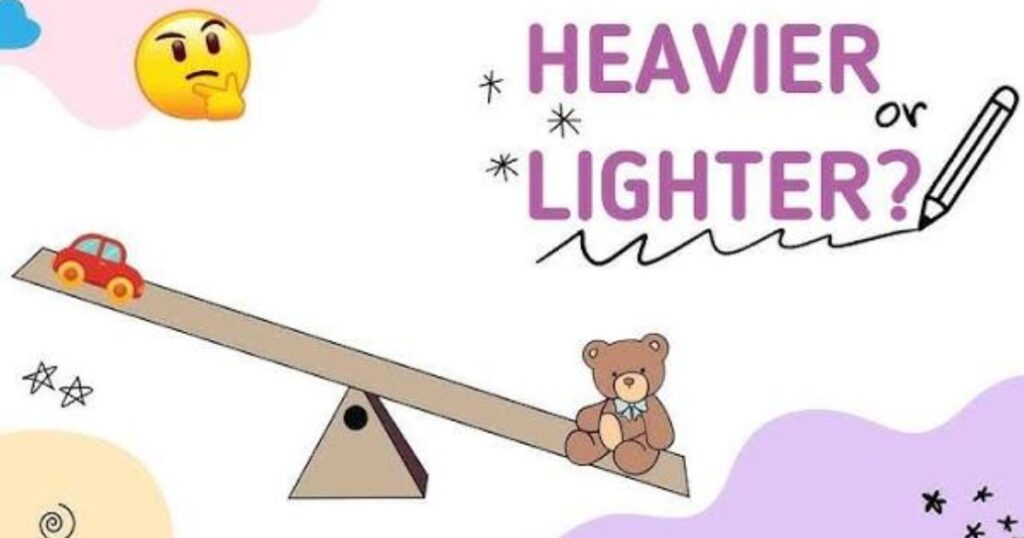
The term heavier is used whenever we compare the weight or mass of two or more objects, describing the one that has more mass or greater weight. If you’ve ever asked what is heavier between two items, you’re really asking a comparison question one that builds core skills in reasoning, measurement, and everyday problem-solving. Concepts like heavier and lighter work as a pair, helping students understand that weight comparisons are relative rather than fixed; an object can be heavier than one thing and lighter than another at the same time.
Questions like which is heavier, a book or a feather, might seem obvious, but they lay important groundwork for more nuanced comparisons later, especially once size and material start to complicate what our eyes alone can tell us. This guide explores why understanding heavier matters, practical teaching strategies, common misconceptions, and answers to some of the most frequently searched weight-comparison questions.
Why Understanding Heavier Is Important
The concept of heavier builds a foundation for comparison, measurement, and precise mathematical communication. When students compare objects by weight noticing, for example, that a watermelon is heavier than an apple, or that a full backpack weighs more than an empty one they build logical reasoning skills and begin developing an intuitive sense of relative mass.
These early comparisons lead naturally into formal measurement. Using balance scales or simply lifting objects by hand helps students physically feel differences in weight, which they can later explore using nonstandard units like cubes or blocks before transitioning to standard units such as grams, kilograms, or pounds. This gradual progression builds a concrete, hands-on understanding of how mass is actually quantified.
Describing one object as heavier than another also encourages more precise mathematical language. Rather than vague statements like “this is big” or “this weighs a lot,” students learn to say something specific, like “this is heavier than that” or “this object weighs two kilograms more.” This shift toward precision supports clearer reasoning and communication across every measurement task that follows.
Teaching Strategies for Heavier
Comparing Objects by Weight
The most natural entry point is direct, hands-on comparison students hold one object in each hand and decide which is heavier. Starting with pairs that have an obvious weight difference, such as a book and a crayon, builds early confidence before introducing objects that feel much closer in weight and require more careful judgment.
As students begin comparing objects that feel nearly identical, a balance scale becomes genuinely useful, settling uncertainty that hands alone can’t resolve. Watching one side dip lower gives students a clear, visual confirmation of which object is actually heavier, and from there they can sort a full collection of classroom items into “heavier” and “lighter” groups relative to a chosen reference object.
Recording these comparisons circling the heavier object in pre-drawn pairs, or drawing arrows between sketched items keeps the hands-on and visual parts of the lesson connected, reinforcing the concept from multiple angles at once.
Measuring How Much Heavier
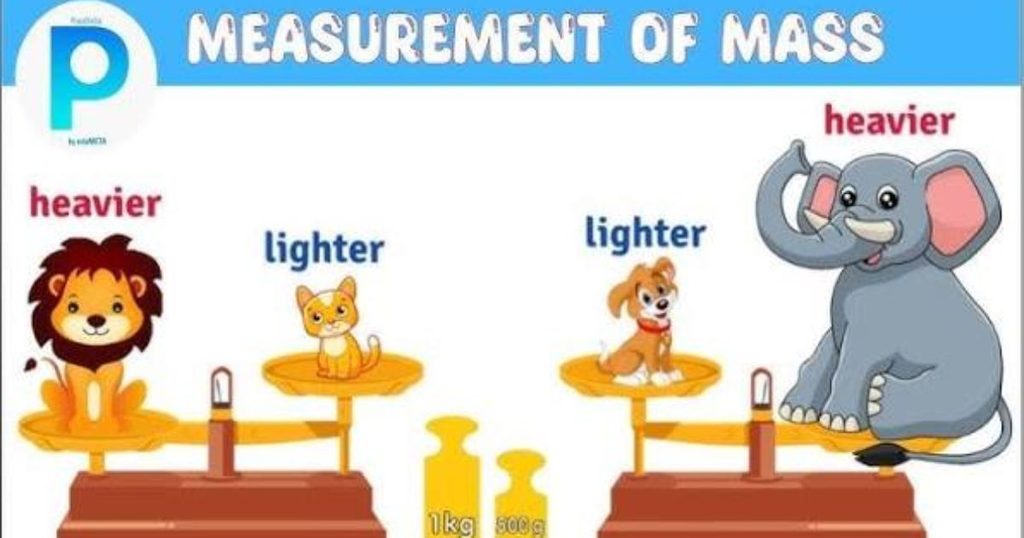
Once students can confidently identify which is heavier, a new question naturally follows: how much heavier? Nonstandard units, like cubes, counters, or marbles, give students a practical way to quantify that difference. Balancing an object against a growing pile of cubes until the scale levels out lets them attach an actual number to weight, such as “the stapler weighs 14 cubes.”
Recording these measurements on a simple chart, alongside sketches of each object and its corresponding cube count, makes comparisons across several items much easier to track. Predicting the count before measuring and then comparing that guess to the actual result often sparks valuable discussion about why some objects turn out heavier or lighter than students initially expected.
Reasoning About Weight
Connecting the idea of heavier to familiar, everyday experiences makes abstract comparisons feel far more concrete for young learners. Relating measurement concepts to objects students already use and recognize builds both vocabulary and confidence in their reasoning.
Asking students to find something in the classroom that is heavier than their pencil encourages them to apply their growing understanding in a context that feels relevant and low-pressure. As students share their findings, prompting them to explain their reasoning how they know one object is heavier, and what specific clues helped them decide reinforces precise mathematical language while encouraging genuine justification rather than guessing.
Common Misconceptions About Heavier
Misconception: Larger Objects Are Always Heavier
A frequent misconception among students is assuming that larger objects are automatically heavier than smaller ones. While size and weight are sometimes related, an object’s material and density play just as important a role in determining actual weight, meaning a small, dense object can easily outweigh a much larger, lighter one.
Addressing this misconception works best through hands-on testing. Encouraging students to make a prediction first, then confirm it using a balance scale, helps them see directly whether size, material, or both are influencing an object’s actual weight turning an assumption into something they can verify for themselves.
Read Also: Understanding Ones in Mathematics
Heavier In Mathematics Worksheets
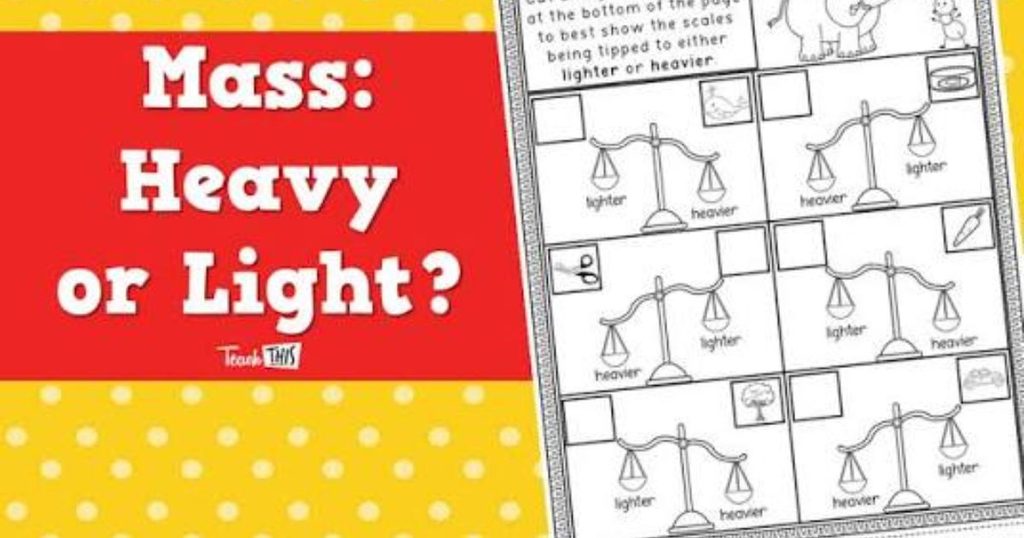
Heavier in mathematics worksheets typically include activities like circling the heavier object in a pair, ordering a set of items from lightest to heaviest, or matching pictures to their correct weight comparisons. These worksheets reinforce classroom learning through repeated, independent practice.
Well-designed worksheets often combine visual comparisons with simple word problems, asking students to reason through scenarios involving heavier and lighter objects without a physical balance scale in front of them, helping bridge hands-on learning with more abstract reasoning skills.
What Is Heavier Game
A what is heavier game turns weight comparison into an interactive, engaging activity rather than a worksheet exercise. Common versions include a digital or physical balance scale where students drag or place objects on each side and predict which will tip the scale before checking their answer.
These games work especially well for reinforcing which is heavier reasoning in a low-stakes, playful format, allowing students to test multiple predictions quickly and receive instant feedback, which keeps engagement high while still building genuine measurement skills.
Which Is Heavier 1kg Cotton Or 1kg Iron
This is a classic trick question: many students initially assume iron must be heavier, but 1kg of cotton and 1kg of iron actually weigh exactly the same, since both are measured at exactly one kilogram. The difference lies in density and volume, not weight iron simply takes up far less space to reach that same 1kg mass.
This example is particularly effective for correcting the misconception that material alone determines which is heavier, since it clearly separates the concept of weight from the concept of size or density, both of which students often confuse early on.
What Heavier, A Kilogram Of Steel Or A Kilogram Of Feathers
Much like the cotton and iron example, asking what heavier, a kilogram of steel or a kilogram of feathers, highlights the exact same principle: both weigh precisely the same amount, one kilogram, despite feathers requiring a much larger volume to reach that weight.
This comparison is a popular teaching tool specifically because it challenges intuition so directly. Steel feels obviously heavier by nature, so seeing that equal masses balance perfectly on a scale, regardless of material, helps cement the distinction between weight and density in a memorable way.
Heavier Spelling
The correct heavier spelling is h-e-a-v-i-e-r, formed by adding the comparative suffix “-er” to the base word “heavy,” following the same pattern as words like “faster” or “taller.” A common mistake is dropping or misplacing the “i,” so reinforcing the correct spelling alongside its meaning helps prevent confusion.
Understanding this spelling pattern also helps students recognize related comparative words, such as “lighter,” “heaviest,” and “lightest,” building broader vocabulary skills alongside the core mathematical concept of comparing weight.
What Is Heavier Water Or Sand
When comparing equal volumes, sand is generally heavier than water, since sand particles pack more densely together, giving the same amount of space a greater total mass. This makes for a great hands-on classroom experiment using identical containers filled with each material.
This comparison also introduces the idea that “what is heavier” often depends on how the comparison is set up comparing equal volumes gives a very different answer than comparing equal weights, reinforcing that precise, consistent measurement matters when making these kinds of judgments.
What Is Heavier 1kg Of Feathers Or 1kg Of Bricks
Just like the earlier steel and cotton comparisons, 1kg of feathers and 1kg of bricks weigh exactly the same amount, even though the feathers would fill a dramatically larger space. This repeated pattern across different materials helps reinforce the same core lesson from multiple angles.
Using several versions of this comparison feathers versus bricks, cotton versus iron, steel versus feathers gives students repeated practice recognizing that which is heavier always comes down to actual measured weight, not appearance, size, or assumptions about a material’s typical density.
Heavier And Lighter Worksheet
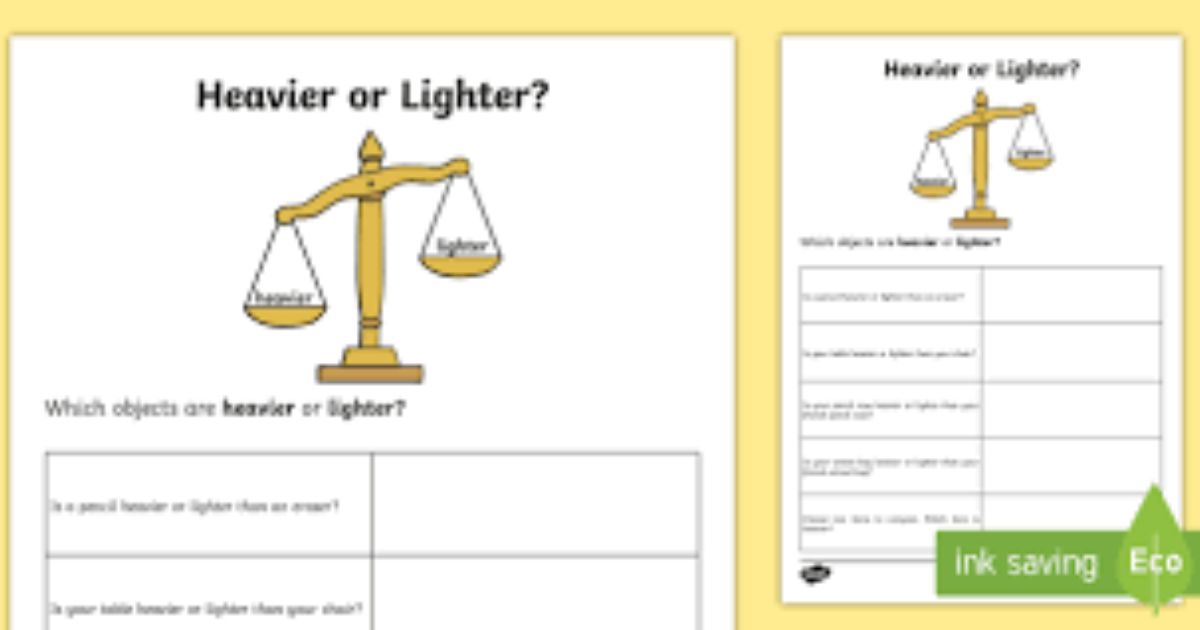
A heavier and lighter worksheet typically presents pairs or groups of objects and asks students to identify, sort, or order them based on weight. These worksheets often progress from simple visual comparisons to more complex problems involving numeric weights that must be compared directly.
Combining picture-based questions with short written justifications encourages students to explain their reasoning, not just select an answer, reinforcing both the conceptual understanding of heavier and lighter and the mathematical vocabulary needed to describe it clearly.
Frequently Asked Questions
Which is heavier in maths?
In math, which is heavier is determined by comparing the actual measured mass of two objects, not their size or appearance.
What is heavier and lighter?
Heavier and lighter describe relative weight comparisons, where one object has more mass (heavier) or less mass (lighter) than another.
What is the unit of weight?
Common units of weight include grams, kilograms, and pounds, used to measure and compare how much an object weighs.
What is used to measure heavier objects?
Balance scales, spring scales, and digital scales are commonly used tools to accurately measure and compare heavier objects.
Conclusion
Understanding heavier gives students a foundational tool for comparison, measurement, and precise mathematical communication that extends far beyond the classroom. From simple hands-on activities comparing two objects to trickier examples like which is heavier, a kilogram of feathers or a kilogram of bricks, this concept teaches that weight depends on actual measurement rather than size, material, or appearance alone. Common misconceptions, like assuming larger objects are always heavier, are easy to correct once students test their predictions using real balance scales and hands-on comparisons.
Whether working through a heavier and lighter worksheet, playing an interactive comparison game, or reasoning through classic trick questions involving equal weights, the underlying skill remains the same: careful, measured comparison rather than assumption. With consistent practice using real objects, visual tools, and thoughtful discussion, this concept becomes an intuitive and lasting part of every student’s measurement toolkit.

