

Silicon is one of those elements that people encounter every day without always realizing it. It is connected to computer chips, smartphones, solar panels, glass, ceramics, construction materials, and many other products. The word is especially common in science and technology, but its importance extends far beyond computers.
The basic silicon definition and meaning is simple: silicon is a chemical element with the symbol Si and atomic number 14. It is usually classified as a metalloid because it has a combination of metallic and nonmetallic characteristics. In nature, silicon is rarely found by itself. Instead, it is commonly combined with oxygen and other elements in minerals and rocks.
Silicon is particularly important because of its semiconductor properties. These properties allow engineers to control how electricity moves through the material, making silicon useful for computer chips, electronic devices, and solar cells. Understanding silicon also means understanding the difference between silicon and silicone, two terms that are often confused.
What Is Silicon?
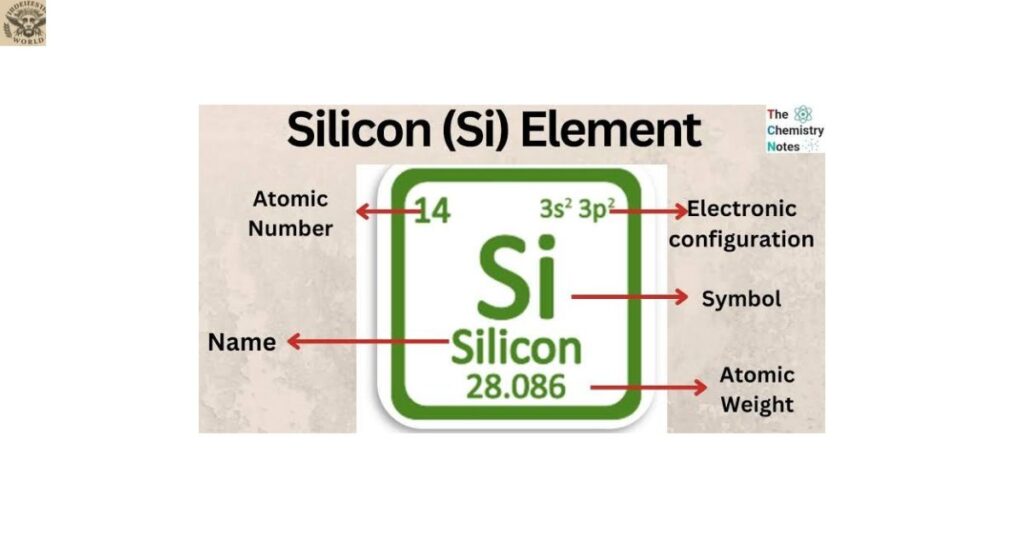
Silicon is a naturally occurring chemical element found in large quantities in the Earth’s crust. Its chemical symbol is Si, and its atomic number is 14. On the periodic table, silicon is located in Group 14 and Period 3.
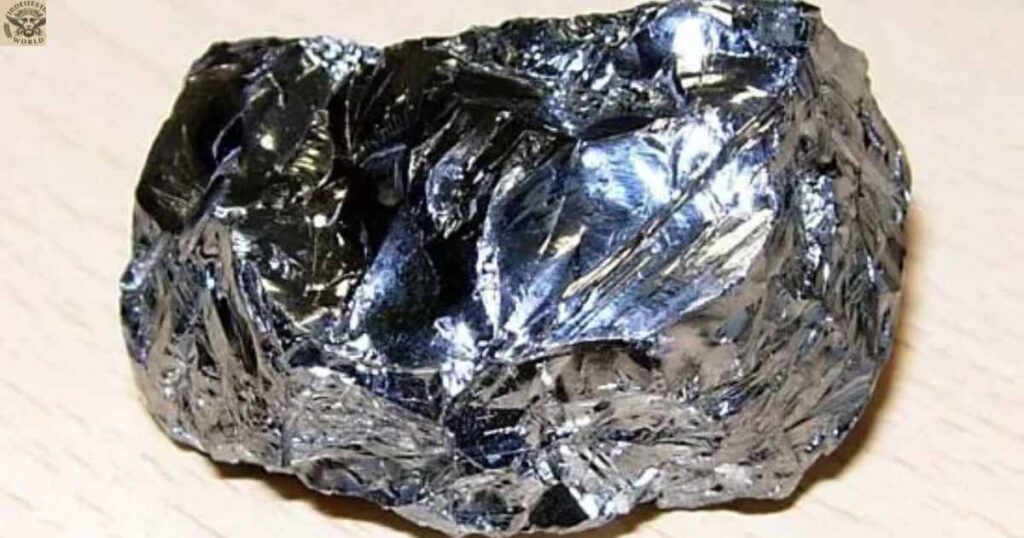
In its pure form, silicon is a hard and brittle solid with a grey or blue-grey appearance. It can look somewhat metallic, but it does not behave like common metals such as iron or copper. Instead, silicon has properties that place it between metals and nonmetals, which is why it is generally described as a metalloid.
One of the most important things about silicon is its ability to act as a semiconductor. That means its electrical conductivity can be controlled. This characteristic has made silicon a foundation of modern electronics and an important material for solar technology.
Silicon Definition and Meaning
The silicon definition refers to a chemical element identified by the symbol Si and atomic number 14. Dictionary definitions describe silicon in connection with minerals, rocks, electronics, alloys, and solar technology. Dictionary.com also provides American and British dictionary entries with slightly different wording around its classification.
In simple English, silicon means a chemical element that is widely used in technology, manufacturing, construction, and energy applications.
The exact meaning can depend on the context. In chemistry, silicon means the element itself. In electronics, the word often refers to the semiconductor material used to make chips and electronic components. In solar energy,Silicon Definition & Meaning, it commonly refers to the silicon used in photovoltaic cells.
Silicon Meaning in Simple English
A simple definition of silicon is:Silicon is a chemical element used in electronics, solar cells, glass, ceramics, alloys, and many other products.This short explanation is useful if you are looking for the meaning of silicon without going into advanced chemistry.
What Does Silicon Mean in Science?
In science, silicon specifically refers to the element Si. It has 14 protons in the nucleus of each atom and belongs to Group 14 of the periodic table.Silicon has four electrons in its outer shell. This electronic structure helps explain why it can form bonds with several other elements and why its compounds are so common in nature.
You will rarely find large amounts of pure silicon sitting naturally on the ground. Most natural silicon is chemically combined with oxygen and other elements. Two especially important groups of silicon-containing substances are silica and silicates.
Quartz is a familiar example of a mineral containing silicon dioxide. Many rocks also contain silicate minerals. So, when scientists talk about silicon in the Earth’s crust, they are often referring to silicon that is chemically bound inside minerals.
Read More:White Blood Cell Meaning: What Are White Blood Cells?
What Is the Chemical Symbol for Silicon?
The chemical symbol for silicon is Si.The first letter is capitalized and the second is lowercase. Therefore, the correct form is Si, not SI or si.Here are some basic facts about the element:
| Property | Silicon |
| Chemical name | Silicon |
| Symbol | Si |
| Atomic number | 14 |
| Relative atomic mass | 28.085 |
| Period | 3 |
| Group | 14 |
| Classification | Metalloid |
| State at room temperature | Solid |
| Melting point | About 1414°C |
| Boiling point | About 3265°C |
The Royal Society of Chemistry lists silicon with an atomic number of 14,Silicon Definition & Meaning, a relative atomic mass of 28.085, a melting point of 1414°C, and a boiling point of 3265°C.
Where Is Silicon Found on the Periodic Table?
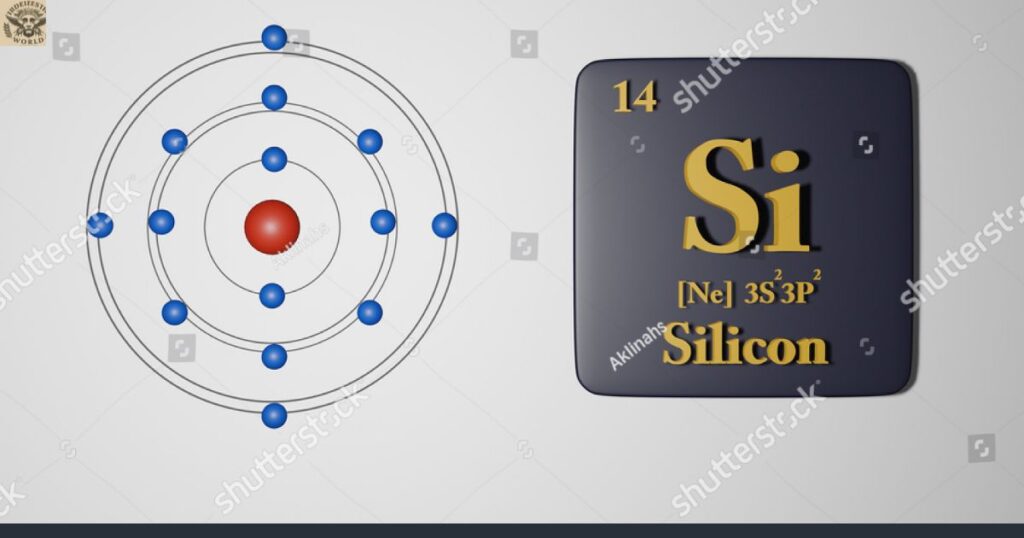
Silicon is found in Group 14 and Period 3 of the periodic table. It sits below carbon and above germanium.Its position is useful because elements in the same group share some chemical characteristics. Silicon has four valence electrons, which gives it an important role in forming chemical compounds.
Although the element is widespread, natural silicon is mostly present in compounds rather than as pure silicon. Silica and silicate minerals are particularly common.The Royal Society of Chemistry reports that silicon makes up about 27.7% of the Earth’s crust by mass, making it the second most abundant element in the Earth’s crust after oxygen.
What Are the Main Properties of Silicon?
Silicon has several properties that make it useful in science and industry.
Silicon Is a Semiconductor
The most famous property of silicon is its semiconductor behaviour. It does not conduct electricity in the same way as copper,Silicon Definition & Meaning, but its electrical behaviour can be controlled.
Manufacturers can introduce carefully measured amounts of other elements into silicon. This process is called doping, and it changes how electrical charge moves through the material.That control is essential for making transistors, integrated circuits, and many other electronic components.
Silicon Is Hard and Brittle
Pure silicon is relatively hard but brittle. It does not bend easily like many metals and can break when subjected to enough force.This characteristic matters during manufacturing because silicon wafers need to be handled carefully.
Silicon Has a High Melting Point
Silicon has a melting point of around 1414°C. Its high melting point is one of its useful physical characteristics, particularly in industrial and high-temperature applications.
Silicon Forms Many Compounds
Silicon combines readily with oxygen and other elements. As a result, silicon compounds are found throughout the Earth’s crust and in products such as glass, Silicon Definition & Meaning,ceramics, concrete, and other materials.
How Does Silicon Occur Naturally?
Silicon is extremely common in the Earth’s crust, but you normally will not find it there as pure elemental silicon.Instead, it occurs mainly in compounds. Silicon dioxide, also called silica, is one of the best-known examples. Silicates form another huge group of silicon-containing minerals.
Quartz contains silicon dioxide. Many common rocks contain silicate minerals. Sand can also contain a high proportion of silica.This is why silicon is sometimes associated with sand. However, saying that sand is simply “silicon” would be inaccurate. Sand and pure silicon are different materials.
How Is Silicon Made or Obtained?
Commercial silicon is produced from silicon-containing raw materials, particularly silica.One industrial method involves reducing silica with carbon at very high temperatures. The process produces silicon that can then be processed for different applications.
Not all silicon needs the same level of purity. Material used for some industrial purposes does not require the same extreme purity as material intended for semiconductor manufacturing.
For electronics, manufacturers use highly purified silicon and carefully controlled processing methods. The Royal Society of Chemistry describes the production of commercial silicon by reducing sand with carbon in an electric furnace, followed by additional purification for high-purity applications.
What Is Silicon Used For?
The uses of silicon cover a surprisingly wide range of industries.Silicon and silicon-containing materials are used in:
- Computer chips
- Transistors
- Integrated circuits
- Solar cells
- Semiconductor devices
- Metal alloys
- Steel production
- Glass
- Ceramics
- Construction materials
- Chemical manufacturing
- Silicone production
Some uses involve pure or highly purified silicon, while others depend on silicon compounds.
For example, the semiconductor industry needs highly refined silicon,Silicon Definition & Meaning, while glass manufacturing mainly depends on silica and other ingredients.
Silicon in Electronics and Computer Chips
Silicon is perhaps best known for its role in electronics.A silicon semiconductor can be carefully modified so that its electrical behaviour suits a particular purpose. This makes it possible to build transistors and other microscopic electronic structures.
Transistors are fundamental building blocks of modern electronic devices. Billions of electronic components can be incorporated into advanced integrated circuits.This technology is behind computers, smartphones, servers, networking equipment, cars, medical devices, and countless other products.
What Is a Silicon Chip?
A silicon chip is a small piece of semiconductor material used to create electronic circuits.The chip begins with highly purified silicon. Manufacturers produce silicon wafers and then use complex processes to create microscopic structures on their surfaces.
The final chip can contain a huge number of transistors and other components. These structures work together to process information and perform calculations.That is why the term “silicon chip” is so closely connected with modern computing.
Why Is Silicon Important in Technology?

Silicon became important in technology because it offers a useful combination of properties.It is relatively abundant, can be purified to very high levels, and has semiconductor characteristics that engineers can control. Over many decades, the electronics industry has also developed highly advanced manufacturing systems around silicon.
This combination has made silicon a central material in semiconductor technology.The term silicon technology can therefore refer to much more than the element itself. It can include wafers, semiconductor devices, integrated circuits,Silicon Definition & Meaning, manufacturing processes, and related technologies.
Silicon in Solar Panels
Silicon is also a major material in solar energy.A solar cell needs a semiconductor capable of interacting with sunlight and producing an electrical current. Silicon is well suited to this role, which is why crystalline silicon has become widely used in photovoltaic technology.
The U.S. Department of Energy explains that silicon is the primary semiconductor used in solar cells and most electronic devices. It also identifies monocrystalline and polycrystalline silicon as two common forms used in solar panels.
Monocrystalline Silicon
Monocrystalline silicon is made from a single crystal structure. Solar cells made from this material are widely used in residential, commercial, and large-scale solar systems.
Polycrystalline Silicon
Polycrystalline silicon contains multiple crystal structures. It has also been widely used in photovoltaic manufacturing.The U.S. Department of Energy notes that approximately 95% of solar panels on the market at the time of its published primer used either monocrystalline or polycrystalline silicon.
How Does Silicon Work in a Solar Cell?
A silicon solar cell is designed to create an electrical response when sunlight reaches the semiconductor.Manufacturers process silicon so that different regions have different electrical characteristics. This creates the structure needed for the photovoltaic effect.
When sunlight reaches the cell, energy from the light can cause charge carriers to move. The cell’s electrical contacts collect the resulting current so it can be used outside the panel.The U.S. Department of Energy describes silicon solar cells as semiconductor devices with processed silicon and electrical contacts that allow current to be collected.
This is the basic science behind many solar panels installed on homes, businesses, and utility-scale solar farms.
What Is Silicon Dioxide?
Silicon dioxide is a chemical compound made from silicon and oxygen. Its chemical formula is SiO₂.It is commonly called silica.Silica occurs naturally in quartz and many other materials. It is also an important ingredient in the production of glass.
Silicon dioxide and elemental silicon are therefore not the same thing. Silicon is the element Si, while silicon dioxide is a compound containing silicon and oxygen.This difference is important when discussing sand. Much of the silicon associated with sand is present as silica rather than pure silicon.
Silicon vs. Silicone: What Is the Difference?
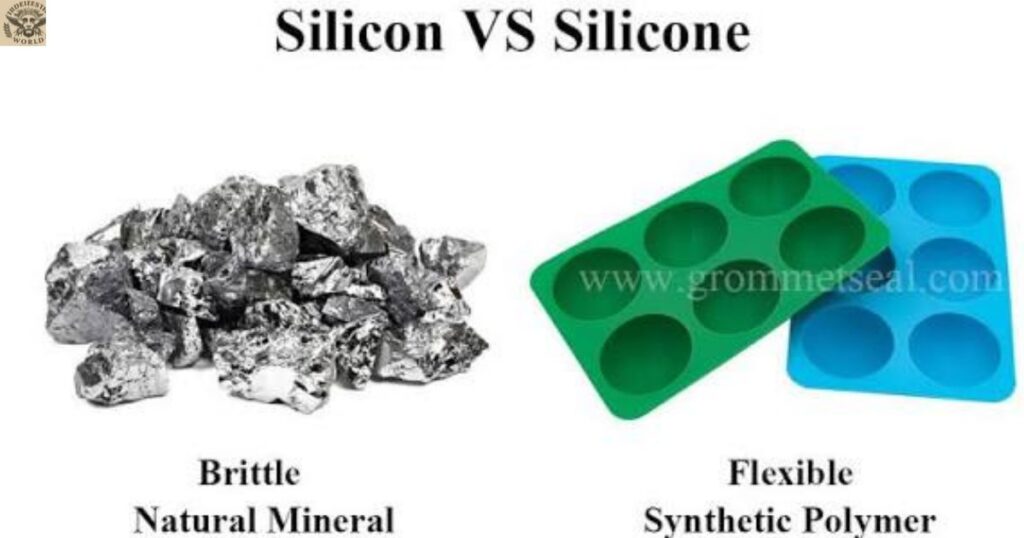
Silicon and silicone are two different things.
| Silicon | Silicone |
| Chemical element | Synthetic polymer material |
| Symbol is Si | Contains silicon and oxygen in its structure |
| Atomic number 14 | Does not have an atomic number |
| Important semiconductor | Used in sealants, rubber, oils, and other products |
| Found naturally in minerals | Manufactured from silicon-containing compounds |
| Used in electronics and solar cells | Used in many industrial and consumer products |
Silicone is a family of synthetic polymers that contain silicon and oxygen in their molecular structures. Depending on the formulation, silicone materials can be flexible, rubbery, fluid, or resin-like.The easiest way to remember the difference is:
Silicon is an element. Silicone is a synthetic material.
What Is Silicone Used For?
Silicone materials are useful because they can remain stable across a range of temperatures and can have properties such as flexibility,Silicon Definition & Meaning, water resistance, and electrical insulation.
They are used in products such as:
- Sealants
- Lubricants
- Synthetic rubber
- Electrical insulation
- Water-resistant products
- Some personal-care products
- Industrial components
So if someone is talking about a silicone sealant around a window or bathroom, they are talking about a manufactured polymer material, not pure silicon.
Silicon in Everyday Life
Silicon is present in everyday life in ways that are easy to overlook.The glass in a window contains silicon dioxide. Ceramic products often contain silicon compounds. Concrete and many construction materials involve silicate minerals. Electronic devices depend heavily on semiconductor technology, while solar panels commonly use crystalline silicon.
This means silicon connects some very old industries with some of the newest technologies.Glassmaking and ceramics have existed for thousands of years, while semiconductor manufacturing is a modern high-precision industry. Silicon chemistry plays an important role in both.
Is Silicon a Metal or Nonmetal?
Silicon is generally classified as a metalloid.Metalloids have characteristics that fall somewhere between those normally associated with metals and nonmetals.
Silicon can have a shiny, metallic-looking appearance, but it is brittle rather than easily bendable. Its electrical behaviour is also quite different from that of highly conductive metals.Its semiconductor characteristics are what make silicon particularly valuable in electronics.
Is Silicon Found in the Human Body?
Silicon and silicon-containing compounds occur in biological systems.The Royal Society of Chemistry notes that silicon is important to plant life and that its role in animals is less certain. It also reports that silicon in humans is associated with areas such as connective tissue and skin.
Some organisms also use silica to build structures. Diatoms, for example, produce intricate silica-based structures.This biological role is different from the industrial use of purified silicon in electronics and solar technology.
Silicon and Plants
Plants can absorb silicon from soil in forms that are available to them.Some plants accumulate significant amounts of silica. They can produce microscopic silica structures known as phytoliths.
These structures can remain after plants decay and may help researchers study ancient vegetation and environmental conditions.The Royal Society of Chemistry notes that phytoliths can survive in fossils because silica does not easily decay.
Silicon and Rocks
Silicon is one of the major elements found in rocks and minerals.Quartz is a familiar example because it consists largely of silicon dioxide. Feldspar, mica, clay minerals, and many other geological materials contain silicon in silicate forms.
This abundance explains why silicon is such an important part of the Earth’s crust.It also explains why the element has become economically important. Silicon-containing raw materials are widely available and can be processed into useful industrial materials.
Silicon and Glass
Silicon compounds are essential to many types of glass.Silica is a major raw material in glass production. When silica is heated and combined with other ingredients,Silicon Definition & Meaning, it can form glass with useful optical and physical characteristics.
Glass is used in windows, bottles,Silicon Definition & Meaning, laboratory equipment, screens, optical products, and countless other applications.So while a glass window is not made from a block of pure silicon, silicon chemistry is fundamental to its production.
Silicon in Construction
Silicon compounds are also important in construction.Many rocks, minerals, sand, clay, concrete ingredients, ceramics, and cement-related materials contain silicon compounds.
The Royal Society of Chemistry identifies sand and clay as important materials in concrete and cement production and notes the role of silica in glass and ceramic products.This is why the uses of silicon extend well beyond high-tech industries.
Silicon in Metal Alloys
Silicon can be combined with metals to create useful alloys.
For example, aluminium-silicon alloys are used in engineering applications,Silicon Definition & Meaning, while ferrosilicon is important in steel production.
Silicon can also help remove oxygen during certain metallurgical processes.These applications demonstrate another side of silicon. It is not simply a material for computer chips and solar panels. Its chemical properties also make it valuable in manufacturing and metallurgy.
Silicon Pronunciation
The word silicon is generally pronounced:
SIL-i-kuhnIt has three syllables.The pronunciation is similar in American and British English, although dictionary pronunciation systems may represent the sounds differently.It is worth remembering that silicon and silicone are pronounced differently. The extra “e” in silicone is not just a spelling detail; the words refer to different substances.
What Is the Origin of the Word Silicon?
The English word silicon is connected to the word silica.Dictionary.com dates the word to the early nineteenth century and explains that it was formed from silica with the ending “-on,” following the naming pattern of elements such as carbon and boron.The scientific history of the element is also interesting.
Chemists had been studying silica and attempting to understand its composition before relatively pure silicon was isolated.Jöns Jacob Berzelius is commonly credited with obtaining relatively pure silicon in 1824.The element’s history therefore began long before the development of computers and modern electronics.
Who Discovered Silicon?
The discovery of silicon was a gradual scientific process rather than a single event.Early nineteenth-century chemists worked with silica and tried to separate it into its components. Humphry Davy investigated the material, while Joseph Gay-Lussac and Louis Jacques Thénard produced an impure form in 1811.
In 1824, Swedish chemist Jöns Jacob Berzelius produced a relatively pure form of silicon. He is commonly credited with the isolation of the element.The later development of purification and semiconductor technology transformed silicon from a chemical curiosity into a foundation of modern industry.
Why Is Silicon So Important?
Silicon is important because it combines abundance with useful chemical, physical, and electrical properties.It is a major part of the Earth’s crust and is found in a huge range of minerals. Its compounds are important in glass, ceramics, construction, and industrial chemistry.
At the same time, highly purified silicon has exceptional importance in modern electronics. Its semiconductor behaviour can be carefully controlled, allowing engineers to build transistors and integrated circuits.Silicon is also central to much of today’s solar technology. These different roles make it one of the most significant elements in both natural materials and modern manufacturing.
Silicon in Modern Semiconductor Technology
The semiconductor industry depends on precise control over materials.Silicon can be doped with very small quantities of other elements to change its electrical behaviour. Depending on the type of doping, manufacturers can create regions with different charge-carrier characteristics.These controlled regions are essential to semiconductor devices.
The Royal Society of Chemistry identifies elements such as boron, phosphorus, arsenic, and gallium among substances that can be used to modify silicon’s electrical properties.Modern semiconductor manufacturing takes this basic principle and applies it at extremely small scales.
Silicon and Modern Computing
Every modern computer depends on electronic components that perform calculations and move information.Many processors and memory devices are manufactured using silicon-based semiconductor technology.
A silicon wafer can be processed through numerous manufacturing stages to create microscopic electronic structures. These structures can contain huge numbers of transistors working together.That is why terms such as silicon chip, silicon semiconductor, and silicon wafer are so common when discussing computer hardware.
Silicon and Solar Energy
Solar energy is another major area where silicon matters.Photovoltaic cells need semiconductor materials that can respond effectively to sunlight. Crystalline silicon has become a widely used choice for this purpose.
The U.S. Department of Energy explains that silicon-based solar cells dominate the photovoltaic market and identifies monocrystalline and polycrystalline silicon as major forms used in solar panels.For homeowners in the USA and UK, this connection is especially relevant because silicon-based solar panels are widely used in residential and commercial installations.
Is Silicon the Same as Sand?
No.Sand and silicon are not the same material.Sand can contain a large amount of silicon dioxide, also known as silica. Pure silicon is a separate substance and must be extracted and processed from silicon-containing raw materials.
A useful way to remember the relationship is:
Silicon = chemical element
Silicon dioxide = compound made from silicon and oxygen
Sand = naturally occurring granular material that can contain silica
The U.S. Department of Energy explains that silicon used for solar cells begins with silicon-containing raw materials and requires significant processing before it becomes suitable semiconductor-grade material.
Is Silicon Safe?
The safety of silicon depends on its chemical and physical form.Elemental silicon is different from fine crystalline silica dust. Occupational exposure to respirable silica particles can be hazardous to the lungs.The Royal Society of Chemistry notes that fine silica and silicate dust can be dangerous and can cause serious health problems, including silicosis, when workers are exposed to hazardous levels.
This is particularly important in workplaces involving cutting, grinding, mining, quarrying, or processing stone and other silica-containing materials.Therefore, “silicon” should not automatically be treated as one single exposure category. The specific material and route of exposure matter.
Silicon Definition vs. Silicon Meaning
The terms definition and meaning are closely related.
A definition gives a precise explanation of what a word represents. Meaning can change slightly depending on how the word is being used.
For example:
Scientific definition: Silicon is the chemical element with the symbol Si and atomic number 14.
Technology meaning: Silicon can refer to the semiconductor material used to manufacture electronic components.
Solar-energy meaning: Silicon can refer to the semiconductor material used in photovoltaic cells.
The word stays the same, but the context determines what aspect of silicon is being discussed.
Silicon Meaning in Technology
In technology, the word silicon often appears in phrases such as:
- Silicon chip
- Silicon wafer
- Silicon semiconductor
- Silicon processor
- Silicon transistor
- Silicon solar cell
- Silicon Valley
These expressions are related to the technological importance of silicon.A silicon wafer, for example,Silicon Definition & Meaning, is a thin piece of semiconductor material used during chip manufacturing. A silicon solar cell uses semiconductor properties to convert sunlight into electrical energy.
Silicon Meaning in the USA and UK
The scientific meaning of silicon is the same in both the USA and UK.Dictionary.com provides separate American and British entries,Silicon Definition & Meaning, with differences in how the element is classified in the wording of the definition.
For readers in both countries, the most important facts remain unchanged: silicon has the symbol Si, atomic number 14, and is widely used in semiconductors,Silicon Definition & Meaning, solar cells, alloys, glass, ceramics,Silicon Definition & Meaning, and other applications.The word is especially common in technology-related English in both American and British contexts.
Silicon Valley Meaning
Silicon Valley is a geographical and technology term.The name refers to a region of California that became strongly associated with the semiconductor and technology industries.
The “silicon” part of the name reflects the historical importance of silicon-based semiconductor technology in the region.It does not mean that Silicon Valley is made of silicon. Instead,Silicon Definition & Meaning, the term connects the location with the technology industry that grew there.
Silicon Chip vs. Microchip
The terms silicon chip and microchip are often used when talking about electronic hardware.A silicon chip is a small semiconductor component on which electronic circuits can be created. A microchip is a broader everyday term for a small integrated electronic circuit.
Modern chips can contain extremely large numbers of transistors and other components.Although the terminology varies depending on the context,Silicon Definition & Meaning, both terms are strongly associated with semiconductor manufacturing and silicon technology.
Silicon Facts at a Glance
| Silicon Fact | Information |
| Name | Silicon |
| Symbol | Si |
| Atomic number | 14 |
| Relative atomic mass | 28.085 |
| Group | 14 |
| Period | 3 |
| Classification | Metalloid |
| Room-temperature state | Solid |
| Melting point | About 1414°C |
| Boiling point | About 3265°C |
| Major natural forms | Silica and silicates |
| Important uses | Electronics, solar cells, alloys, glass, ceramics |
| Common confusion | Silicon vs. silicone |
The basic chemical and physical values above are reported by the Royal Society of Chemistry.
Frequently Asked Questions :
Is silicon a metal or nonmetal?
Silicon is generally classified as a metalloid because it has a mixture of properties associated with metals and nonmetals.
What is silicon used for?
Silicon is used in semiconductor devices, computer chips, solar cells, metal alloys, steel production, glass-related industries, ceramics, and chemical manufacturing.
What is the difference between silicon and silicone?
Silicon is a chemical element with the symbol Si. Silicone is a synthetic polymer material containing silicon and oxygen in its structure.
What is silicon’s atomic number?
Silicon has an atomic number of 14, meaning a neutral silicon atom has 14 protons.
Is silicon found in sand?
Yes, sand can contain large amounts of silicon in the form of silicon dioxide, or silica. Sand itself is not the same thing as pure elemental silicon.
Conclusion
The silicon definition and meaning become much easier to understand when the element is separated from the many materials and technologies associated with it. Silicon is the chemical element Si, Silicon Definition & Meaning, with atomic number 14, and it is generally classified as a metalloid. It is abundant in the Earth’s crust and is mainly found naturally in silica and silicate minerals.
Silicon has an unusually broad range of uses. Its semiconductor properties make it essential to computer chips and electronic devices,Silicon Definition & Meaning, while crystalline silicon is widely used in solar cells. Silicon compounds also contribute to glass, ceramics,Silicon Definition & Meaning, construction materials,Silicon Definition & Meaning, rocks, minerals, and metal alloys.

