

Dream catchers are known for their circular hoops, woven webs, feathers, beads, and detailed patterns. These designs are often connected with protection, dreams, spirituality, nature, and personal symbolism. Understanding symbolic dream catcher patterns meanings can help explain the meaning behind different shapes, colors, and designs.
Dream catchers have roots in Indigenous traditions, especially Ojibwe culture. Traditional designs vary in materials and appearance, while modern versions often include colors, gemstones, and animals. Since meanings can differ, it is helpful to understand traditional symbolism separately from modern interpretations.
What Is a Dream Catcher?
A dream catcher is a circular object with a hoop and woven web. Traditional forms used willow and plant materials, while modern examples may include wood, leather, beads, feathers, and other materials. Museum collections show that dream catchers vary in design and construction.
In common explanations of Ojibwe tradition, dream catchers were connected with protecting children and filtering dreams. A woven web was placed within a hoop, with feathers and other elements sometimes attached below. Popular descriptions say harmful dreams could become caught in the web while positive dreams could pass through.
Today, dream catchers are also found as wall decorations, jewelry, tattoos, gifts, and handmade art. Modern versions may have little connection to a specific Indigenous tradition, so their symbolism can be personal rather than historically fixed.
The Origin and Cultural Meaning of Dream Catchers
Dream catchers are strongly associated with Ojibwe traditions from the Great Lakes region. One Ojibwe story connects their origin with Asibikaashi, often described as a Spider Woman who cared for children and people. As Ojibwe communities spread across a large area, stories explain how woven webs could continue serving as protective symbols for children.
Another important point comes from Lakota tradition. A Lakota legend describes Iktómi appearing in the form of a spider and creating a web on a willow hoop. In this story, the web becomes connected with choices, life cycles, and the difference between helpful and harmful influences.
These traditions should not be treated as one identical story. Different Indigenous nations have their own histories, teachings, and interpretations. Modern commercial dream catchers can also combine elements from several cultures.
Why Cultural Context Matters
Dream catchers have become popular worldwide, but some Native people have criticized mass-produced versions and their use outside their cultural context. A Smithsonian source on dream catchers specifically discusses their origins, different designs and materials, later distribution, marketing, and concerns surrounding appropriation.
For this reason, it is better to describe modern symbolic meanings as interpretations rather than claiming that every color, bead, or web point has one universal Indigenous meaning.
What Does a Dream Catcher Symbolize?
A dream catcher can symbolize several connected ideas depending on its cultural background and design. Common themes include:
- Protection
- Dreams and visions
- Positive thoughts
- Spiritual guidance
- Connection with nature
- Family and children
- Life cycles
- Hope
- Peace
- Balance
- Personal growth
- Cultural identity
Traditional explanations often focus on protection and dreams, while modern interpretations may emphasize emotional healing, positive energy, personal intentions, and spiritual connection.The most meaningful interpretation often comes from understanding why a particular pattern was chosen rather than assuming every dream catcher has exactly the same symbolism.
Read More:270+ Life Lesson Quotes About Growth, Love, Success, and Happiness
Dream Catcher Hoop Meaning
The circular hoop is one of the most recognizable parts of a dream catcher. Its shape is commonly connected with cycles, continuity, and life.In Ojibwe explanations, the circular form has been associated with natural cycles, including movement of the sun and moon across the sky.
A circle can also be interpreted more generally as a symbol without a beginning or end. For modern viewers, this can represent:
- Circle of life
- Continuity
- Family connection
- Unity
- Balance
- Protection
- Completion
Traditional materials also matter. Willow hoops are frequently mentioned in historical descriptions of dream catchers, while modern examples can use leather, metal, wood, or synthetic materials. Museum collections show considerable variation in construction.
Dream Catcher Web Meaning
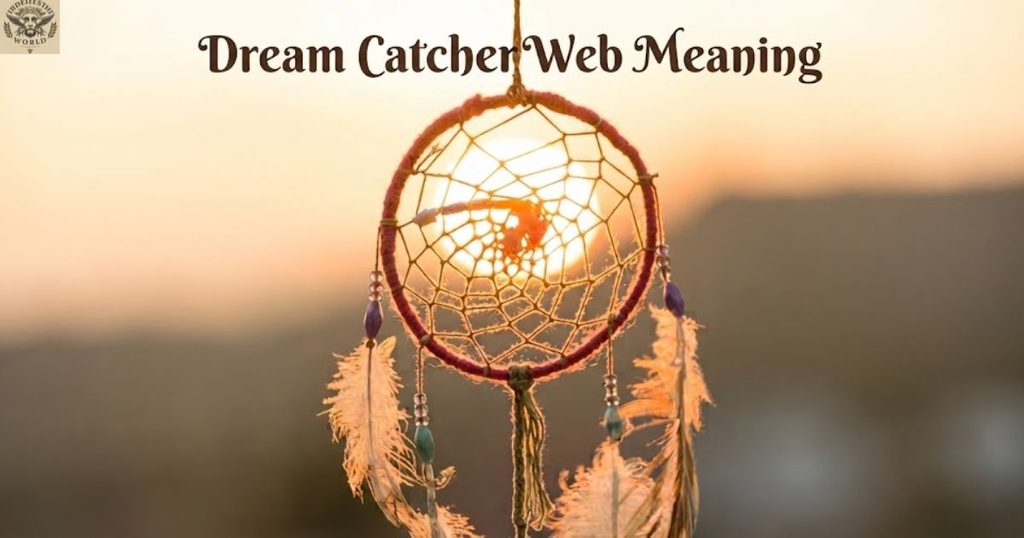
The web is usually considered one of the most important parts of a dream catcher. Its spiderweb-like design is closely connected with traditional stories and popular explanations about filtering dreams.
In an Ojibwe story, woven webs are connected with protection and the care of children. The web has therefore become strongly associated with catching or filtering harmful dreams while allowing positive dreams to continue through.
A Lakota story gives another perspective. In its account of Iktómi, a spider creates a web while discussing different forces that influence a person’s life. The story connects these forces with choices and the journey through different stages of life.
This makes the web meaningful beyond simple decoration. It can represent:
- Protection from harmful influences
- Filtering thoughts
- Life’s interconnected paths
- Choices
- Spiritual awareness
- Connection
- Dreams and visions
Dream Catcher Feathers Meaning
Feathers are among the most recognizable decorative elements on dream catchers. They are commonly placed beneath the hoop and are often connected with air, movement, dreams, and the passage of positive thoughts.
Some traditional and educational explanations describe good dreams as moving through or along feathers toward the sleeper.
However, feather meanings can vary depending on cultural tradition and feather type. A modern dream catcher may use decorative feathers simply because they create a soft, natural appearance.
In symbolic interpretations, feathers can represent:
- Freedom
- Air
- Spiritual connection
- Guidance
- Lightness
- Positive thoughts
- Movement
- Connection between earth and sky
A feather pattern can therefore make a dream catcher feel more connected with nature and spiritual symbolism.
Dream Catcher Beads Meaning
Beads are another common feature found in dream catcher designs. They may be placed within the web or attached to hanging strands.
Their meanings are not universally fixed. In some modern interpretations, beads represent dreams, prayers, intentions, memories, or spiritual connections. Their placement and color can also become part of an individual design.
Museum examples demonstrate that beads have been used in different dream catcher constructions, including glass beads combined with wood, leather, sinew, feathers, and other materials.
For a modern symbolic dream catcher, beads may represent:
- Personal memories
- Wishes
- Prayers
- Important relationships
- Spiritual intentions
- Individual identity
Because bead symbolism varies, it is best to describe these meanings as personal or modern interpretations rather than universal traditional rules.
Symbolic Dream Catcher Patterns and Their Meanings
Different patterns can change how a dream catcher looks and how people interpret it. Some designs use simple circular webs, while others include geometric shapes, multiple hoops, feathers, beads, animals, gemstones, or colored threads.
Here are common symbolic dream catcher patterns meanings:
| Pattern or Element | Common Symbolic Interpretation |
| Circular hoop | Life cycle, unity, continuity |
| Spider web | Protection, filtering, connection |
| Feather | Air, guidance, positive movement |
| Beads | Personal meaning, wishes, memories |
| Five point web | Often associated with a star |
| Six point web | Sometimes associated with an eagle |
| Seven point web | Sometimes linked with seven teachings or prophecies |
| Eight point web | Often connected with spider symbolism |
| Thirteen point web | Sometimes linked with lunar phases |
| Animal patterns | Strength, guidance, or qualities of that animal |
| Floral patterns | Nature, growth, beauty, renewal |
| Geometric patterns | Balance, direction, order, or personal symbolism |
The numerical interpretations above are especially important to describe carefully. Some modern dream catcher guides give meanings to five, six, seven, eight, and thirteen points, but these associations are not a universal traditional system. A current source specifically describes them as modern folk associations that vary by maker.
What Do Different Numbers of Web Points Mean?
One of the most searched questions about dream catcher patterns concerns the number of points where a woven web meets its outer hoop.
Some modern interpretations assign symbolic meanings to different numbers. These can be useful when choosing a personalized design, but they should not be presented as fixed rules for all Indigenous traditions.
5 Point Dream Catcher Meaning
A five point web is sometimes interpreted as a star-like shape. Modern sources connect this pattern with a star in the sky.
For a contemporary design, five points may be chosen because the shape creates a clear geometric appearance and can represent guidance, hope, or a guiding light.
6 Point Dream Catcher Meaning
Six points are sometimes associated with an eagle in modern dream catcher interpretations. The eagle can represent qualities such as strength, vision, courage, and connection with the sky.
This interpretation should be understood as a modern symbolic association rather than a universal rule.
7 Point Dream Catcher Meaning
Seven point designs are sometimes connected with seven teachings or seven prophecies in popular interpretations. Some modern sources make this connection, but interpretations differ between traditions and communities.
A seven point design can therefore be meaningful to someone who wants a dream catcher connected with wisdom, values, or spiritual teachings.
8 Point Dream Catcher Meaning
Eight points are often connected with spider symbolism because a spider has eight legs. Modern dream catcher guides sometimes associate this design with Spider Woman or the protective spider figure found in traditional stories.
This makes an eight point web especially interesting for people who focus on spider web symbolism.
13 Point Dream Catcher Meaning
Thirteen points are sometimes associated with the thirteen phases of the moon in modern dream catcher symbolism.
People interested in lunar symbolism may choose this pattern because it visually connects the dream catcher with moon cycles and the changing rhythm of nature.
Dream Catcher Colors and Their Meanings
Colors can strongly influence the appearance and personal symbolism of a dream catcher. Unlike a universal dictionary of colors, their meanings can change according to culture, tradition, maker, and individual beliefs.
Modern interpretations commonly associate colors with ideas such as:
| Color | Common Modern Interpretation |
| White | Peace, clarity, calm |
| Black | Protection, grounding, strength |
| Red | Energy, courage, vitality |
| Blue | Calm, peace, tranquility |
| Green | Growth, nature, renewal |
| Yellow | Light, hope, warmth |
| Purple | Spirituality, mystery, imagination |
| Pink | Love, kindness, affection |
| Brown | Earth, stability, nature |
These associations are useful for modern decorative and personal designs, but they should not be confused with a single traditional color code shared by all Indigenous nations.
White Dream Catcher Meaning
White dream catchers are often chosen for their calm and simple appearance. In modern symbolic interpretations, white can represent peace, clarity, purity, and a fresh beginning.
A white design may therefore appeal to someone who wants a gentle bedroom decoration or a personal symbol connected with calm dreams.
Black Dream Catcher Meaning
Black dream catchers often have a stronger visual appearance. Modern symbolism can associate black with protection, grounding, strength, and mystery.
Black feathers, dark beads, or black thread can create a design that feels bold while still keeping the traditional circular web structure.
Blue Dream Catcher Meaning
Blue is commonly associated with calmness, peaceful feelings, water, sky, and emotional balance in modern symbolic systems.
A blue dream catcher can therefore represent tranquility and a desire for a peaceful sleeping environment.
Red Dream Catcher Meaning
Red is frequently connected with strength, vitality, courage, energy, and passion in modern interpretations.
Red thread combined with natural feathers can create a striking design for someone who wants symbolism related to confidence and personal strength.
Green Dream Catcher Meaning
Green is naturally associated with plants, forests, growth, and renewal. A green dream catcher can symbolize connection with nature and personal development.
It can also work well with wooden hoops, natural feathers, and earthy beads.
Animal Patterns on Dream Catchers
Animal designs are common in modern dream catcher artwork. An animal can add a personal layer of symbolism based on qualities people associate with that creature.
Common animal designs include:
- Eagles
- Owls
- Wolves
- Bears
- Deer
- Butterflies
- Horses
- Birds
- Spiders
However, animal symbolism can differ greatly among Indigenous nations. Animals may have specific cultural, spiritual, clan, or ceremonial significance that cannot be reduced to a simple online meaning.
For this reason, an animal design should be researched according to its specific cultural tradition rather than assigned one universal definition.
Spider Symbolism in Dream Catchers
Spider symbolism is especially important because spider imagery is closely connected with some dream catcher origin stories.
In an Ojibwe story, Asibikaashi is associated with Spider Woman and protection of children. A Lakota story instead describes Iktómi appearing as a spider and weaving a web while teaching about life and its forces.
These are distinct traditions, so they should not be blended into one single legend.
In modern symbolic interpretation, a spider web may represent:
- Creativity
- Connection
- Protection
- Patience
- Interconnectedness
- Life’s pathways
- Care and guidance
Floral Dream Catcher Patterns
Flowers and leaves are popular in modern dream catcher designs because they create a natural and soft appearance.
A floral dream catcher may include roses, leaves, vines, petals, or other plant-inspired shapes. Modern interpretations commonly associate floral patterns with:
- Growth
- Beauty
- Renewal
- Nature
- Life
- Healing
- New beginnings
Indigenous floral art can have specific meanings within particular communities, so a general modern interpretation should not be presented as a traditional rule for every nation.
Geometric Dream Catcher Patterns
Geometric patterns can include diamonds, triangles, crosses, lines, stars, and repeated shapes. Such designs can make a dream catcher look more structured and visually balanced.
In Indigenous art, geometric motifs can carry culturally specific meanings. For example, educational sources discussing Indigenous beadwork note that geometric designs can represent ideas related to directions, landscapes, celestial objects, strength, or spiritual concepts depending on community and context.
For modern dream catcher designs, geometric shapes can also simply express balance, order, symmetry, and creativity.
Dream Catcher Patterns With Stars and Moons
Stars and moons are popular additions to modern dream catcher artwork because they naturally connect with nighttime, dreams, and the sky.
A star design may symbolize:
- Guidance
- Hope
- Light
- Direction
- Dreams
A moon pattern may suggest:
- Night
- Cycles
- Change
- Reflection
- Nature
- Personal growth
These are primarily modern symbolic interpretations unless a specific cultural tradition gives a particular design a documented meaning.
Dream Catcher With Arrowhead Patterns
Arrowhead shapes are frequently included in contemporary dream catcher designs. Some modern interpretations connect four arrowheads with four directions or four corners of the earth.
Because directional symbolism can differ across Indigenous traditions, it is better to identify the source or cultural context when making a specific claim.
As a modern design, arrowhead patterns can also represent:
- Direction
- Purpose
- Protection
- Movement
- Strength
- A clear path
Dream Catcher Patterns With Multiple Hoops
Some modern dream catchers combine two or more hoops. Smaller circles may be attached to a larger central hoop, creating layered designs.
Multiple circles can visually represent:
- Family connections
- Different life stages
- Relationships
- Unity
- Interconnected lives
- Continuity
These meanings are usually personal or contemporary rather than fixed traditional interpretations.
Dream Catcher Designs for Protection
Protection is one of the strongest ideas connected with dream catchers. Traditional descriptions connect the object with protection, particularly for children, and with filtering harmful dreams.
A modern protection-focused design may include:
- A strong circular hoop
- Dense webbing
- Feathers
- Dark or earthy colors
- Protective animal imagery
- Natural materials
- Personal symbols
It is important to understand that modern decorative dream catchers should not automatically be presented as objects with proven supernatural effects. Their protective meaning is primarily cultural, traditional, spiritual, or personal.
Dream Catcher Designs for Positive Energy
Many modern spiritual interpretations describe dream catchers as symbols for positive thoughts, peaceful sleep, hope, and protection from negativity.
A design focused on positive energy might use:
- Light colors
- Natural feathers
- Sun or star patterns
- Green leaves
- Blue threads
- Clear or colorful beads
- Open circular designs
Such meanings are modern symbolic interpretations and can vary from one person to another.
Dream Catcher Patterns for Children
Historical and educational sources frequently connect dream catchers with children. One Ojibwe origin story explains how woven webs were created to protect children as communities expanded over large distances.
Modern children’s dream catchers often use soft colors, feathers, stars, animals, clouds, moons, and simple webs.
Popular designs include:
- Owl dream catchers
- Butterfly dream catchers
- Moon and star designs
- Blue and white patterns
- Rainbow colors
- Small circular hoops
Parents may choose these designs as decorative symbols of comfort, care, and peaceful sleep.
Dream Catcher Patterns for Spiritual Meaning
People who are interested in spirituality may choose designs based on personal beliefs rather than one established symbolic system.
A spiritual dream catcher might include:
- Moon patterns
- Sun symbols
- Feathers
- Natural stones
- Stars
- Animal imagery
- Geometric shapes
- Multiple circles
- Earth-inspired colors
Its meaning can become personal. Someone may associate one design with faith, another with healing, and another with a particular life experience.
Dream Catcher Patterns and Personal Intentions
One reason modern dream catchers remain popular is that people can personalize them.
For example, someone may select:
- Blue for calm
- Green for growth
- White for peace
- Red for courage
- Feathers for freedom
- Stars for guidance
- Flowers for renewal
- A circular web for continuity
This creates a symbolic object based on personal intention rather than a fixed formula.
Traditional Dream Catchers vs. Modern Dream Catcher Designs
Traditional and modern dream catchers can look very different.
| Traditional Context | Modern Interpretation |
| Connected with specific Indigenous traditions | Often used as decoration |
| Historical materials included willow and plant fibers | May use metal, synthetic cord, gemstones, and artificial feathers |
| Connected with cultural stories and teachings | Often personalized |
| Meanings depend on community and tradition | Meanings may depend on individual beliefs |
| Cultural context is important | Frequently sold as lifestyle or decorative products |
Museum collections demonstrate that dream catcher construction has changed over time and across regions. Some objects are explicitly cataloged as made-for-sale items or souvenirs, showing how commercial forms became part of the modern story.
Why Dream Catcher Meanings Differ
There is no single universal dictionary that assigns one meaning to every dream catcher pattern.
Meanings can change because of:
- Indigenous nation or community
- Historical period
- Specific cultural story
- Materials used
- Design style
- Individual maker
- Modern spiritual interpretation
- Personal beliefs
This is especially important for number symbolism and color meanings. Online articles may provide specific interpretations, but these should be treated as modern or folk associations unless supported by a particular cultural source.
How to Choose a Dream Catcher Pattern Based on Meaning
If you are choosing a dream catcher for your room, gift, tattoo, or personal artwork, start with its design rather than simply selecting a random pattern.
For peace
Choose soft colors such as white or blue with simple feathers and an open web.
For growth
Green colors, floral designs, leaves, and natural materials can represent growth and renewal in modern symbolism.
For strength
Bold colors, strong geometric patterns, or animal imagery can express strength and courage.
For guidance
Stars, feathers, and sky-inspired designs can represent direction and hope.
For connection
Circular patterns, multiple hoops, and interconnected web designs can represent relationships and unity.
For personal memories
Add beads, colors, or small symbols connected with meaningful people, places, or experiences.
The important part is understanding that your personal interpretation does not automatically become a traditional cultural meaning.
What Materials Are Used in Dream Catchers?
Traditional and contemporary dream catchers can use many materials.
Common materials include:
- Willow
- Wood
- Sinew
- Leather
- Hide
- Thread
- Feathers
- Glass beads
- Metal
- Natural stones
- Synthetic fibers
Museum collections show examples made with wood, hide thong, sinew, glass beads, feathers, leather, twine, metal, and other materials.
Material choice can affect appearance, durability, texture, and personal symbolism.
What Does a Spider Web Dream Catcher Mean?
A spider web dream catcher generally represents protection, filtering, connection, and the relationship between dreams and the web.
Its symbolism is especially connected with traditional stories involving spider figures and woven webs. In Ojibwe tradition, Spider Woman is part of an origin story, while Lakota tradition has a separate story involving Iktómi in spider form.
Modern interpretations may additionally connect the web with interconnectedness, personal journeys, and life’s complicated paths.
What Does a Feather Dream Catcher Mean?
A feather dream catcher is often interpreted as a symbol of air, freedom, guidance, and the movement of positive dreams.
Traditional educational material describes feathers as part of the way positive dreams are believed to move toward the sleeper.
Modern designs may use feathers simply because they add softness and movement, so their presence does not always indicate a specific spiritual belief.
What Do Dream Catcher Beads Mean?
Dream catcher beads can represent different things depending on cultural or personal interpretation.
Modern meanings may include:
- Wishes
- Memories
- Prayers
- Personal intentions
- Relationships
- Spiritual connection
Some dream catcher designs place one bead in a central position, while others use several beads throughout the web and hanging strands. There is no universal rule requiring one specific number or placement.
Are Dream Catcher Patterns Culturally Specific?
Yes. Dream catchers are connected with Indigenous cultures, particularly Ojibwe history, while related forms and interpretations have spread among other communities.A Smithsonian source describes dream catchers as objects associated with Ojibwa community traditions and discusses their later distribution, different designs, and modern commercialization.
A Lakota cultural source also preserves a distinct dream catcher legend involving Iktómi.Therefore, it is more accurate to talk about different dream catcher traditions and interpretations rather than saying every dream catcher follows one identical symbolic system.
Cultural Respect When Using Dream Catcher Designs
Because dream catchers have Indigenous cultural roots, cultural awareness matters when using them as decorations, tattoos, products, or commercial designs.
A respectful approach includes:
- Learning about their history
- Avoiding claims that every design has one traditional meaning
- Identifying specific cultural traditions accurately
- Avoiding invented “ancient” meanings
- Understanding differences between Indigenous nations
- Supporting Indigenous artists when possible
- Avoiding stereotypes in artwork and marketing
Dream catchers are more than a generic boho decoration. Their history includes living cultural traditions, storytelling, craftsmanship, and modern debates about commercialization and cultural appropriation.
Why Are Dream Catchers Still Popular Today?
Dream catchers have moved far beyond their historical geographic origins and can now be found in bedrooms, nurseries, jewelry, tattoos, artwork, and interior decoration.
Their popularity comes partly from their visual design. A circular hoop, woven web, feathers, and beads create an easily recognizable shape that can be customized in many ways.
They also offer a simple symbolic language. A person can choose colors, feathers, animals, stars, moons, or beads based on a personal story.
Modern popularity, however, does not erase their cultural history. Understanding both sides makes it possible to appreciate dream catcher art while recognizing its Indigenous roots.
FAQs About Symbolic Dream Catcher Patterns Meanings
What does a dream catcher symbolize?
A dream catcher is commonly associated with protection, dreams, positive thoughts, and spiritual or cultural traditions. Specific meanings vary by community and design.
What does the web on a dream catcher mean?
The web is connected with spider web imagery and is commonly interpreted as a protective design that filters or catches harmful dreams. Different traditions explain its meaning in different ways.
What do feathers mean on a dream catcher?
Feathers are often associated with air, movement, guidance, and positive dreams. In common traditional explanations, they are connected with helping positive dreams reach the sleeper.
What do the different points on a dream catcher mean?
Modern sources sometimes associate five, six, seven, eight, and thirteen points with stars, eagles, teachings or prophecies, spider symbolism, and lunar phases. These meanings are not a universal traditional code and can vary by source and maker.
Where did dream catchers originate?
Dream catchers are strongly associated with Ojibwe traditions from the Great Lakes region. They later spread more widely among Native communities and eventually became popular worldwide.
Conclusion
Symbolic dream catcher patterns meanings can include protection, dreams, guidance, balance, nature, and personal growth. The hoop, web, feathers, beads, colors, and patterns can each add a unique layer of symbolism. Meanings can vary depending on cultural tradition and personal beliefs.
Understanding dream catcher history makes their designs more meaningful. Traditional Indigenous stories and modern interpretations should be viewed separately, especially for specific colors, numbers, or patterns. A dream catcher can represent hope, connection, protection, and meaningful desi

