


Students meet the less than symbol early in their math journey, and once they truly understand it, they unlock a whole new way of thinking about numbers. The less than sign shows that one number holds a smaller value than another, and it lets young learners compare numbers, order quantities, and build strong number sense from the very start.
Math dictionaries define less than as a relational symbol, and it pairs closely with greater than, equal to, and not equal to as students learn to describe how numbers relate to each other. Teachers use counters, number lines, and everyday comparisons to make the less than symbol click, and this hands-on approach prepares students for algebraic inequalities they’ll face in later grades.
Less Than Definition Math Teachers Actually Use
The less than symbol in math is written as <, and it shows that one number holds a smaller value than another number. When you write 4 < 9, you tell the reader that 4 is less than 9. The open end of the symbol always faces the larger number, while the pointed end aims at the smaller one.
Teachers introduce this less than definition alongside three other comparison symbols:
- Greater than (>)
- Equal to (=)
- Not equal to (≠)
Together, these symbols let students describe how numbers relate to each other instead of treating every number as a number that stands alone. This relational habit builds strong number sense, and it prepares students for algebraic inequalities later on.
How to Read and Say the Less Than Sign in Math
Students read the less than sign from left to right, just like a sentence. So 6 < 10 reads as “six is less than ten.” Many teachers pair this reading habit with a simple trick: the symbol acts like an alligator’s mouth, and the alligator always opens its mouth toward the bigger number because it wants to “eat” more. This trick helps kids apply the less than symbol correctly without memorizing rules.
Less Than, Greater Than, Equal To, and Not Equal To at a Glance
| Symbol | Name | Meaning | Example |
| < | Less Than | The first number holds a smaller value | 4 < 9 |
| > | Greater Than | The first number holds a larger value | 12 > 5 |
| = | Equal To | Both sides hold the same value | 6 = 3 + 3 |
| ≠ | Not Equal To | Both sides hold different values | 8 ≠ 5 + 2 |
Learning all four comparison symbols side by side helps students see the full picture of how numbers compare, rather than learning less than in isolation.
Everyday Examples of Less Than

Real-life examples make the less than symbol in math click faster than worksheets alone:
- A backpack that weighs 3 kg is less than a backpack that weighs 7 kg, so you write 3 < 7.
- A student who scores 15 points is less than a student who scores 20 points, so you write 15 < 20.
- A shelf holding 8 books is less than a shelf holding 14 books, so you write 8 < 14.
These simple comparisons show students that less than describes a relationship between two amounts, not a fixed value.
Ways to Teach the Less Than Symbol
Teachers bring the less than symbol to life when they let students touch, see, and play with numbers instead of just reading them off a page. These hands-on strategies build number sense, strengthen relational thinking, and help kids compare quantities with real confidence.
Compare Physical Groups
Give students two piles of blocks, coins, or counters say, 5 and 9. Ask which pile holds fewer items, then guide them to write the comparison using the less than sign. Physical counting builds a stronger foundation than symbols on a worksheet alone.
Use a Number Line
Draw a number line and mark two numbers, such as 3 and 11. Explain that any number sitting further left is less than a number sitting to its right. This visual anchor helps students internalize the less than definition instead of just memorizing a symbol.
Play Comparison Games
Turn two number cards face up and ask students to place the correct symbol <, >, or = between them. Timed rounds or partner games turn a dry lesson into an active one, and repetition builds automatic recall of the less than sign in math.
Teach the Four Symbols Together
Rather than isolating less than, review it next to greater than, equal to, and not equal to in the same lesson. Students who practice switching between all four symbols develop flexible thinking and rarely confuse less than with greater than later on.
Common Mistakes Students Make
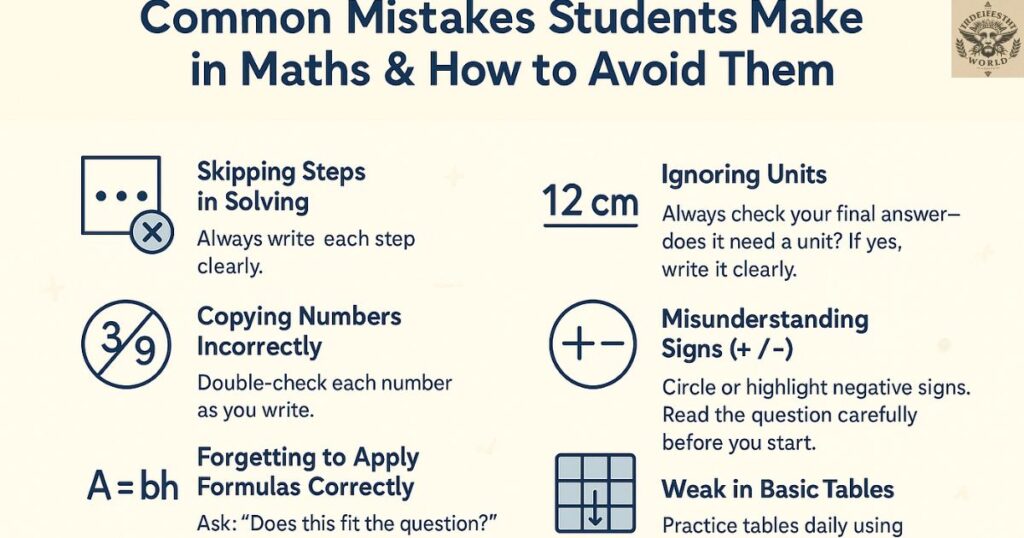
- Flipping the symbol: Students often write 9 < 4 instead of 4 < 9. Correct this quickly using the alligator-mouth trick.
- Treating the symbol as an answer: Some students think < gives a value, when it only shows a relationship. Remind them that 5 < 12 compares two numbers; it does not calculate anything.
- Confusing less than with subtraction: The shape of < can look similar to other math marks to a first-time learner, so extra practice with visuals reduces this mix-up.
Less Than 1 Symbol
Writing x < 1 introduces students to a comparison that stretches beyond whole numbers, since the values that satisfy it often include zero, fractions, or negative numbers. This early exposure to the less than symbol pushes learners to think past simple counting and start recognizing that comparing numbers can involve more than just bigger whole numbers.
Teachers use less than 1 as a bridge between basic number sense and early fraction or decimal concepts, since students must picture values sitting between zero and one. Practicing this comparison strengthens relational thinking and prepares students for the inequalities they’ll meet in algebra.
Less Than Symbol Copy
Typing math problems, worksheets, or digital lessons often calls for a quick way to copy the less than symbol (<) without hunting through a keyboard. Having this symbol ready to paste keeps math notation accurate and saves valuable time when building assignments or answer keys.
Teachers, students, and parents alike run into this need whenever they type out a number comparison for homework or an online quiz. Keeping a copy-ready less than sign on hand makes writing correct math notation simple and consistent every time.
Less Than Symbol Example
Simple examples turn the less than symbol from an abstract mark into something students can actually picture, such as 3 < 8 or 5 < 12. Working through a few number comparisons side by side helps learners spot the pattern immediately: the smaller number always sits on the open side of the symbol.
Real-life examples make the lesson stick even further, like comparing 4 apples to 9 apples or a $6 allowance to a $15 allowance. Repeated exposure to these less than symbol examples builds strong number sense and confidence in reading inequalities.
Less Than Sign 10
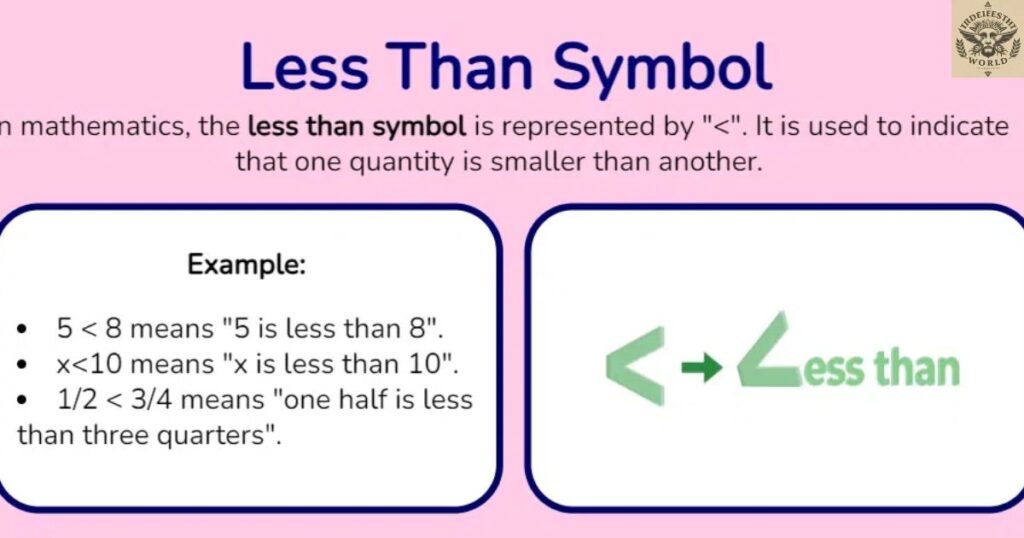
Comparing numbers against 10 gives young learners one of their first real chances to apply the less than sign, since 10 sits as a familiar milestone in early counting. Seeing 7 < 10 helps a student quickly recognize that 7 holds a smaller value, reinforcing number sense right from the start.
Teachers often use 10 as an anchor number because students already count to it with ease. Comparing smaller values like 3, 5, or 8 against 10 shows the less than symbol in action and builds a strong base for ordering numbers and comparing quantities.
Less Than Sign or Equal To
Some comparisons need more flexibility than a strict less than sign allows, and that’s exactly where the less than or equal to symbol (≤) comes in. This symbol tells students that the first number is either smaller than or exactly equal to the second, opening the door to describing ranges and boundaries.
Teachers introduce this symbol once students feel confident with basic less than comparisons, since it adds a new layer of relational thinking. Understanding less than or equal to prepares students for the inequality notation they’ll rely on throughout algebra.
Greater Than Symbol
The greater than symbol (>) works as the mirror image of less than, showing that the first number in a comparison holds the larger value. Teachers introduce it right alongside the less than symbol so students see both directions of a comparison and build a complete understanding of numerical relationships.
Everyday examples make the greater than symbol easy to grasp, such as 12 > 5 or comparing a taller building to a shorter one. Practicing both greater than and less than together strengthens number sense and helps students order numbers with confidence.
Greater Than and Less Than Symbol
Students learn the greater than and less than symbol as a pair, since these two signs describe opposite sides of the same comparison. The greater than symbol (>) points toward the smaller number while showing the first number is larger, and the less than symbol (<) does the reverse, showing the first number is smaller.
Teaching both symbols together builds flexible, relational thinking and helps students avoid mixing them up later on. Once learners master the greater than and less than symbol side by side, they read and write number comparisons with real confidence.
Relevant Post……mm-math-terms-tally-marks
Less Than 100 Sign
Writing a comparison like x < 100 helps students apply the less than symbol to larger numbers, moving beyond the small values they practiced early on. This comparison shows that any number satisfying the inequality must stay smaller than 100, reinforcing the same relational thinking used with smaller numbers.
Teachers use less than 100 to introduce students to comparing bigger quantities, such as populations, distances, or scores. Working with larger numbers this way strengthens number sense and prepares students to handle more complex inequalities as they progress in math.
Frequently Asked Questions
What does ‘<‘ mean?
The symbol ‘<‘ means “less than,” showing that the number on the left holds a smaller value than the number on the right.
What does ‘<‘ and ‘>’ mean?
‘<‘ means “less than” and ‘>’ means “greater than,” and together they show which number in a comparison holds the smaller or larger value.
What is another word for less than?
Students often use “fewer than” or “smaller than” as another way to say less than when comparing numbers or quantities.
What is the difference between (<) and (>)?
‘<‘ shows that the first number is smaller than the second, while ‘>’ shows that the first number is larger than the second.
What is the meaning of less than?
Less than describes a relationship where one number holds a smaller value compared to another number.
Conclusion
The less than symbol teaches students something simple yet powerful: numbers don’t just exist on their own, they relate to each other. Once a student grasps the less than definition and practices with counters, number lines, and real-life examples, number sense grows naturally, and comparing numbers stops feeling like guesswork.
Pair the less than sign with greater than, equal to, and not equal to, and students gain a full toolkit for relational thinking. That foundation carries them straight into algebraic inequalities and confident math reasoning for years to come.

