

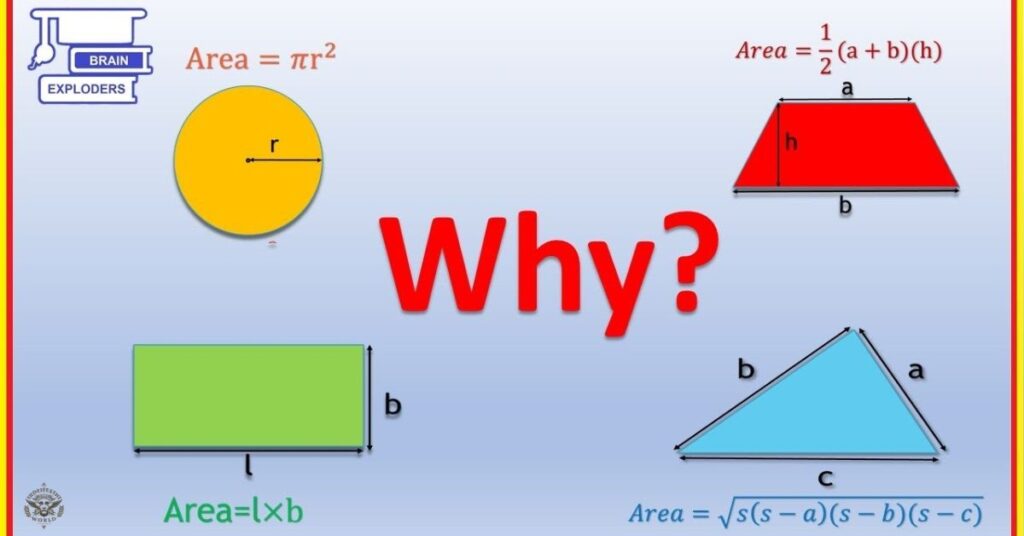
Area is one of the first big ideas kids meet in area math, and at its core it’s simple: it’s the space inside a flat, two-dimensional shape, measured in square units like square inches (in²) or square feet (ft²). Whether students count squares on grid paper or apply a formula like length × width, they’re working out how much surface a shape covers.
This idea shows up constantly in areas in real life, from flooring a room to fencing a garden, and it builds the number sense students need for multiplication, division, and later topics like surface area and volume. Through hands-on activities and clear area examples, students move from counting squares to calculating areas with confidence.
Understanding Area in Mathematics
Area is one of the first big measurement ideas kids run into in area math, and it’s simpler than it sounds once you see it in action. Picture a rectangle drawn on graph paper. Area tells you how many little squares fit inside that rectangle, nothing more complicated than counting. Because area measures a flat, two-dimensional shape, it’s always reported in square units: square inches (in²), square centimeters (cm²), square feet (ft²), or square meters (m²), depending on whether you’re working with a notebook page or a football field.
Before kids ever see a formula, they should get their hands on the concept. Covering a surface with tiles, shading squares on grid paper, or counting non-standard units like paperclips laid across a desk all build the same core idea: area is the space inside a shape, not the distance around it. Once that concrete understanding is solid, the formula length × width (or base × height for other shapes) stops feeling like a magic trick and starts feeling like a shortcut for something they already understand.
Read More: Fifths – Meaningful Math
Why Does Area Matter?
Area isn’t just a formula to memorize for a quiz. It’s a gateway skill that opens doors to several other areas of math.
Learning area helps students:
- Build spatial reasoning. Figuring out how a region of space fits together sharpens problem-solving and measurement sense at the same time.
- Strengthen multiplication and division. An area model gives students a picture of what multiplying and dividing actually do, instead of just steps to follow.
- Get ready for harder math later. Surface area and volume, which show up in later grades, are really just areas stretched into three dimensions.
Teaching Strategies for Area

Kids grasp area math best when they move from concrete to abstract, starting with hands-on activities like tiles and manipulatives before jumping into an area model or formula. Mixing in area examples from real life, like flooring, tiling, or a garden’s fencing, builds number sense and keeps the area in real life feeling practical rather than abstract.
Start With Hands-On Practice
Kids need to touch the area before they calculate it. A few ways to make that happen:
Cover shapes with tiles. Hand students a cutout shape and a pile of square tiles, then have them fill the shape completely and count how many tiles it took. This is area in its rawest form: literally counting square units.
Draw and shade on graph paper. Ask students to sketch a rectangle, a triangle, or an irregular polygon on grid paper, then shade and count the squares inside. Partial squares can be combined or estimated, which naturally introduces the idea of decomposing shapes into simpler pieces.
Bring in Visual Models
An area model bridges hands-on counting and abstract formulas. Draw a rectangle with a length of 4 units and a width of 3 units, split it into a grid, and let students count squares to land on 12. That’s area and multiplication meeting in the same picture, and it’s a great way to introduce the commutative property along the way (4 rows of 3 equals 3 rows of 4).
Connect Area to Real Life
Area in real life shows up constantly, and pointing that out makes the math stick.
Sort real scenarios. Give students situation cards, how much paint covers a wall, how much fencing wraps a garden, how much gas a road trip burns, and ask them to sort which ones actually involve areas and which don’t. Not every measurement question is an area question.
Plan a room. Have students measure a bedroom or classroom and calculate how much flooring, carpet, or tiling it would take to cover it. Suddenly area examples aren’t abstract anymore; they’re tied to a construction budget or a landscaping plan.
How Area Connects to Multiplication and Division
Area, multiplication, and division are tightly linked once students see the pattern. Calculating the area of a rectangle with length × width is really just counting rows and columns of unit squares, which is another name for repeated addition. A rectangle that’s 4 units by 3 units can be read as 4 rows of 3, or 3 columns of 4, either way the product is 12.
Division flips the same relationship around. If a rectangle covers 24 square units and one side measures 4 units, dividing 24 by 4 reveals the missing dimension: 6 units. That link between a known area, a known side length, and a missing factor turns area into one of the clearest ways to visualize division.
Vocabulary Tied to Area
- Square Unit: The basic unit for measuring area, a square with sides of length one.
- Dimensions: The measurements that define a shape’s size, most often length and width.
- Formula: A rule for finding area, such as length × width for a rectangle or base × height for a parallelogram.
- Perimeter: The distance around a shape’s edges, easy to confuse with area but measuring something entirely different.
Common Misconceptions About Area
The mix-up between area and perimeter is probably the most common stumbling block. Area measures the surface inside a shape; perimeter measures the boundary around it. Practicing both side by side, counting square units for area and adding edge lengths for perimeter, helps the difference click.
Miscounting on grid paper is another frequent issue. Students sometimes double-count squares along an edge or skip partial squares entirely, which throws off the total. Careful, systematic counting (row by row, rather than jumping around) fixes most of this.
A third misconception is stretching the rectangle formula onto shapes it doesn’t fit, like triangles or irregular polygons. The fix is teaching students to decompose a composite shape into rectangles or triangles they already know how to measure, then add the pieces together for the total area.
Working through these misconceptions early, alongside plenty of hands-on and visual practice, gives students a flexible, lasting grasp of area, one that carries them straight into surface area, volume, and beyond.
Areas Meaning in English
In everyday English, the word “area” stretches far beyond a math classroom. People use it to describe a neighborhood, a region of a city, or a general topic, like saying “logistics is my area of expertise.” That everyday flexibility is exactly why area math can feel confusing at first: the same word covers a general sense of space and a precise, measurable quantity, and students need to learn which meaning applies in which context.
In a measurement context, though, area always narrows down to one specific idea: the amount of surface a flat shape covers. Once students separate the casual, conversational use of the word from its mathematical meaning, area examples start making a lot more sense, and they stop mixing up a “neighborhood area” with the number of square units inside a rectangle.
Area in Physics
Physics leans on area constantly, often in ways that connect directly back to the same array-based thinking used in elementary math. Pressure, for instance, is calculated as force divided by area, which means a smaller surface concentrates the same force into a much stronger push. Flux, fluid flow, and even how much sunlight a solar panel captures all depend on surface area, not just length or volume alone.
These physics applications give older students a real reason to master area formulas early on. A student who understands area as length × width, or who can decompose an irregular surface into simpler shapes, has an easier time later calculating surface area for a cylinder or estimating airflow across a wing. Area in real life shows up in engineering, architecture, and science labs just as often as it shows up on a worksheet.
Area Meaning Maths
In math, area has one job: telling you how much space a two-dimensional shape covers, measured in square units. It’s different from perimeter, which only measures the distance around a shape’s edges, and different from volume, which measures space inside a three-dimensional object. Keeping “area vs. perimeter” straight is one of the biggest hurdles young learners face, and it’s worth practicing both side by side.
Building conceptual understanding starts with counting squares, not memorizing formulas. Covering a surface with tiles, shading squares on grid paper, or building an area model with manipulatives all reinforce the same core idea before a formula ever enters the picture. That concrete-to-abstract path is what makes area meaning stick, rather than becoming a rule students forget the moment the numbers change.
Area Formula
Every area formula is really just a shortcut for counting square units faster. For a rectangle, that shortcut is length × width; for a triangle, it’s half of base × height; for a parallelogram, it’s base × height. Each formula multiplies two dimensions together to land on a total, and multiplication here is just repeated addition in disguise, counting rows of unit squares instead of adding them one at a time.
Understanding why a formula works matters just as much as memorizing it. Seeing a rectangle as an array of unit squares makes the commutative property visible: 4 rows of 3 gives the same product as 3 rows of 4. That same logic later helps students decompose composite shapes, breaking an irregular figure into rectangles and triangles they can measure separately, then adding the results for the total area.
Example of Area
A few concrete area examples help this concept click faster than any explanation. A bedroom floor that’s 10 feet by 12 feet covers 120 square feet, useful information whether you’re buying flooring, carpet, or planning a construction project. A garden bed that’s 6 feet by 4 feet covers 24 square feet, which tells you how much soil or fencing the space actually needs.
Real-world area math doesn’t stop at homes and gardens. A painter estimating how much paint covers a wall, a landscaper working out tiling for a patio, or an architect sketching a blueprint all rely on the same length × width thinking. These areas in real life examples turn an abstract formula into a practical skill, showing students that measurement sense and estimation matter well beyond the classroom.
Area Calculator
An area calculator simply automates the same multiplication a student would do by hand: it takes side lengths or dimensions and multiplies them to output a total in square units. For a rectangle, that means entering length and width; for a triangle or parallelogram, it means entering base and height. The math underneath never changes, only the speed of getting the answer.
Even with a calculator handy, understanding the process behind it matters more than the tool itself. Estimation and benchmark quantities help students sanity-check a calculator’s output, catching errors like a misapplied formula or a mixed-up unit of measurement before they cause real problems. A calculator speeds up area math; it doesn’t replace number sense or critical thinking.
Area of Square
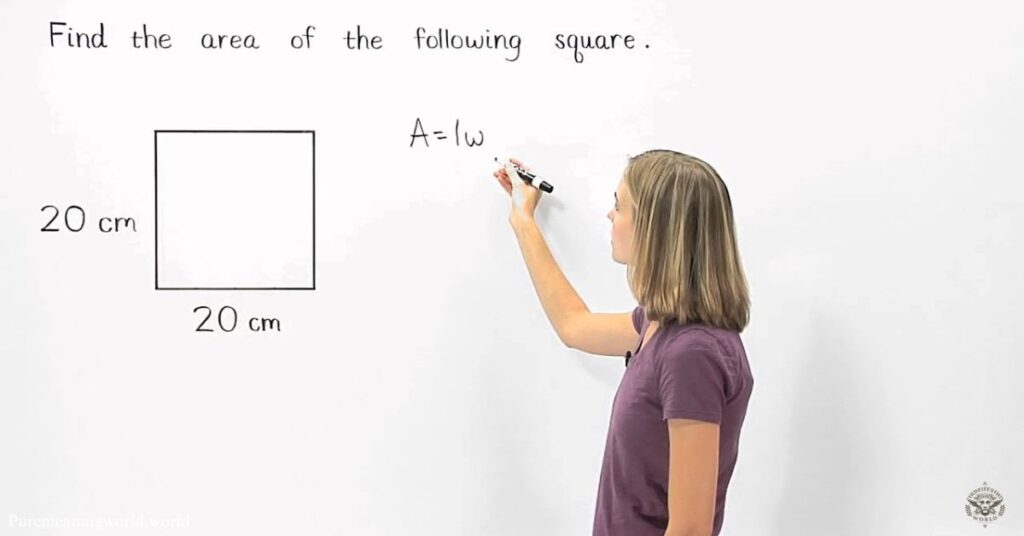
A square is one of the simplest shapes for building area, since all four sides share the same length. Because of that symmetry, the area formula simplifies to side × side, or side squared, rather than needing separate length and width measurements. Counting squares on a grid makes this obvious: a 5-unit by 5-unit square holds exactly 25 unit squares inside it.
That simplicity makes squares a great starting point for teaching decomposing shapes. A rectangle, a composite figure, or even an irregular polygon can often be broken down into a set of smaller squares, each one easy to count or calculate individually. Once students master the area for a square, extending that reasoning to rectangles and other quadrilaterals becomes a much smaller leap.
Area Formula Rectangle
The rectangle formula, length × width, is the foundation nearly every other area formula builds on. Multiply the two side lengths together, and the product gives the total square units the rectangle covers. It’s the same relationship an area model shows visually: a grid of rows and columns, where each cell represents one square unit and the total count matches the multiplication.
This formula also opens the door to division. If a rectangle’s area and one side length are known, dividing the area by that side reveals the missing dimension, turning area, multiplication, and division into three sides of the same coin. Whether it’s calculating room dimensions for flooring or working out factors in a math problem, the rectangle formula stays one of the most useful tools students carry forward.
What is a formula for area?
It depends on the shape, but the most common one is length × width for a rectangle, or base × height for a triangle and parallelogram.
What is a definition of area?
Area is the amount of space a flat, two-dimensional shape covers, measured in square units like square inches or square feet.
How do I calculate an area?
Multiply the shape’s dimensions together, usually length × width for a rectangle, then express the answer in square units.
How to write “I love you” in math?
A popular version uses the equation for a cardioid curve, x² + (y − ∛(x²))² = 1, which plots out into a heart shape when graphed.
What is a simple area?
A simple area is just the space inside a basic shape, like a square or rectangle, found by multiplying its two dimensions together.
Conclusion
Area starts as something kids can touch, tiles on a shape, squares on a grid, and grows into a tool that carries them through multiplication, division, and eventually volume and surface area. When students build that foundation through hands-on practice before jumping to a formula, area math stops feeling like a rule to memorize and starts feeling like something they actually understand.
That understanding pays off well past the classroom. Whether it’s figuring out how much flooring a room needs, how much fencing a garden requires, or how pressure changes with surface area in physics, the same core skill keeps showing up. A strong grasp of an area gives students a practical, lasting tool they’ll reach for again and again, in math class and in everyday life.

