


Lithium has become a key mineral for modern batteries. Electric vehicles, energy storage systems, phones, laptops, and many other products depend on lithium-based battery technology. As demand grows, new mining projects are moving from early exploration toward commercial production.A Lithium Mine Development Timeline can cover many years.
A project must pass geological, technical, economic, environmental, legal, and construction stages before regular production begins.Each stage can create new costs, risks, and delays.The exact Lithium Mine Development Timeline depends on the deposit, mining method, country, infrastructure, financing, permits, and processing technology. Hard-rock projects and brine projects also follow different development routes.
What Is a Lithium Mine Development Timeline?
A Lithium Mine Development Timeline shows the sequence of activities required to move a lithium project from exploration to production. Common stages include discovery, resource definition, feasibility studies, permitting, financing, construction, commissioning, and production.
A strong Lithium Mine Development Timeline also tracks decisions between major stages. A company must confirm geological potential before spending large amounts on engineering or construction. Economic conditions can also change during development.
How Long Does It Take to Develop a Lithium Mine?
A Lithium Mine Development Timeline can range from several years to more than a decade. Lithium Harvest reports roughly 10–17 years from discovery to first production for some hard-rock projects and about 13–15 years for some evaporation-pond brine projects.
A South American brine project can take at least four years to reach operation from inception, followed by another three to four years for full capacity in some cases. Project location, infrastructure, permits, technology, funding, and resource quality can change the schedule.
| Development stage | Typical purpose | Main output |
| Exploration | Find lithium-bearing material | Exploration target |
| Resource definition | Confirm size and quality | Mineral resource |
| Economic assessment | Test project economics | Initial economic model |
| Feasibility | Test technical and financial viability | Feasibility study |
| Permitting | Secure legal approvals | Permits |
| Financing | Fund development | Project capital |
| Construction | Build mine and plant | Operating facilities |
| Commissioning | Test equipment | Production readiness |
| Ramp-up | Increase output | Stable production |
The Main Stages of Lithium Mine Development
A Lithium Mine Development Timeline normally starts with exploration and ends with commercial production. The stages connect closely, but some activities can overlap.
The main sequence includes geological exploration, resource estimation, economic assessment, feasibility, environmental review, permitting, financing, engineering, construction, processing, commissioning, first production, and ramp-up. A project can stop or change direction at almost any stage.
Lithium Exploration and Project Discovery
Exploration forms the first major part of the Lithium Mine Development Timeline. Geologists search for lithium-bearing rocks, brines, clay deposits, or other suitable mineral systems.
Field mapping, geochemical sampling, geophysical surveys, drilling, and laboratory testing help identify promising areas. A discovery does not automatically mean an economic mine. More drilling and analysis are required before a company can define a resource.
Read More: Traditional Mining: Methods, History, Benefits, Environmental Impact & Future
Geological Surveys and Lithium Resource Definition
A Lithium Mine Development Timeline moves forward when exploration data support a stronger geological model. Drilling helps identify the thickness, grade, continuity, depth, and quality of lithium-bearing material.
For hard-rock projects, geologists may study spodumene-bearing pegmatites. Brine projects require data on aquifers, lithium concentration, flow, chemistry, and water balance. Geological characteristics strongly influence later mine design and processing choices.
Lithium Resource Estimation and Evaluation
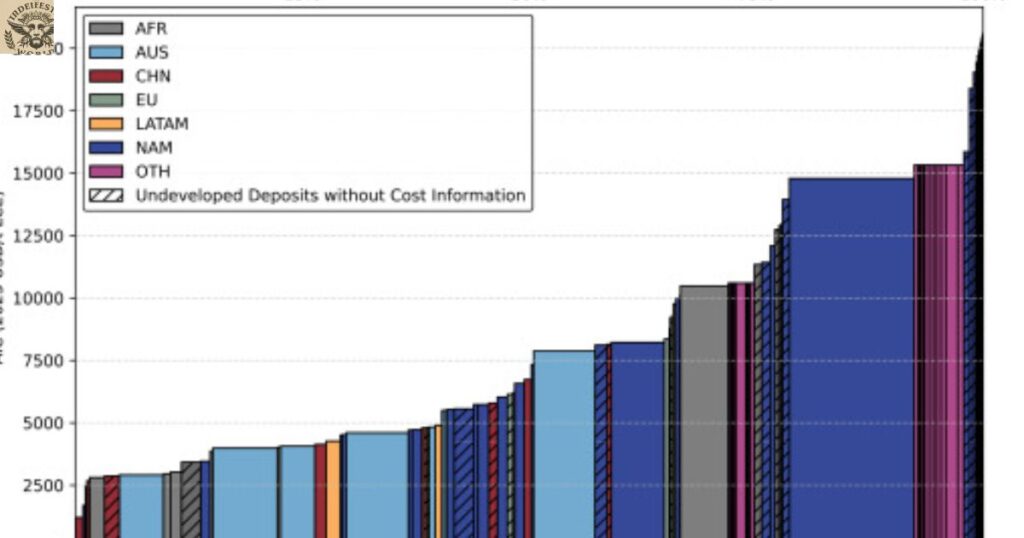
Resource estimation is another major point in the Lithium Mine Development Timeline. Specialists use drilling and laboratory data to estimate the quantity and quality of lithium-bearing material.Resource classification provides a stronger basis for economic studies. More drilling can improve geological confidence. A larger resource does not always create a profitable mine because recovery, processing costs, infrastructure, prices, and capital needs also matter.
Preliminary Economic Assessment for Lithium Projects
A preliminary economic assessment tests whether a project could have commercial potential. The study can examine mine size, production capacity, capital investment, operating costs, processing methods, project life, and possible revenue.
A Lithium Mine Development Timeline becomes more detailed after economic assessment. Companies can compare development options and identify major technical or financial risks before committing to a full feasibility study.
Lithium Mine Feasibility Studies
A feasibility study provides a deeper technical and financial review. Engineers examine mine design, processing technology, infrastructure, water, power, transport, production rates, costs, and environmental requirements.
A Lithium Mine Development Timeline can move toward construction only after sufficient confidence exists in the project plan. Financing decisions often depend on feasibility results, market conditions, permits, contracts, and expected returns.
Environmental and Social Impact Assessment
Environmental assessment plays a major role in a Lithium Mine Development Timeline. Studies can examine water use, land disturbance, biodiversity, emissions, waste, tailings, chemical use, and ecosystem impacts.
Social assessment can cover local communities, employment, land access, cultural concerns, and community benefits. A strong environmental and social plan can support permitting and long-term project relationships.
Lithium Mine Permitting and Regulatory Approvals
Permitting can become one of the longest parts of a Lithium Mine Development Timeline. A project may need mining approvals, environmental permits, water permissions, land agreements, construction approvals, and processing-related authorizations.
Regulatory requirements vary by country and project type. Brine projects can face detailed water and environmental reviews. Hard-rock projects can require approvals covering mining, waste rock, tailings, transport, and processing facilities.
Land Access and Community Consultation
Land access can affect a Lithium Mine Development Timeline before construction begins. Companies may need agreements with landowners, governments, local communities, or Indigenous groups.
Community consultation can also influence project design. Local concerns may involve water, roads, jobs, land use, noise, dust, and environmental protection. Early engagement can help identify issues before major construction commitments.
Lithium Mine Financing and Investment

Financing is a major decision point in the Lithium Mine Development Timeline. Lithium mines and processing plants can require large capital investments before revenue begins.
Funding can come from company equity, debt, strategic investors, government support, joint ventures, or long-term supply agreements. Lithium prices also influence financing decisions. USGS reported that many projects were postponed or cancelled in 2024 amid lower lithium prices.
Engineering and Mine Design
Engineering converts project studies into detailed plans. Mine engineers design pits, underground workings, roads, waste areas, water systems, power systems, and production facilities.
For a Lithium Mine Development Timeline, engineering must connect the mine with the processing plant. Equipment selection also depends on ore characteristics and the planned lithium extraction methods.
Lithium Mine Construction Timeline
Construction is often one of the most capital-intensive stages. A Lithium Mine Development Timeline can include site preparation, roads, power systems, water facilities, mining infrastructure, processing plants, storage areas, workshops, and offices.
Construction schedules depend on equipment supply, labor, weather, transport, permits, financing, and site conditions. Remote projects can face longer logistics chains and higher infrastructure costs.
Lithium Processing Plant Development
Mining does not automatically produce battery-grade lithium. Ore or brine must pass through processing and chemical conversion stages.
A Lithium Mine Development Timeline therefore includes processing plant development. Hard-rock operations may crush and concentrate spodumene ore before chemical conversion. Brine operations may use evaporation ponds or direct lithium extraction before conversion into lithium chemicals.
Lithium Extraction and Processing Methods
Lithium production can use different methods. Hard-rock mining commonly extracts lithium-bearing minerals from ore. Brine projects recover lithium from underground saline water.
Direct lithium extraction, or DLE, can use selective technologies to recover lithium from brines. Conventional evaporation can use large ponds in suitable climates. Processing selection depends on chemistry, geology, water conditions, energy needs, recovery rates, and economics.
| Project type | Main source | Common route | Major development concern |
| Hard-rock | Spodumene ore | Mining, crushing, concentration, conversion | Mining and processing costs |
| Brine | Lithium-rich brine | Pumping, evaporation or DLE, conversion | Water and chemistry |
| Clay | Lithium-bearing clay | Mining and chemical processing | Recovery and processing complexity |
| Geothermal brine | Deep geothermal fluids | Extraction and processing | Geothermal infrastructure |
Hard-Rock Lithium Mine Development Timeline
A hard-rock Lithium Mine Development Timeline usually involves exploration drilling, resource definition, open-pit or underground mine design, ore extraction, crushing, concentration, and chemical conversion.Australia remains a major hard-rock lithium producer. USGS data show Australia accounted for about 37% of lithium production excluding U.S. production in 2024.
Hard-rock projects can offer a clear mining route, but capital needs remain significant. Ore processing, concentrate quality, transport, energy supply, and chemical conversion all affect project economics.
Lithium Brine Project Development Timeline
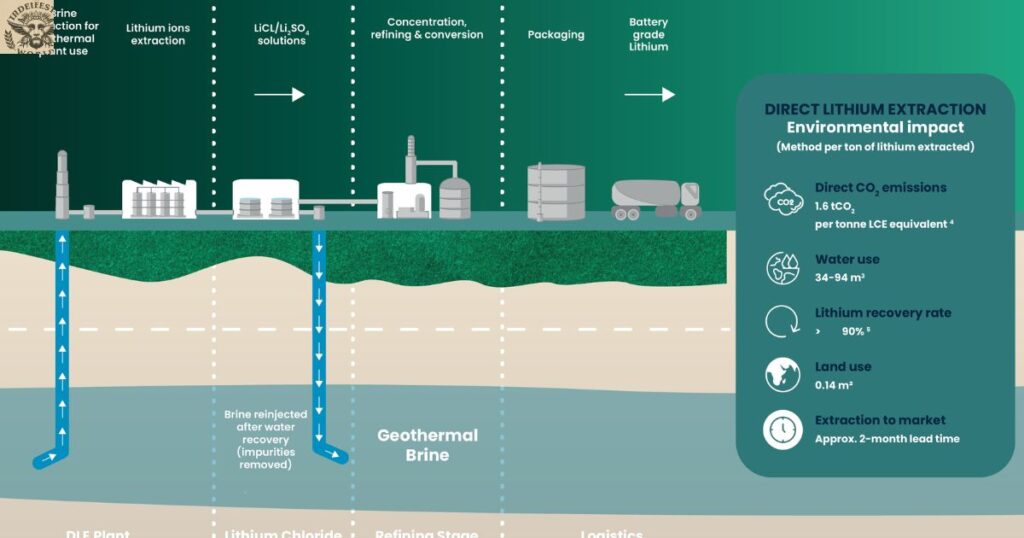
A brine Lithium Mine Development Timeline follows a different route. Developers study aquifers, brine chemistry, pumping rates, water balance, evaporation conditions, and lithium recovery.
South Americans are important sources of lithium. Chile and Argentina have major brine operations. USGS reported Argentina as the fifth-largest lithium producer in 2024, while Chile ranked second after Australia among countries excluding U.S. production.
Lithium Mine Commissioning and Testing
Commissioning comes after construction. Equipment is checked, connected, tested, and adjusted before regular production begins.
A Lithium Mine Development Timeline reaches a major milestone during commissioning. Processing circuits must operate safely and meet design targets. Problems found during testing can push back first production.
First Lithium Production and Project Ramp-Up
First production marks another major milestone. Initial output may remain below the planned production rate while operators adjust equipment and processing conditions.
During ramp-up, operators improve recovery, throughput, product quality, and reliability. A Lithium Mine Development Timeline is not complete at first production because commercial operations require stable and repeatable output.
Reaching Full-Scale Commercial Lithium Production
Full-scale production means the project approaches planned capacity and product quality. Production ramp-up can take months or several years depending on technology and project complexity.
A Lithium Mine Development Timeline reaches commercial maturity when the mine and processing system operate consistently. Contracts, customer qualification, product quality, and logistics also become important.
Factors That Can Delay Lithium Mine Development
Many factors can extend a Lithium Mine Development Timeline. Common causes include weak lithium prices, financing problems, permit delays, technical challenges, construction problems, equipment shortages, infrastructure gaps, and community concerns.
Geology can also create unexpected problems. Lower grades, complex mineralogy, poor recovery, water constraints, or difficult ground conditions can increase costs. Market conditions can change during long project cycles.
Why Lithium Mine Permitting Takes So Long
Permitting can take years because lithium projects can affect land, water, ecosystems, roads, communities, and local economies.A Lithium Mine Development Timeline must account for environmental studies, public consultation, government reviews, technical documents, and permit conditions. Different jurisdictions also apply different regulatory standards.
Infrastructure Challenges in Lithium Mine Development
Infrastructure can shape a Lithium Mine Development Timeline from an early stage. Mines require roads, power, water, communications, processing facilities, storage, and transport systems.Remote deposits can need major infrastructure investment before production begins. Port access can also matter for concentrated exports. Reliable electricity and water supply can affect both mine design and operating costs.
Technology and Innovation in Lithium Mining

Technology can change a Lithium Mine Development Timeline by improving exploration, recovery, processing, and monitoring.DLE has attracted attention in brine projects. Automated drilling, digital geological models, advanced sensors, process controls, and improved chemical conversion can also support efficiency. Technology still requires testing before large commercial deployment.
Lithium Mine Development Costs and Economics
Costs vary widely between projects. Capital expenditure can include exploration, engineering, mine construction, processing plants, roads, power, water systems, and environmental facilities.
A Lithium Mine Development Timeline also depends on operating costs and lithium prices. Lower prices can reduce project margins and delay investment decisions. USGS reported major lithium price declines and project delays linked to market oversupply during 2024.
From Lithium Discovery to Battery-Grade Lithium
The path from discovery to battery-grade lithium contains several technical steps. Exploration identifies the deposit. Resource work defines the mineral system. Feasibility studies select the development plan.
A Lithium Mine Development Timeline then moves toward mining, concentration or brine extraction, chemical conversion, refining, product testing, and customer qualification. Battery-grade lithium carbonate or lithium hydroxide requires strict quality specifications.
Lithium Mine Development Timeline by Project Type
A Lithium Mine Development Timeline differs according to the mineral source and processing route. Hard-rock mines often involve conventional mining and ore concentration. Brine projects depend heavily on hydrogeology and lithium recovery technology.
Clay and geothermal projects can require specialized processing. The development period can therefore vary even among projects located in the same country.
| Timeline factor | Hard-rock project | Brine project |
| Exploration | Geological mapping and drilling | Basin and brine studies |
| Resource work | Orebody definition | Aquifer and brine definition |
| Mining | Open-pit or underground | Brine pumping |
| Processing | Crushing and concentration | Evaporation or DLE |
| Water concern | Mine and plant water | Brine and freshwater balance |
| Main technical risk | Ore recovery and processing | Lithium recovery and chemistry |
Future Trends in Lithium Mine Development
Future projects may use more advanced exploration, automation, DLE, improved processing, recycling, and integrated supply chains.
Global lithium demand continues to grow strongly. IEA reports that lithium has experienced particularly strong demand growth and projects more than threefold lithium demand growth to 2040 under its Stated Policies Scenario.
A stronger Lithium Mine Development Timeline will increasingly include technology testing, recycling links, local processing, supply agreements, water management, and lower-impact production methods.
Lithium mine development timeline pdf
A lithium mine development timeline PDF can provide a simple reference for exploration, resource definition, feasibility, permitting, financing, construction, commissioning, and production.For project planning, a timeline PDF can also include estimated durations, milestones, responsible teams, capital requirements, and approval points. A clear visual schedule helps stakeholders understand project progression.
Lithium mining environmental impact
Lithium mining environmental impact depends on the extraction method, location, water system, energy source, waste management, and processing route.Hard-rock operations can disturb land and generate waste rock and tailings. Brine operations can affect water systems and require careful hydrogeological management. Environmental assessment remains a key part of responsible lithium mining.
Lithium mines in the world map
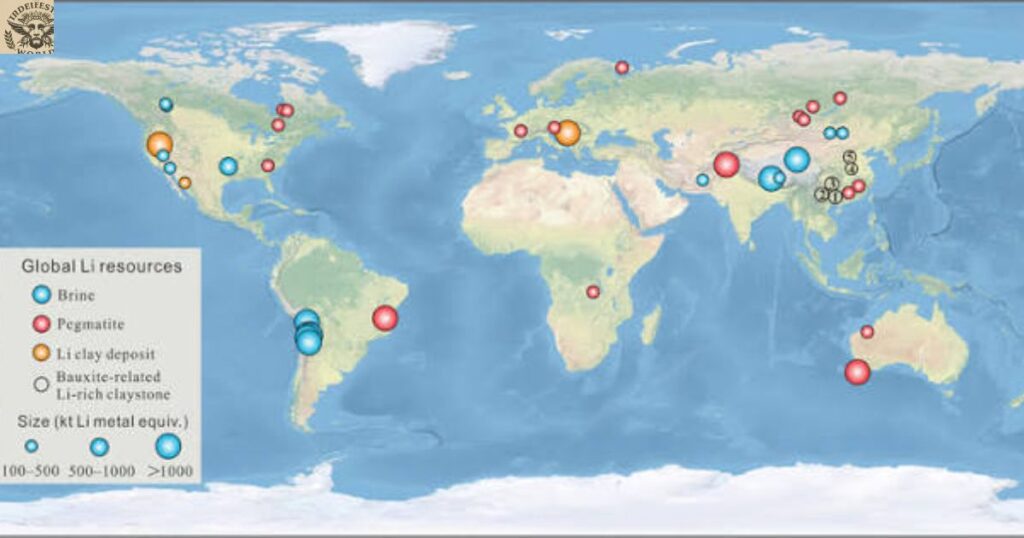
A lithium mines in the world map would show major production regions across Australia, South America, China, Africa, North America, and Europe.Australia is a major hard-rock producer, while Chile and Argentina are major brine producers. China also has significant lithium mining and refining activity. USGS data show Australia, Chile, China, Zimbabwe, and Argentina among leading lithium producers in 2024.
Lithium Supply e-bike
Lithium supply supports electric mobility, including e-bike batteries. E-bike battery demand adds another use for lithium-ion battery materials alongside electric cars and stationary energy storage.A stable lithium supply chain requires mining, processing, chemical conversion, battery manufacturing, recycling, and transportation. Supply disruptions at any stage can affect battery manufacturers.
How bad Is lithium mining
Lithium mining has environmental costs, but impacts vary by extraction method and project location. Water use, land disturbance, energy use, emissions, waste, and ecosystem effects can all require management.
A balanced assessment should compare project design, local water conditions, processing technology, environmental controls, and alternative supply routes rather than treating all lithium mining operations as identical.
Global lithium production 2024
Global lithium mine production reached about 240,000 metric tons of lithium content in 2024, according to USGS estimates. Australia, Chile, China, Zimbabwe, and Argentina were among the leading producers.
USGS also reports that global measured and indicated lithium resources totaled about 115 million metric tons, while global reserves were about 30 million metric tons in the 2025 Mineral Commodity Summaries.
Lithium demand 2025
Lithium demand remained closely linked with electric vehicles, battery storage, and wider clean-energy deployment. IEA reports global battery demand grew by more than 35% in 2025 and passed 1.5 TWh.Lithium demand increased around 25% per year on average over the previous two years, according to the IEA’s 2026 market overview.
Lithium supply 2026
Lithium supply in 2026 remains shaped by new mines, expansions, processing capacity, project delays, and market prices. USGS reported that lithium prices declined in 2025, while global supply capacity continued to expand.
The global supply picture includes hard-rock mines, brine operations, emerging clay projects, refining facilities, and recycling. New supply can take years to develop because a Lithium Mine Development Timeline involves multiple technical and regulatory stages.
Frequently Asked Questions
How much water does it take to mine 1 ton of lithium?
Water use varies greatly by extraction method and site. Brine, hard-rock, and DLE projects can have very different water requirements, so no single figure applies globally.
How much is 1 ton of lithium worth?
Lithium value depends on chemical form, purity, market price, and contract terms. Lithium metal, lithium carbonate, and lithium hydroxide have different market values.
Who is the biggest producer of lithium in the world?
Australia was the largest lithium producer in 2024, excluding U.S. production, with about 37% of global output according to USGS estimates.
What country is richest in lithium?
“Richest” can mean resources or reserves. Bolivia has very large lithium resources, while countries such as Australia, Chile, Argentina, China, and the United States hold substantial reserves or resources.
What battery will replace lithium?
No single battery technology has replaced lithium-ion batteries globally. Sodium-ion, solid-state, and other chemistries are developing, but lithium-ion remains dominant across major battery applications.
Conclusion
A Lithium Mine Development Timeline starts long before commercial mining. Exploration, resource definition, economic assessment, feasibility, environmental review, permitting, financing, engineering, construction, commissioning, and ramp-up all shape the final schedule.
A Lithium Mine Development Timeline can vary widely by deposit and country. Hard-rock and brine projects have different technical routes. Market prices, infrastructure, water, regulation, financing, technology, and community factors can also change project timing. The growing need for battery materials keeps lithium development important. IEA expects lithium demand to remain one of the fastest-growing critical-mineral markets toward 2040.

