

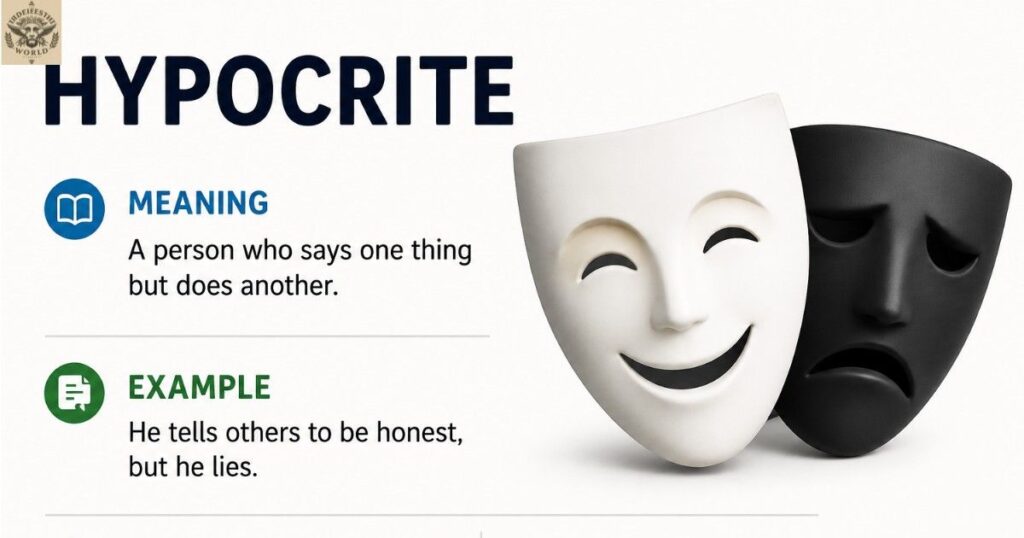
Understanding the hypocrite meaning helps explain a common type of behaviour in everyday life. A hypocrite is a person whose actions do not match their stated beliefs, values, or principles. For example, someone who tells others to be honest but regularly lies may be called a hypocrite.
The word appears in conversations about friendship,Hypocrite Meaning relationships, school, work, politics, and social media. People often use it when they notice a difference between what someone says and what that person actually does. However, making a mistake does not automatically make someone a hypocrite. The situation, intention, and repeated behaviour also matter.
In this guide, the hypocrite meaning is explained through simple English, Urdu and Hindi translations, Farsi vocabulary, synonyms, and practical examples. It also explains common expressions such as “You’re such a hypocrite and “Don’t be a hypocrite, so readers can understand when and how to use them correctly.
What Does Hypocrite Mean in English?
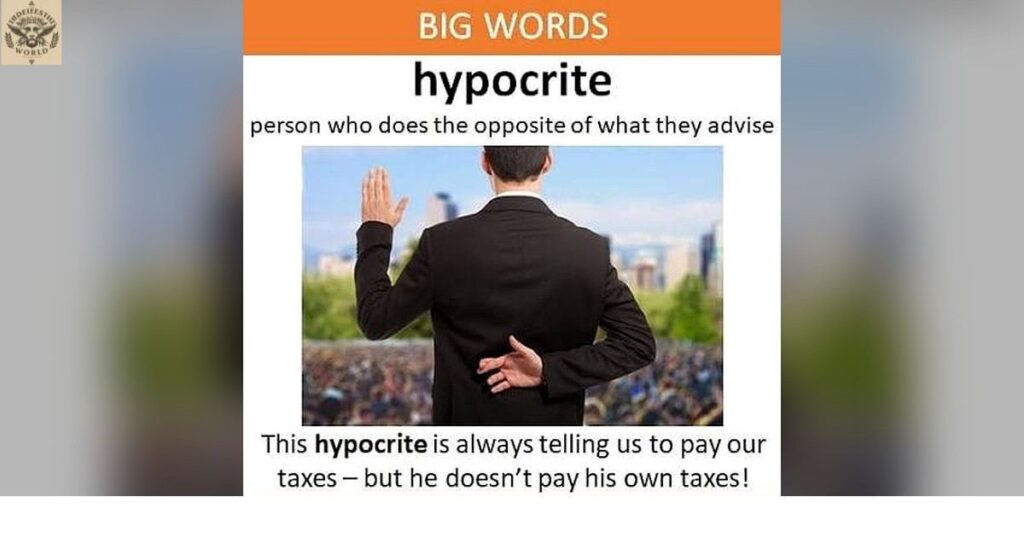
The hypocrite meaning in English is a person who claims to have particular moral beliefs or standards but behaves in a way that contradicts those beliefs. In simple words, a hypocrite says one thing but does another.
For example, imagine a student who tells classmates not to cheat during exams but secretly copies answers from another student. The student’s behaviour contradicts the advice given to others. This inconsistency is an example of hypocrisy.
The term is usually negative because it suggests dishonesty, double standards, or a lack of sincerity. However, context matters. People sometimes fail to follow their own values without deliberately pretending to be better than others.
Hypocrite Meaning in Simple Words
A hypocrite is someone who expects other people to follow rules that they do not follow themselves.Consider a person who criticises friends for spending too much money but frequently wastes money on unnecessary things. If the person repeatedly applies different standards to themselves and others, friends may describe that behaviour as hypocritical.
The easiest way to remember the hypocrite meaning is to think of a mismatch between words and actions. A person’s public statements may sound honest or moral, while their behaviour tells a different story.
Hypocrite Meaning in Urdu and Hindi
In Urdu, a common translation of hypocrite is منافق (munafiq). In Hindi, it can be translated as पाखंडी (pakhandi). Depending on the context, words related to pretending, insincerity, or double standards may also communicate the meaning.
English
Hypocrite
- A person whose actions contradict their stated beliefs or standards.
- Urdu
منافق
- Roman Urdu: Munafiq
- Hindi
पाखंडी
- Roman Hindi: Pakhandi
- Simple Urdu explanation
Aisa shakhs jo doosron ko ek baat ki naseehat kare lekin khud uske khilaf amal kare.
For example, if a person tells everyone to speak the truth but lies repeatedly, others may call that person a hypocrite. In Urdu, the behaviour can be described as doosron ko naseehat karna lekin khud us par amal na karna.
The exact translation depends on the sentence. In religious or cultural discussions, munafiq can carry a stronger meaning than the everyday English word.Hypocrite Meaning Therefore, choose a translation that matches the intended context.
Hypocrite meaning in english
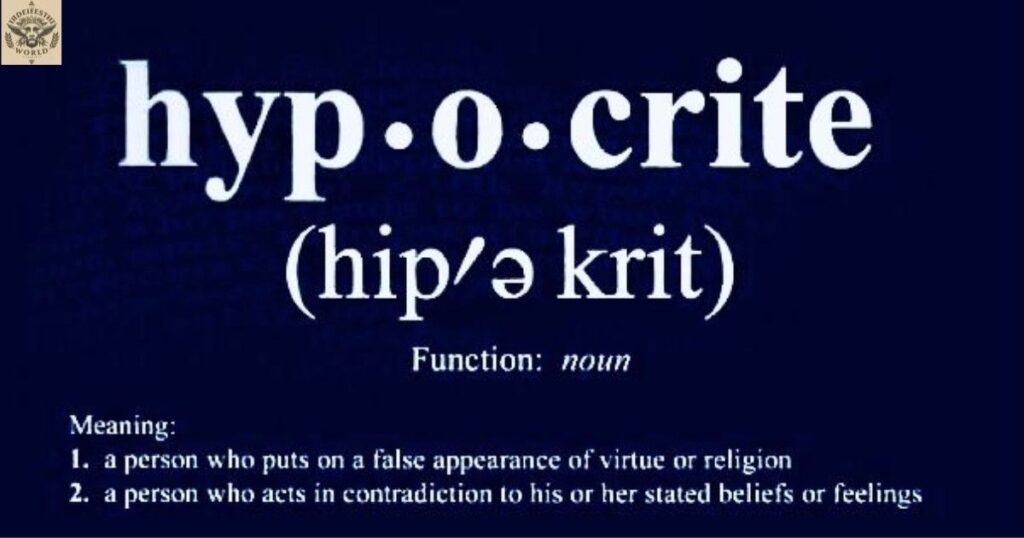
The word hypocrite is a noun. It describes a person whose behaviour does not agree with the values or standards they claim to follow. The related noun hypocrisy describes the behaviour itself, while hypocritical is an adjective used to describe an action, statement, or attitude.
These forms are useful in everyday English because they help describe different situations accurately. For example, “He is a hypocrite” describes the person, “His hypocrisy upset his friends” describes the behaviour, and “That was a hypocritical comment” describes a particular statement.
| Word | Part of speech | Example |
| Hypocrite | Noun | He is a hypocrite. |
| Hypocrisy | Noun | Everyone noticed the hypocrisy. |
| Hypocritical | Adjective | Her comment sounded hypocritical. |
| Hypocritically | Adverb | He spoke hypocritically about honesty. |
Hypocrite Meaning in English With example
Here are simple sentences that demonstrate how the word is used naturally in English.
- Example 1: He tells everyone to be honest, but he lies to his friends. He is acting like a hypocrite.
- Example 2: She criticises people for arriving late, yet she often arrives late herself.
- Example 3: The manager demands respect from employees but treats them rudely.
- Example 4: A person who promotes kindness online but repeatedly bullies others may be displaying hypocrisy.
- Example 5: My friend asked me not to gossip, but later shared someone else’s private information.
Each example shows a difference between what a person expects, says, or promotes and how that person behaves. Hypocrite Meaning Still, a single mistake does not always prove hypocrisy. Repeated double standards or deliberate paractes provide stronger reasons for using the term.
Read More: Hypothetical Meaning: Definition, Examples, Synonyms, and How to Use It
:
Hypocrite meaning synonyms
Learning synonyms makes it easier to understand the hypocrite meaning and choose the right word for a particular situation. Some related words have slightly different meanings, so they are not interchangeable in every sentence.
| Synonym | Meaning | Example |
| Pretender | Someone who presents a false image | He pretended to be generous. |
| Phony | An insincere or fake person or thing | Her apology sounded phony. |
| Deceiver | Someone who misleads others | The deceiver hid the truth. |
| Fraud | Someone who uses deception to gain an advantage | His claims were exposed as fraudulent. |
| Insincere person | Someone who does not express genuine feelings or beliefs | His praise seemed insincere. |
| Two-faced person | Someone who behaves differently around different people, often deceptively | She was friendly in public but criticised him privately. |
Antonyms of Hypocrite
Antonyms are words with opposite or contrasting meanings. Depending on the context, useful antonyms include:
- Sincere: Honest in expressing feelings or beliefs.
- Genuine: Real rather than fake or pretended.
- Honest: Truthful and straightforward.
- Authentic: True to one’s real character or values.
For example, a sincere person tries to make their actions match their stated values. A genuine apology shows real regret rather than simply trying to avoid blame.
Hypocrite meaning in farsi
In Persian (Farsi), a common translation of hypocrite is منافق, transliterated as monāfeq. Another word, ریاکار (riyākār), can describe a hypocritical or pretentious person, particularly someone who pretends to be virtuous or acts morally for appearances.
The best choice depends on the situation. Monāfeq often carries religious or moral associations, while riyākār can emphasise showing off virtue or pretending to be good in front of others.
For example, a person who publicly claims to be generous but acts selfishly may be described as riyākār in a suitable context. The general idea is the same: a difference between a person’s public claims and actual behaviour.
Hypocrite meaning in relationship
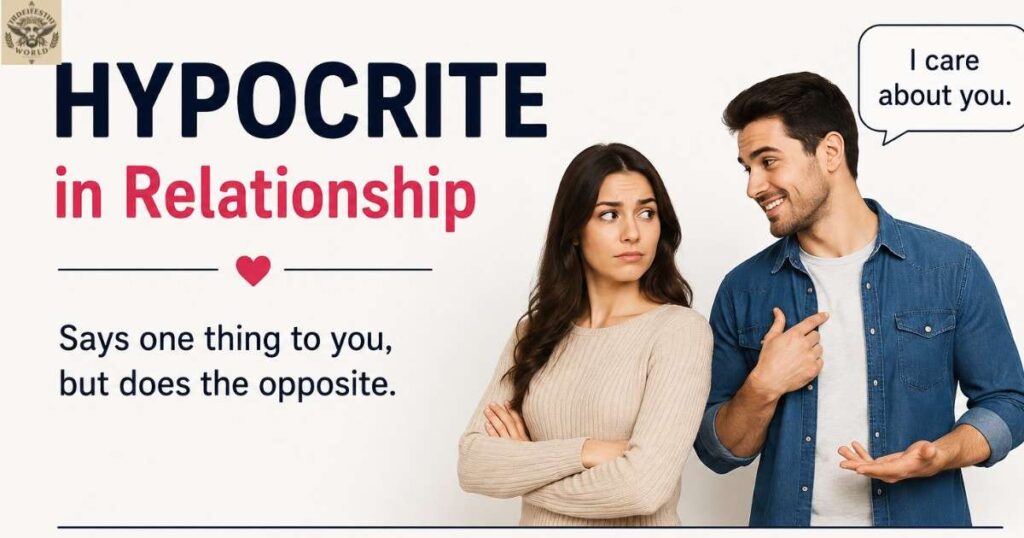
In relationships, a hypocrite is someone who expects a partner to follow certain rules but refuses to follow those same rules themselves. This can create frustration, mistrust, and arguments because both people may feel that the standards are unfair.
For example, a person might demand complete honesty from a partner but hide important information about their own actions. Another person may complain about a partner spending time with friends while regularly making the same plans themselves. These situations can involve double standards.
Common signs of hypocrisy in relationships
- Different rules: One partner expects freedoms that they deny the other.
- Unfair criticism: Someone condemns behaviour in a partner but excuses the same behaviour in themselves.
- Contradictory promises: A person promises to communicate openly but repeatedly hides important information.
- Public and private behaviour: Someone presents themselves as caring in public but regularly treats their partner disrespectfully in private.
These signs are reasons to discuss a problem, not automatic proof of someone’s character. Misunderstandings, changing circumstances,Hypocrite Meaning and occasional mistakes can also cause inconsistencies.A healthy response is to describe the specific behaviour rather than immediately labelling the person.
For example, saying, “I feel there is a double standard when you expect me to do something you won’t do yourself, can encourage a more productive conversation.
You’re such a hypocrite meaning
The expression “You’re such a hypocrite means that someone believes another person is behaving in a way that contradicts their own stated beliefs, rules, or values. It is usually a criticism and can sound angry, disappointed, or confrontational.
For example, imagine a friend who constantly tells others not to spread rumours but then starts spreading rumours about classmates. Someone might say,Hypocrite Meaning “You’re such a hypocrite! because the friend’s actions contradict the advice they give.
In Urdu, the expression can be understood as “Tum munafiq ho or, more naturally in some everyday contexts, “Tum doosron ko naseehat karte ho, lekin khud us par amal nahi karte. The tone is generally negative, so it is important to consider the situation before using it.
Don’t be a hypocrite meaning
“Don’t be a hypocrite” means that someone is being advised not to apply one standard to other people and a different standard to themselves. It can also mean that the person should act according to the values they claim to believe in.
For example, a student who tells classmates not to cheat but secretly cheats during an exam might hear, “Don’t be a hypocrite. Hypocrite MeaningThe speaker is pointing out the contradiction between the student’s advice and behaviour.
In Urdu, the phrase can be expressed as “Munafiqat mat karo or “Doosron ke liye aur apne liye alag mayaar mat . It is a direct expression, so a calmer alternative may be better during a serious conversation: “Please follow the same rules you expect others to follow.
Hypocrite meaning for Kids
For kids, the easiest way to understand a hypocrite is to think about someone who tells others to follow a rule but does not follow it themselves.
Imagine a child who tells a younger brother not to eat sweets before dinner but secretly eats sweets before dinner, too. If the child keeps enforcing a rule that they refuse to follow themselves, the behaviour may be described as hypocritical.
Here are three simple examples:
- A child says, “Don’t tell lies, but lies about finishing homework.
- A classmate says, “Be kind to everyone, but make fun of other children.
- A student tells others to keep the classroom clean but deliberately leaves rubbish on the floor.
Children also need to learn that making a mistake does not automatically make someone a hypocrite. Everyone sometimes fails to follow their own advice. The important lesson is to recognise the mistake, apologise when necessary, and try to behave more fairly.
Hypocrisy in Everyday Life
Hypocrisy can appear in many settings. Understanding these examples helps readers identify contradictory behaviour without making unfair assumptions about people.
Hypocrisy at school
A student who demands that everyone follow classroom rules but repeatedly breaks those rules may be displaying a double standard. Teachers and students can address the problem by applying rules consistently.
Hypocrisy at work
A manager who demands punctuality from employees but regularly arrives late without a valid reason may be criticised for applying different standards to different people.
Hypocrisy on social media
Someone might post messages about kindness and respect but use their account to insult people who disagree with them. The conflict between public statements and online behaviour may appear hypocritical.
Hypocrisy in public life
Public figures sometimes promote certain values while behaving in ways that contradict those values. Such contradictions can lead to public criticism, especially when the person’s decisions affect other people.
In all these examples, the key question is whether there is a meaningful and recurring contradiction between what someone claims and what they do. A fair assessment considers evidence, context, and whether the person is willing to acknowledge their behaviour.
Psychology Behind Hypocrisy
People do not always behave consistently with their beliefs. Sometimes they want others to see them as honest,Hypocrite Meaning generous, fair, or responsible, even when their own behaviour falls short of those standards.
Several factors may contribute to hypocritical behaviour:
- Self-interest: A person may want rules to benefit them without accepting the same restrictions.
- Self-image: Someone may believe they are more ethical than their actions demonstrate.
- Social pressure: A person may publicly support a value because it is expected by friends or colleagues.
- Lack of self-awareness: Someone may notice other people’s mistakes more easily than their own.
- Fear of criticism: A person may hide their own failures while judging similar behaviour in others.
These factors can help explain hypocrisy, but they do not prove that every inconsistent action is deliberate. People can have good intentions and still struggle to live up to their values.
A useful way to respond is to focus on specific actions, ask reasonable questions, and encourage consistent standards. This approach is generally more productive than attacking someone’s character without understanding the circumstances.
Hypocrite Word Origin and Pronunciation
The English word hypocrite comes through Latin and French from Greek hypokritēs, a word associated with an actor or someone who plays a role. Over time, its meaning developed to describe a person who pretends to have virtues, beliefs, or feelings that their behaviour does not support.
The modern word is commonly used in moral, social, and everyday discussions. It describes a person rather than the behaviour itself; the related word hypocrisy names that behaviour.Pronunciation: HIP-uh-krit.Breaking the pronunciation into three parts can make it easier to say: HIP + uh + krit. Listening to a reputable English dictionary can help learners practise the correct stress and vowel sounds.
Frequently Asked Questions (FAQs)
What is the simple hypocrite meaning?
A hypocrite is a person whose actions contradict the beliefs, rules, or moral standards they claim to follow. For example, someone who demands honesty but repeatedly lies may be acting hypocritically.
Is a hypocrite the same as a liar?
No. A liar is someone who tells lies, while a hypocrite behaves in ways that contradict their stated beliefs or standards. A person can be both, but the words have different meanings.
What is the meaning of hypocrite in Urdu?
A common Urdu translation is منافق (munafiq). In everyday language, it can describe someone who advises others to behave in a certain way but does not follow the same advice themselves.
What does “You’re such a hypocrite mean?
It means that the speaker believes someone is acting against their own stated beliefs or expectations. The phrase is usually critical and may express frustration or disappointment.
What is the difference between hypocrite and hypocrisy?
A hypocrite is the person, while hypocrisy is the behaviour. For example, “He is a hypocrite” describes someone, whereas “His hypocrisy disappointed his friends” describes the contradiction in his behaviour.
Conclusion
Understanding the hypocrite meaning helps people describe double standards and contradictions in everyday Behavior . A hypocrite is generally someone whose actions do not match the values or principles they claim to follow. The word is commonly used in friendships, relationships, schools, workplaces, and public discussions.
Learning its synonyms, translations, pronunciation, and common expressions can improve English vocabulary and communication. However,Hypocrite Meaning it is important to distinguish deliberate hypocrisy from ordinary human mistakes. Everyone can fail to follow their own advice occasionally.
The best approach is to judge behaviour fairly, apply consistent standards, and recognise mistakes honestly. Living according to one’s stated values is a practical way to build trust and maintain healthy relationships.

