

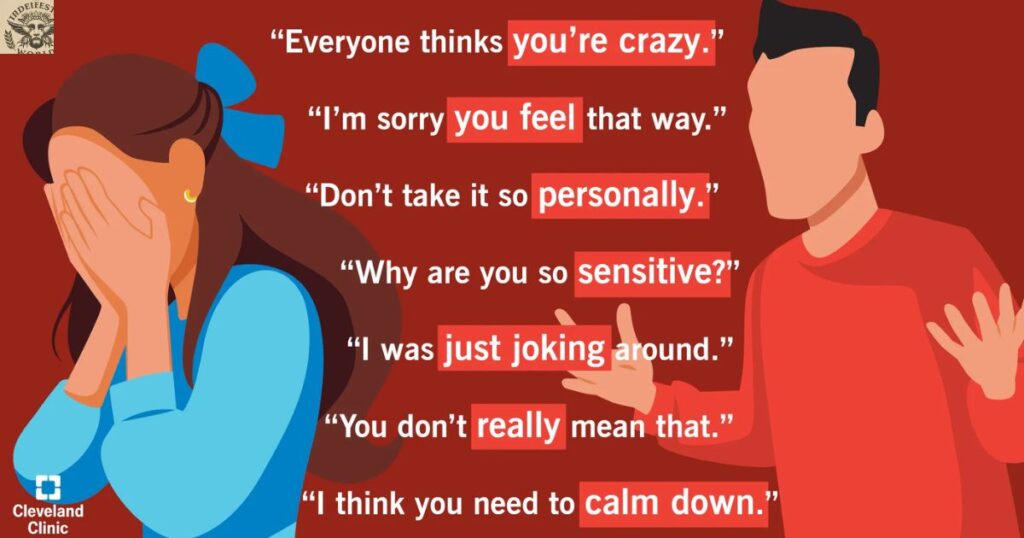
Gaslighting meaning describes a form of psychological manipulation that can make a person doubt memory, feelings, judgment, or perception. A gaslighter may deny events, change facts, shift blame, or dismiss real concerns. Such behavior can create confusion and emotional stress over time.
The term appears often in relationship discussions, mental health conversations, workplaces, families, and online chats. Gaslighting can happen during serious conflicts or through repeated small comments. Clear examples can help readers understand the difference between normal disagreement and harmful manipulation.
Learning gaslighting meaning can help identify unhealthy communication patterns. Recognition can support better boundaries and stronger personal awareness. A calm response, written records, trusted support, and professional guidance can also help during difficult situations.
What Does Gaslighting Meaning?
Gaslighting meaning refers to a pattern of behavior that causes another person to question reality, memory, feelings, or judgment. A person may deny something that happened, insist on a false version of an event, or claim that another person’s reaction is unreasonable. Repeated behavior can create self-doubt.
The phrase can describe psychological manipulation in personal and social settings. A gaslighter may use denial, blame, diversion, or emotional pressure. A single disagreement does not automatically qualify as gaslighting. The pattern, intent, repetition, and effect all matter when assessing a situation.
Gaslighting Definition Explained in Simple Words
A simple gaslighting definition is the deliberate use of misleading statements or manipulative behavior to make another person doubt personal perception. The behavior can involve memory, emotions, conversations, promises, or past events. Repeated denial can make a person lose confidence in personal judgment.
In simple terms, gaslighting can sound like, “That never happened, after a clear event occurred. Another example is, “You are imagining everything, during a genuine concern. The aim may involve control, avoidance of responsibility, protection of an image, or personal advantage.
| Gaslighting behavior | Possible effect |
| Denying an event | Creates confusion |
| Changing past facts | Weakens confidence |
| Blaming another person | Creates guilt |
| Dismissing feelings | Causes emotional doubt |
| Hiding information | Creates uncertainty |
Where Did the Term Gaslighting Come From?
The word gaslighting has a literary and cinematic origin. Patrick Hamilton wrote the 1938 stage play Gas Light. The story later inspired the 1944 film Gaslight, directed by George Cukor. The plot helped establish the modern meaning linked with psychological manipulation.
In the story, a husband manipulates his wife and attempts to make her believe that her perceptions are wrong. Changes in household gas lighting become part of the manipulation. Modern language later adopted the term for broader behavior that makes another person question reality or personal judgment.
How Does Gaslighting Work?
Gaslighting usually works through repeated communication patterns. A person may deny facts, contradict earlier statements, change the subject, or attack another person’s memory. Repetition can create uncertainty. Over time, a person may begin checking every decision with the manipulative individual.
The behavior can also use emotional pressure. A gaslighter may respond to a concern with anger, shame, guilt, or ridicule. Such reactions can shift attention away from the original issue. The conversation then becomes focused on the person’s reaction instead of the behavior under discussion.
| Tactic | Common result |
| Denial | Confusion |
| Diversion | Lost focus |
| Blame-shifting | Guilt |
| Trivializing | Emotional invalidation |
| Withholding | Uncertainty |
Why Do People Use Gaslighting?
People may use gaslighting for different reasons. Some may seek control or avoid responsibility. Others may protect an image, escape consequences, maintain power, or gain personal advantage. A person may also use manipulative habits learned from past relationships or social environments.
Gaslighting does not always come from a diagnosed mental health condition. Narcissistic behavior can overlap with gaslighting, but every gaslighter does not have narcissistic personality disorder. A careful discussion focuses on observable behavior rather than assigning a diagnosis without professional assessment.
What Are the Common Signs of Gaslighting?
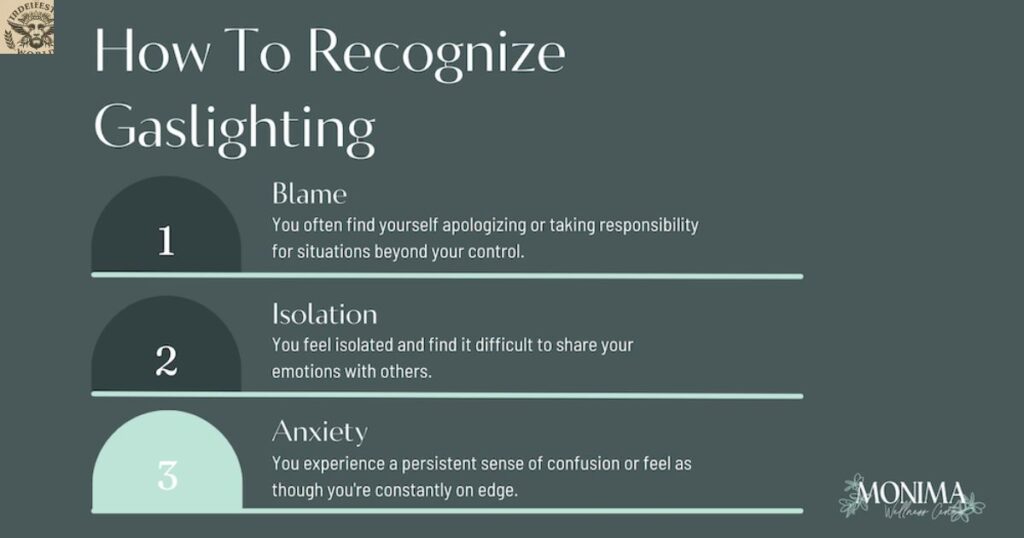
Common signs include frequent self-doubt, confusion after conversations, repeated apologies, anxiety, and difficulty trusting personal memory. A person may start asking others to confirm basic events. Confidence can decline after repeated denial or criticism.
Another sign involves changing behavior to avoid conflict. A person may become afraid of raising concerns. Social isolation can also appear when a manipulative individual discourages contact with friends or family. Gaslighting meaning becomes clearer when several patterns appear repeatedly rather than after one argument.
| Sign | What it may feel like |
| Self-doubt | “Maybe I am wrong. |
| Confusion | “I cannot follow the story. |
| Anxiety | “Another conflict may start. |
| Memory doubt | “Did that really happen? |
| Low confidence | “My judgment feels unreliable. |
How Does Gaslighting Affect Your Mind?
Repeated gaslighting can affect emotional well-being and self-trust. A person may experience anxiety, confusion, low self-esteem, emotional distress, or difficulty making decisions. Constant questioning can also consume attention and energy.
Long-term emotional manipulation may create dependence on the manipulative person. A person may stop trusting personal judgment and seek constant approval. Isolation can make the problem harder to recognize because fewer outside perspectives remain available.
| Possible effect | Common experience |
| Anxiety | Constant worry |
| Confusion | Unclear memories |
| Self-doubt | Reduced trust |
| Low confidence | Fear of decisions |
| Isolation | Less outside support |
What Are the Most Common Gaslighting Techniques?
Gaslighting techniques can appear in several forms. Denial rejects an event. Countering challenges memory. Diverting changes the subject. Trivializing reduces the importance of feelings. Withholding information creates uncertainty.
Other techniques include blame-shifting, shaming, stereotyping, lying, and rewriting history. A gaslighter may combine several tactics in one conversation. The pattern can become difficult to recognize because each individual statement may appear small.
| Technique | Simple example |
| Denial | “That never happened. |
| Countering | “Your memory is wrong. |
| Diverting | “Why discuss that old issue? |
| Trivializing | “It is not a big deal. |
| Blame-shifting | “The problem started because of you. |
Gaslighting Through Denial and Rewriting History
Denial rejects an event, statement, promise, or action. A person may insist that an event never happened despite evidence or clear memory. Rewriting history goes further by presenting a different version of the past.
Repeated rewriting can make a person question personal memory. Written messages, dates, photographs, or trusted witnesses can provide useful factual references. Records do not need to become a weapon. Their main value comes from preserving clarity during confusing situations.
Gaslighting Through Blame-Shifting
Blame-shifting moves responsibility from one person to another. A person may raise a valid concern, but the response focuses on personal mistakes instead. For example, a discussion about a broken promise may suddenly become an attack about an unrelated argument.
Blame-shifting can create guilt and distract from the original issue. A calm response can return the discussion to the specific behavior. Clear boundaries can also prevent every conversation from becoming a debate about personal character.
Gaslighting Through Trivializing and Minimizing Feelings
Trivializing means treating a concern as unimportant or excessive. Common statements may label a person as too sensitive, dramatic, emotional, or unreasonable. Such statements can invalidate genuine feelings without addressing the actual issue.
Minimizing feelings does not always mean gaslighting. People can misunderstand emotions during normal disagreements. A repeated pattern becomes more concerning when dismissal consistently prevents honest discussion and causes ongoing self-doubt.
Read More:Love Bombing Mean: What Does Love Bombing Mean in a Relationship?
Gaslighting Through Withholding and Diverting

Withholding involves refusing to communicate, share information, or engage in a reasonable discussion. A person may deliberately avoid answering direct questions. The silence can create uncertainty and increase emotional pressure.
Diverting changes the focus of a conversation. Instead of answering a concern, the person may introduce another issue. For example, a question about finances may suddenly become a criticism about household duties. Such diversion can prevent resolution.
Gaslighting Through Lying and False Information
Lying can become part of gaslighting when false information repeatedly causes another person to doubt reality. A person may deny statements, invent explanations, or provide contradictory accounts. The repeated nature of the behavior can create confusion.
Not every lie qualifies as gaslighting. Ordinary lying involves deception, while gaslighting often targets perception or confidence. The distinction depends on the broader pattern. The effect can include self-doubt, confusion, and difficulty trusting personal judgment.
Common Gaslighting Phrases and What They Mean
Gaslighting phrases often challenge memory, emotions, or perception. Statements such as “That never happened, “You are imagining things, or “You are too sensitive can appear during manipulative interactions. Context matters because people can also use similar words during ordinary conflict.
A repeated pattern carries more significance than one sentence. A person may also combine phrases with denial, blame, intimidation, or isolation. Understanding gaslighting meaning requires attention to the entire interaction rather than one isolated phrase.
| Phrase | Possible tactic |
| “That never happened. | Denial |
| “You imagined it. | Reality denial |
| “You are too sensitive. | Trivializing |
| “You always cause problems. | Blame-shifting |
| “Nobody agrees with you. | Isolation |
Gaslighting Examples in Everyday Life
A simple example can involve two friends. One friend repeatedly cancels plans but later claims that no plan existed. After several similar events, the other friend starts questioning memory and checking messages before discussing plans.
Another example can happen in a family setting. A person makes a harsh comment and later denies saying it. When confronted, the response may attack the other person’s memory instead of addressing the comment. Repetition can create emotional confusion.
Gaslighting in Romantic Relationships
Gaslighting meaning in relationships often involves repeated attempts to control a partner’s perception. A partner may deny hurtful behavior, change facts, minimize concerns, or accuse the other person of being overly emotional. Repeated patterns can damage trust.
Healthy relationships allow disagreement without forcing one person to abandon reality. Partners can remember events differently and still discuss facts calmly. Gaslighting becomes more concerning when one partner repeatedly uses denial, blame, shame, or confusion to control the relationship.
Gaslighting meaning in relationship
Gaslighting meaning in relationship settings describes manipulation that causes a partner to question memory, feelings, or judgment. Common examples include denying promises, rewriting arguments, and calling genuine concerns irrational.
A healthy disagreement allows both partners to speak and review facts. A gaslighting pattern repeatedly shifts responsibility and creates self-doubt. Clear communication and boundaries can help separate normal conflict from manipulation.
Gaslighting meaning in farsi
The closest explanation of gaslighting meaning in Farsi relates to psychological manipulation that makes a person doubt personal perception, memory, or judgment. Persian speakers may explain the idea through phrases about making someone doubt reality.
The English term itself often remains in use online. A simple Persian explanation can describe the behavior as deliberate manipulation of another person’s understanding of events or feelings.
Gaslighting meaning with example
Gaslighting meaning with example becomes easier to understand through a short situation. Suppose a person clearly promises to attend an important event, then later denies making any promise and claims the other person imagined the conversation.
A single forgotten promise may simply reflect poor memory. Repeated denial combined with attacks on memory creates a stronger gaslighting pattern. Context and repetition remain important.
Gaslighting meaning in chat
Gaslighting meaning in chat refers to manipulative communication through text messages, social media, or messaging apps. A person may deny earlier messages, change the meaning of statements, or accuse another person of inventing conversations.
Chat records can preserve useful evidence because messages often contain dates and exact wording. Screenshots or message history can help clarify facts during confusing exchanges.
Gaslighting Between Partners
Partners may experience gaslighting around money, friendships, household duties, intimacy, family issues, or past arguments. A partner may deny actions, change stories, or claim that another person remembers events incorrectly. Repeated behavior can weaken trust.
A useful response involves staying focused on specific facts. Written communication can reduce confusion around important matters. Trusted friends, family members, counselors, or support services can also provide an outside perspective.
Gaslighting in Family Relationships
Family gaslighting can occur between siblings, spouses, relatives, or extended family members. A relative may deny past behavior, dismiss emotions, or rewrite childhood events. Family history can make such patterns especially difficult because relationships often carry strong emotional bonds.
Healthy family communication allows different memories without attacking personal worth. Two people can remember an event differently. Gaslighting involves a repeated effort to make another person distrust personal perception or accept a false account.
Gaslighting Between Parents and Children

Parent-child gaslighting can involve repeated denial of a child’s feelings or experiences. A parent may dismiss concerns by calling a child dramatic, ungrateful, confused, or overly sensitive. Such communication can affect confidence and emotional security.
Children and teenagers may depend heavily on adults for guidance. Trusted relatives, teachers, counselors, or other safe adults can provide support when communication becomes harmful. A supportive adult can help separate normal discipline from repeated emotional manipulation.
Gaslighting in Friendships
Friendship gaslighting may appear through denial, exclusion, blame, or repeated rewriting of conversations. A friend may claim that a hurtful event never occurred or accuse another friend of causing every conflict. Such patterns can create uncertainty.
Healthy friendships allow honest disagreement and accountability. Friends can apologize, explain mistakes, and discuss different memories without attacking personal reality. Repeated manipulation can signal an unhealthy friendship dynamic.
Gaslighting in the Workplace
Workplace gaslighting can involve managers, employees, colleagues, or other professional relationships. Examples include denying instructions, changing deadlines, blaming another employee for documented decisions, or claiming that previous conversations never occurred.
Written communication can help maintain clarity at work. Emails, project notes, meeting records, and task updates can preserve important facts. Professional policies and human resources channels may also provide formal support when appropriate.
| Workplace behavior | Possible impact |
| Denying instructions | Confusion |
| Changing deadlines | Stress |
| Blaming employees | Fear |
| Rewriting decisions | Distrust |
| Dismissing concerns | Reduced confidence |
Medical Gaslighting: What Does It Mean?
Medical gaslighting describes situations where a patient’s symptoms or concerns receive repeated dismissal or are not properly addressed. A patient may feel ignored, misunderstood, or blamed for symptoms. Medical communication can become difficult when concerns remain unresolved.
Not every medical disagreement represents gaslighting. Diagnosis often involves uncertainty, testing, different clinical opinions, and changing information. A patient can ask questions, request explanations, seek another professional opinion, and keep records of symptoms or appointments.
Gaslighting and Narcissistic Behavior
Gaslighting and narcissistic behavior can overlap. A person who strongly protects an image or avoids responsibility may use denial, blame-shifting, or emotional manipulation. However, gaslighting does not prove narcissistic personality disorder.
Narcissistic gaslighting often appears in discussions about relationships. Still, diagnosis belongs to qualified mental health professionals. Focusing on observable behavior provides a safer approach. Repeated denial, manipulation, control, and emotional invalidation remain important regardless of any diagnosis.
Gaslighting vs Lying: What Is the Difference?
Gaslighting vs lying involves an important distinction. Lying means presenting false information intentionally. Gaslighting often includes deception but also attempts to make another person doubt memory, perception, emotions, or judgment.
A person can lie without gaslighting. For example, hiding a purchase involves deception but may not challenge another person’s reality. Repeatedly denying the purchase while claiming that another person imagined seeing it can create a gaslighting pattern.
| Lying | Gaslighting |
| Gives false information | Distorts another person’s perception |
| May involve one event | Often appears as a pattern |
| Can hide an action | Can create self-doubt |
| May avoid consequences | May seek control |
| Does not always target memory | Often targets memory or judgment |
Gaslighting vs Manipulation: How Are They Different?
Gaslighting vs manipulation requires a broad view. Manipulation includes many behaviors used to influence another person’s actions, emotions, or decisions. Gaslighting represents a more specific pattern that can involve questioning reality or personal judgment.
A manipulator may use guilt to gain a favor. A gaslighter may deny causing harm and then claim another person imagined the entire event. Both behaviors can overlap, but gaslighting has a stronger connection with reality distortion and self-doubt.
Gaslighting vs Normal Disagreement
Normal disagreement allows two people to hold different opinions or memories. One person may say, “I remember the event differently, without attacking another person’s sanity or character. Both sides can discuss evidence and accept uncertainty.
Gaslighting usually involves a repeated pattern of denial, manipulation, or reality distortion. The behavior may attack confidence instead of addressing the issue. Gaslighting meaning becomes clearer when a disagreement repeatedly turns into pressure to distrust personal perception.
How to Tell If Someone Is Gaslighting You
Look for patterns rather than one uncomfortable conversation. Frequent denial, repeated blame, changing stories, dismissal of feelings, attacks on memory, and pressure to apologize can form a concerning pattern. A journal can help identify repeated events.
Outside perspectives can also help. A trusted friend, relative, counselor, or therapist may provide useful feedback. Written records can clarify dates, statements, and decisions. Strong emotions can make patterns harder to see, so calm documentation can support clearer thinking.
| Question | Helpful clue |
| Are facts repeatedly denied? | Possible denial pattern |
| Are feelings constantly dismissed? | Possible invalidation |
| Does blame always shift? | Possible manipulation |
| Are memories regularly attacked? | Possible reality distortion |
| Has confidence declined? | Possible emotional impact |
How to Respond to Gaslighting
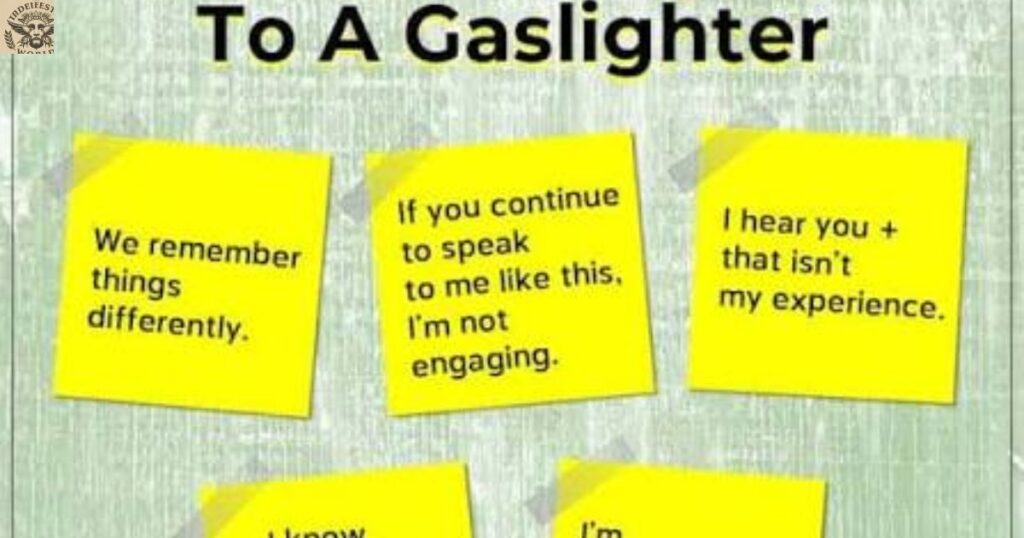
A calm and direct response can reduce unnecessary confusion. State the specific issue without entering a long argument. Written communication can help when important facts need preservation. A simple statement can also establish a boundary.
Avoid endless attempts to prove personal reality to someone committed to denying facts. Focus on safety, support, and practical decisions. A trusted person can provide an outside perspective. Professional counseling can also help with emotional recovery and boundary setting.
How to Protect Yourself From Gaslighting
Documentation can provide clarity. Keep relevant messages, dates, agreements, notes, and other factual records. Such records can help identify patterns and reduce memory confusion. Privacy and safety should remain important when keeping records.
Strong boundaries can also protect emotional well-being. Limit circular arguments when possible. Stay connected with trusted people. Professional support can help during serious emotional abuse. If a situation includes threats or physical danger, local emergency or domestic violence services can provide safety guidance.
When Should You Seek Help for Gaslighting?
Professional support may help when gaslighting creates persistent anxiety, isolation, confusion, fear, or loss of confidence. A counselor or therapist can help identify unhealthy patterns and develop practical boundaries. Support becomes especially important when another person controls finances, communication, movement, or social contact.
Immediate safety deserves priority when manipulation exists alongside threats, violence, stalking, coercive control, or serious intimidation. A trusted person or local support service can help create a safety plan. Personal safety matters more than winning an argument.
Gaslighting meaning Tagalog
Gaslighting meaning Tagalog can describe a form of manipulation that makes a person doubt memory, feelings, or perception. The English term is widely used in online discussions, while Filipino explanations can describe the same psychological pattern.
A simple explanation focuses on repeated denial and reality distortion. For example, a person may deny an event and then accuse another person of imagining it.
Gaslighting meaning arabic
Gaslighting meaning Arabic relates to psychological manipulation that causes doubt about reality, memory, emotions, or judgment. Arabic explanations may use terms related to psychological manipulation, denial, deception, and emotional control.
The English word also appears frequently in Arabic social media and educational content. Context helps explain the concept clearly without relying only on a direct word-for-word translation.
Gaslighting meaning in Chinese
Gaslighting meaning in Chinese refers to psychological manipulation that causes another person to question personal memory, feelings, perception, or understanding of reality. Chinese discussions may explain the idea through concepts involving psychological control and emotional manipulation.
A simple example involves repeated denial of a clear event. Over time, the targeted person may begin questioning personal memory instead of questioning the false claim.
Gaslighting meaning in relationships examples
Gaslighting meaning in relationships examples can involve repeated denial, blame, emotional invalidation, or rewriting of past events. A partner may deny making a promise, dismiss an emotional concern, or claim that an argument never happened.
Another example involves financial decisions. A person may make a purchase, deny making it, and then accuse a partner of inventing the conversation. Repeated behavior can create distrust and confusion. Clear records and trusted support can help preserve perspective.
| Relationship example | Gaslighting pattern |
| Denying a promise | Memory doubt |
| Rejecting a clear event | Reality doubt |
| Calling feelings irrational | Emotional invalidation |
| Changing past arguments | History rewriting |
| Blaming every conflict | Responsibility shifting |
Frequently Asked Questions
How to tell if a person is gaslighting you?
Look for repeated denial, blame-shifting, reality distortion, attacks on memory, and constant dismissal of genuine feelings.
What is another word for gaslighting?
Related terms include psychological manipulation, emotional manipulation, reality distortion, and emotional abuse, although each term has a slightly different meaning.
Why is it called gaslighting?
The term comes from the 1938 play Gas Light and the 1944 film Gaslight, where gas lighting changes form part of a manipulation plot.
What is gaslighting in simple words?
Gaslighting means repeatedly manipulating a person into doubting memory, feelings, perception, judgment, or reality.
Am I being gaslighted?
Repeated denial, blame, confusion, and attacks on personal memory can signal gaslighting, especially when the pattern causes ongoing self-doubt.
Conclusion
Gaslighting meaning describes a harmful pattern of psychological manipulation that can cause doubt about memory, feelings, judgment, or reality. Gaslighting can appear in romantic relationships, families, friendships, workplaces, medical settings, and online communication. The behavior may involve denial, lying, blame-shifting, trivializing, withholding, diverting, or rewriting history.
Understanding gaslighting can help people recognize unhealthy patterns earlier. A single disagreement does not automatically qualify as gaslighting. Repetition, manipulation, control, and emotional impact provide more useful clues. Documentation, boundaries, trusted support, counseling, and safety planning can offer practical help during difficult situations.

