

The use of clout in different contexts leads to slight variations in meaning. In current English, the use of clout usually refers to power,Clout Meaning influence, status, or the ability to touch people or to touch things. It is usually found in discussions concerning politics, business, showbiz, sports, and social media.
For instance, a famous personality in social media may have enough clout to begin a trend and a major business may have financial clout in the industry.Clout also has a more conventional and literal interpretation. In informal British English, it may mean a hard hit, for example, a punch. To clout may also mean to hit (someone). In sport, it may also mean to hit the ball forcefully.
In recent times, clout is overwhelmingly online. In Internet-based activities (Tiktok, Youtube, Instagram, X, etc.), Clout Meaningclout means online popularity and influence. People who chase clout are known as clout chasers. Generally, they are people who attempt to gain online fame or attention by being associated with popular people or trends.
What Does Clout Mean?
The simplest clout meaning is power or influence.When someone has clout, that person has enough influence to affect decisions, opinions, people, or events. Clout does not always come from an official position. A politician may have political clout, a wealthy investor may have financial clout, and a celebrity may have cultural clout.
Oxford describes clout as power and influence and gives common combinations such as political clout and financial clout. It also shows that people can have, carry, or wield clout.
Simple definition of clout
Clout means the power, influence, or social importance that gives someone the ability to affect other people or situations.
For example:
- A senior politician may have political clout.
- A successful business owner may have financial clout.
- A celebrity may have cultural clout.
- A popular YouTuber may have social-media clout.
- A respected expert may have professional clout.
The meaning is usually positive or neutral when it refers to influence. However, online slang can sometimes make the word sound more connected to popularity and attention.
Clout Meaning in Simple English
If someone asks, What does clout mean?, a simple answer is:
- Clout means influence, power, popularity, or social importance.
Imagine two people making suggestions in a large company. Both may have good ideas, but the senior manager’s opinion may carry more weight because of experience, position, or reputation. The manager therefore has more clout.
The same idea works online. Suppose a creator has five million followers. When that creator recommends a product, thousands of people may notice it. That creator has considerable online clout.So, clout is not simply fame. It is the influence that comes with recognition, authority, reputation, connections, or popularity.
Clout Meaning on Social Media
The modern online clout meaning is closely connected with influence, visibility, popularity, and social status.Social media has changed how people use the word. A person can gain clout through a large audience, viral posts, celebrity connections, strong community support, or consistent public attention.
For example:
- That creator has a lot of clout in the gaming community.
The sentence means the creator is influential and has enough popularity or authority to affect opinions within that community.
A second example is:
- The collaboration gave the brand more clout.
Here, clout means greater visibility, credibility, and influence.
Online, clout can sometimes be measured indirectly through followers, views, engagement, shares, mentions, or the ability to start conversations. However, numbers alone do not always equal genuine influence. A smaller account can have strong clout inside a particular community.
Read More:Barter System Meaning: How People Traded Before Money Existed
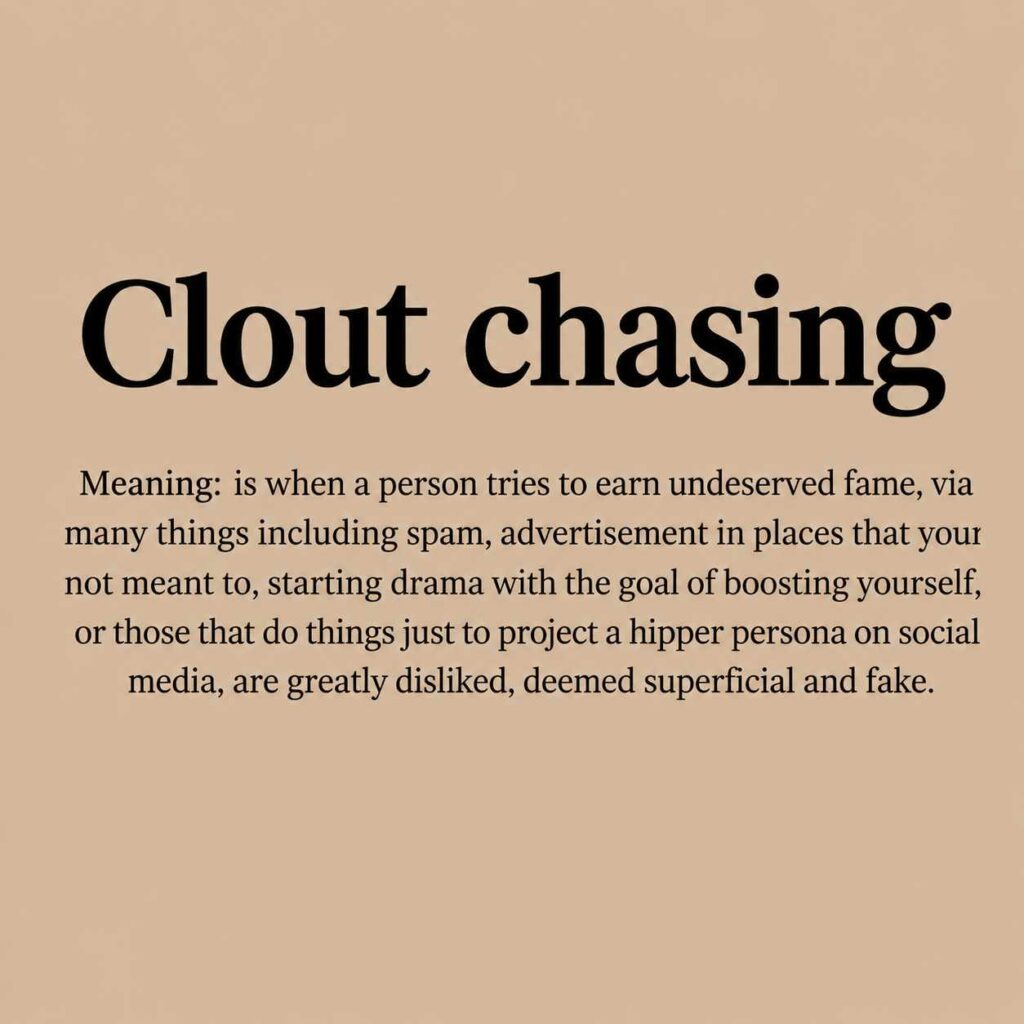
What Is a Clout Chaser?
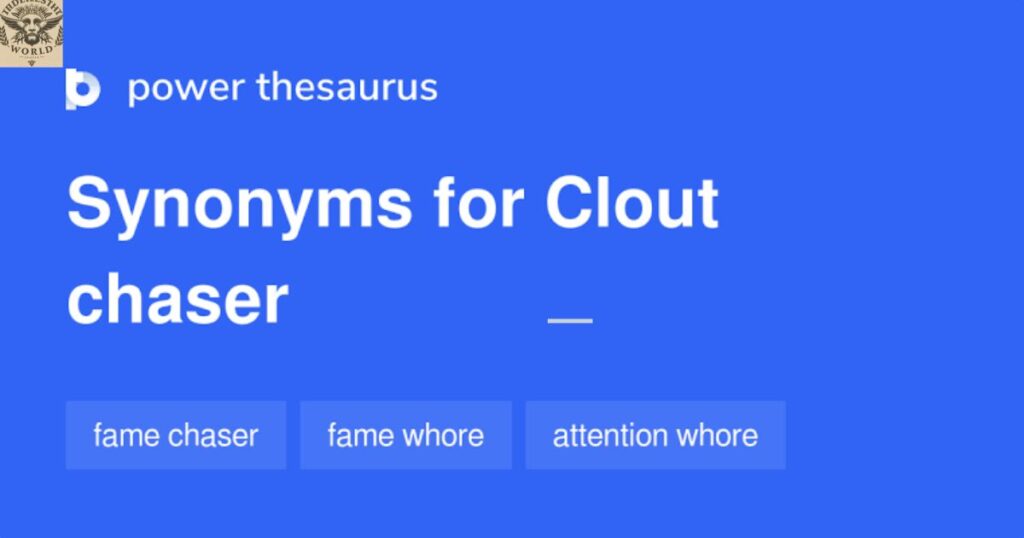
A clout chaser is a person who tries to gain attention, fame, popularity, influence, or social status, often by associating with famous people, trending subjects, or controversial situations.
The phrase is usually informal and critical. Dictionary.com describes clout chaser as a critical expression for someone attempting to gain fame, especially by using proximity to famous people or attention-grabbing behavior.
In simple English:
Clout chaser = someone who chases popularity or influence mainly to become more noticed or famous.
For example:
- He only started talking about the celebrity after the story went viral. People called him a clout chaser.
The accusation suggests that his main motivation was attention rather than genuine interest.
Clout chaser example
Imagine a small creator suddenly begins posting about a famous athlete. The creator repeatedly tags the athlete, creates dramatic videos about them, and tries to get noticed whenever the athlete trends.
If the behavior appears mainly designed to gain followers and attention, people may describe it as clout chasing.However, it is important to remember that intention can be difficult to know. Someone talking about a celebrity is not automatically a clout chaser.
What Does Clout Chasing Mean?
Clout chasing means actively trying to gain social influence, popularity, fame, or attention.The phrase is commonly associated with social media. A person may be accused of clout chasing when they use viral topics, famous people, online drama, or highly visible events to increase their own exposure.
For example:
- She keeps joining every viral controversy just for attention. People think she is clout chasing.
Another example:
- The video looked like clout chasing because it used a celebrity’s name without a clear reason.
The phrase generally carries a negative meaning because it suggests that the person’s actions are motivated by attention rather than authenticity.
Clout vs. Fame: What Is the Difference?
Clout and fame are related, but they are not exactly the same.
- Fame means being widely known.
- Clout means having influence or social power.
A person can be famous without having much influence. Another person can have significant clout within a small professional community without being famous to the general public.
For example, a respected scientist may have strong clout among researchers but may not be a household name.
Similarly, a gaming creator may have enormous clout among gamers but little recognition outside gaming.
| Term | Simple meaning | Example |
| Clout | Influence or power | The journalist has political clout. |
| Fame | Being widely known | The actor became famous worldwide. |
| Popularity | Being liked or followed by many people | The singer gained popularity online. |
| Authority | Recognized right or expertise | The professor has authority in the field. |
| Status | Social or professional position | She has high status in the industry. |
| Influence | Ability to affect opinions or actions | The creator influences buying decisions. |
Clout Meaning in Politics
Politics is one of the clearest areas where clout means influence.A politician may have clout because of experience, connections, public support, wealth, party position, or control over important decisions.
For example:
- The senator has considerable political clout.
This means the senator has enough influence to affect political decisions or persuade other people.
Oxford specifically lists political clout as a common expression. Political clout can also belong to groups and institutions. A large organization may have enough influence to affect public policy, while a major voting group may have considerable influence during an election.
Political clout example

- The organization has enough political clout to influence the proposed policy.
Here, clout means practical political influence.
Clout Meaning in Business
In business English, clout often describes the strength or influence of a company, executive, investor, or organization.
Common phrases include:
- financial clout
- commercial clout
- economic clout
- business clout
- industry clout
- corporate clout
Collins lists expressions such as commercial clout, economic clout, financial clout, and political clout.
For example:
- The company has enough financial clout to expand into international markets.
This means the company has enough financial strength and influence to make major moves.
Another example:
- The brand has considerable industry clout.
This suggests that the brand is respected and influential within its market.
Financial Clout Meaning
Financial clout means influence or power that comes from financial strength.A wealthy company, investor, bank, or institution may have financial clout because its decisions can affect markets, businesses, or other organizations.
For example:
- The investment firm has significant financial clout in the technology sector.
The sentence does not simply say the firm is rich. It suggests that its financial strength gives it influence.
Financial clout can matter in:
- investment
- banking
- international trade
- real estate
- technology
- manufacturing
- entertainment
- sports
Economic Clout Meaning
Economic clout refers to the ability to influence economic decisions or outcomes because of financial size, resources, production capacity, trade power, or market importance.Countries can also have economic clout.
For example:
- China has considerable economic clout in global trade.
The phrase means that China’s large economy and role in international trade give it significant influence.Similar discussions may apply to the United States, India, the United Kingdom, Germany, Japan, and other major economies.
Social Media Clout Meaning
Social media clout refers to online influence and recognition.
A person with social media clout may be able to:
- attract large audiences
- influence trends
- generate discussion
- promote products
- shape opinions
- attract media attention
- encourage followers to take action
For example:
- The creator has enough social media clout to make a new product trend.
The meaning is not necessarily that the creator has formal authority. Instead, the creator has an audience and enough influence to affect online behavior.
TikTok Clout Meaning
On TikTok, clout often refers to popularity, visibility, influence, or status within the platform’s culture.A creator may gain clout after a video becomes viral. Another creator may gain clout by building a strong niche community.
For example:
- That gaming creator gained a lot of clout after the tournament.
Here, clout means increased recognition and influence.The term clout chaser is also common in online conversations when someone seems to be using trends, famous personalities, or controversy mainly to increase visibility.
Instagram Clout Meaning
On Instagram, clout can refer to social influence, popularity, recognition, or status.Followers, engagement, collaborations, brand relationships, and public visibility can contribute to a person’s perceived online clout.
For example:
- Her collaboration with the fashion brand increased her clout.
This does not necessarily mean she became famous overnight. It means the collaboration increased her visibility and influence.
YouTube Clout Meaning
On YouTube, clout can develop through subscribers, views, community trust, collaborations, and long-term recognition.A creator with strong clout can often attract attention to a new video, product, idea, or campaign.
For example:
- The creator’s YouTube clout helped the new channel gain subscribers.
The word can describe influence even when the person is famous only within a particular niche.
Clout Meaning in Gaming
Gaming communities use clout in a similar way.A player, streamer, esports professional, developer, or gaming creator may have clout because of skill, achievements, audience size, reputation, or community connections.
Examples include:
- That streamer has serious clout in the gaming community.
- Winning the tournament gave him more clout.
- The developer has enough clout to influence the game’s competitive scene.
In gaming, clout may therefore mean a mixture of status, reputation, popularity, and influence.
Clout Meaning in Music and Entertainment

Music and entertainment provide another important context.
An artist may have clout because of successful songs, industry relationships, awards, audience support, or cultural impact.
For example:
- The singer has enough clout to attract major producers.
A famous actor may have cultural clout because audiences and media pay attention to their opinions.
- A producer may have industry clout because studios trust their judgment.
Collins also gives examples of clout connected with musicians, platforms, and cultural influence.
Clout Meaning in Sports
In sports, clout can refer to influence, reputation, status, or power.A famous athlete may have clout with fans, sponsors, or sports organizations.The word also has a literal sports-related meaning. Cambridge explains that to clout a ball can mean to hit it hard, including in cricket or baseball.
For example:
- The batter clouted the ball into the stands.
Here, clouted does not mean influenced. It means hit the ball hard.This is an important distinction because the same word can have different meanings depending on context.
Clout Meaning in British English
In British English, clout has several established meanings.The most common modern figurative meaning is power or influence. However, British English also uses clout informally for a hard hit or blow.Oxford marks the hard hit meaning as especially British and informal.
For example:
- He gave the ball a good clout.
Depending on context, the sentence may describe a strong hit.
Another example is:
- He got a clout around his head.
Here, clout means a blow or hit.So UK readers may encounter meanings that differ from the modern social-media meaning.
Clout Meaning in American English
In American English, clout commonly means influence, power, or pull, especially in politics, business, and public life.It can also refer to a hard hit, particularly in sports or informal speech.Collins records American uses involving influence, political power, a hard hit, and a long baseball hit.
For example:
- She has a lot of clout in Washington.
- Here, clout means political influence.
Another example:
- He hit a huge clout to deep center field.
In a baseball context, the word refers to a powerful hit.
Clout Meaning in India
English speakers in India may encounter clout in political, business, entertainment, and social-media contexts.
For example:
- The company has considerable political clout.
Or:
- The actor has a strong clout in the Indian film industry.
On social media, Indian creators may also use clout in discussions about followers, viral content, influencers, and online popularity.The basic meaning remains the same: influence, status, or social power.
Clout Meaning in China
In discussions about China, clout may describe political, economic, commercial, technological, or cultural influence.
For example:
- The company has a growing economic clout in the region.
The word can also appear when discussing Chinese technology companies, global trade, international business, or popular creators.
Online communities in China and international Chinese-language communities may use English social-media vocabulary differently depending on the platform, but the core English idea of clout remains connected to influence and status.
Clout Meaning in the UK, USA, India, and Other Countries
The word clout is widely understood in international English, especially in online communication.
| Country/region | Common context |
| UK | Politics, business, influence, informal hard hit |
| USA | Politics, business, sports, social influence |
| India | Politics, entertainment, business, social media |
| China | Economic, business, technology, global influence |
| Canada | Politics, business, culture, social media |
| Australia | Influence, politics, informal speech |
| New Zealand | Influence and informal English |
| Other English-speaking markets | Influence, popularity, business, online status |
The exact tone depends on the situation. Formal writing generally favors words such as influence, authority, or power, while clout is more conversational and informal.
Clout Synonyms
Several words can be used as synonyms for clout when it means influence.
Common synonyms
- influence
- power
- authority
- standing
- status
- prestige
- pull
- sway
- importance
- weight
- leverage
- social influence
- political influence
Collins specifically lists influence, power, standing, and authority among related meanings. However, these words are not always perfect replacements.
For example, authority can suggest an official right to make decisions, while clout can come from reputation or connections.Influence is usually the closest general synonym.
Clout Antonyms
Possible opposites depend on the context.
If clout means influence, useful antonyms include:
- powerlessness
- weakness
- insignificance
- helplessness
- lack of influence
- lack of authority
- irrelevance
For example:
- The small group had little political clout.
The opposite idea would be:
- The small group had little political influence.
Clout Collocations
Learning common collocations can make English usage more natural.
Some common expressions include:
- political clout
- financial clout
- economic clout
- commercial clout
- cultural clout
- social clout
- industry clout
- business clout
- global clout
- international clout
- considerable clout
- enormous clout
- growing clout
- have clout
- carry clout
- wield clout
Oxford specifically highlights combinations such as political clout, financial clout, carry clout, have clout, and wield clout.
Examples of clout collocations
- The organization has considerable political clout.
- The brand has a growing commercial clout.
- Her opinion carries a lot of clout.
- The company wields considerable financial clout.
These examples show how clout naturally fits into professional and public discussions.
Have Clout Meaning
The phrase have clout means to have influence or power.
Example:
- She has a lot of clout in the industry.
Meaning:
- She is influential and can affect decisions or opinions.
Another example:
- The organization has enough clout to influence policymakers.
The organization has enough influence to affect policy decisions.
Carry Clout Meaning
Carry clout means to have an opinion, reputation, position, or argument that receives significant attention or influence.
For example:
- His recommendation carries a lot of clout.
This means people respect his recommendation and take it seriously. Oxford gives carry as one of the common verbs used with clout.
Read More:Bilateral Meaning: Definition, Examples, Agreements, Relations, and How to Use It
Wield Clout Meaning
Wield clout means to actively use influence or power.
For example:
- The company wields considerable economic clout.
The company does not merely possess influence. It uses its economic position to affect situations.The phrase is common in formal and semi-formal writing.
Clout as a Verb
The clout meaning is not limited to the noun form.As a verb, to clout can mean to hit someone or something with the hand or a heavy object. Cambridge gives this informal verb meaning and also explains that a ball can be clouted when it is hit hard.
Examples:
- He clouted the ball over the boundary.
- The player clouted the ball into the stands.
- She clouted him on the shoulder.
This use is particularly important for English learners because the verb meaning is very different from the modern social-media meaning.
Clouted Meaning
Clouted is the past tense and past participle of clout when it is used as a verb.
For example:
- He clouted the ball.
Meaning:
- He hit the ball hard.
Another example:
- The player was clouded by an opponent.
Meaning:
- The player was hit.
Collins lists forms including clouts, clouting, and clouted.
Clout in Cricket and Baseball
Sports provide a special use of clout.In cricket and baseball, to clout a ball means to hit it hard. Cambridge specifically gives cricket and baseball examples.
For example:
- The batter clouted the ball into the stands.
This means the batter hit the ball with considerable force.This use can be especially useful for readers in the UK, USA, India, Australia, and other countries where cricket or baseball is popular.
Historical Meaning and Origin of Clout
The history of clout is older than its modern social-media meaning.Oxford traces the word to Old English clūt, connected with a patch or piece of material. It also notes a relationship with Dutch kluit, meaning a lump or clod. The sense connected with a heavy blow developed later, while the exact transition is uncertain.
Collins also traces the word through Middle English and Old English forms associated with cloth, patches, and related physical objects.
Over time, the word developed several meanings, including:
- A piece of cloth or patch.
- A blow or hard hit.
- Influence or power.
- A strong hit in sports.
- A target-related archery meaning.
- Various older or dialectal meanings.
Modern everyday English mostly focuses on influence and the informal hit meaning.
Why Does Clout Have So Many Meanings?
Language changes over time.Words can develop new meanings as people use them in different communities. Clout is a good example because it has moved through physical, sports, political, and modern digital contexts.
A physical hit and social influence may appear unrelated today, but historical language development explains why one word can have several senses.For English learners, context is the key.
Consider:
- She has political clout.
This means influence.
Now consider:
- He gave the ball a clout.
This means a hard hit.
Finally:
- He is chasing clout online.
This refers to attention, popularity, or influence.The surrounding words make the intended meaning clear.
Clout Meaning vs. Influence
Clout and influence are close in meaning, but clout often has a more informal tone.
Compare:
- She has considerable influence in the industry.
- She has considerable clout in the industry.
Both sentences mean that she can affect decisions or opinions.However, the second sentence sounds more conversational and emphasizes practical power or social weight.
For formal academic writing, influence may be the safer choice. In journalism, conversation, business discussion, and online communication, clout can sound natural.
Clout Meaning vs. Power
Power is broader than clout.
Power can come from:
- legal authority
- government position
- money
- physical strength
- institutional control
- social influence
Clout usually focuses more on influence, standing, reputation, or social power.
For example:
- The president has political power.
This can refer to formal authority.
- The senator has political clout.
This emphasizes influence and ability to affect decisions.The two words overlap, but their tone is different.
Clout Meaning vs. Popularity
Popularity means being liked, admired, followed, or recognized by many people.Clout goes further by suggesting influence.A person can be popular without having much ability to change decisions.
For example, a funny social-media account may have millions of followers but limited influence outside entertainment.
- Another person may have a smaller audience but strong clout inside a professional field.
Therefore:
- Popularity = how many people know or like you.
- Clout = how much influence or social power you have.
Is Clout a Positive or Negative Word?
The answer depends on context.
In business or politics, clout is often neutral or positive.
- The organization has significant political clout.
This simply describes influence.
In social media slang, clout can sometimes sound negative.
- He only did it for clout.
This suggests that the person acted mainly to gain attention or popularity.The phrase clout chaser is even more clearly critical. It usually suggests that someone is pursuing fame or influence in an opportunistic or inauthentic way.
Doing It for Clout Meaning
The phrase doing it for clout means doing something mainly to gain attention, popularity, influence, or social recognition.
For example:
- She posted the controversial video just for clout.
The speaker believes the person’s primary goal was attention rather than the stated subject of the video.
Another example:
- He joined the conversation for clout.
This suggests that he became involved mainly because the topic was popular.The phrase is informal and especially common in online conversations.
For Clout Meaning on Social Media
When someone says:
- He did it for clout.
they usually mean:
- He did it to get attention, followers, popularity, or online influence.
- The phrase can be used seriously or jokingly.
For example:
- I uploaded that photo for clout.
A person might say this jokingly about their own attempt to get more attention.
However:
- She started that argument for clout.
is usually an accusation.
Signs People May Call Someone a Clout Chaser
The phrase should not be treated as an objective diagnosis. It describes how people interpret someone’s behavior.
People may use clout chaser when someone appears to:
- repeatedly attach themselves to famous people
- use celebrity names for attention
- jump into every viral controversy
- create drama to increase visibility
- post mainly to attract engagement
- exploit a trending event
- exaggerate relationships with influential people
- seek attention through shocking behavior
Dictionary.com notes that the term is generally used critically and may involve attempts to gain fame through association with people who already have greater visibility.
Example
- He suddenly became friends with the celebrity after she went viral, so people accused him of being a clout chaser.
The important word is accused. The phrase describes an opinion about someone’s motives, not a proven fact.
Clout Chaser vs. Influencer
These terms should not be confused.An influencer is generally a person who has an audience and can affect opinions, choices, or trends.A clout chaser is a critical label for someone who appears to be aggressively pursuing attention, fame, or influence.
An influencer may build an audience through:
- education
- entertainment
- expertise
- creativity
- reviews
- lifestyle content
- professional knowledge
That does not automatically make the person a clout chaser.The difference is mainly about perceived motivation and behavior.
Clout Chaser vs. Attention Seeker
An attention seeker wants people to notice them.A clout chaser usually wants attention because it can increase popularity, influence, social status, or fame.
There is significant overlap.
For example:
- He is an attention seeker.
This focuses on wanting attention.
- He is a clout chaser.
This adds the idea of pursuing influence or status through that attention.
Clout Chaser Examples
Here are simple examples:
Example 1:
- She keeps tagging famous creators in unrelated posts. People think she is clout chasing.
Example 2:
- He started talking about the controversy after it became viral. Some users called him a clout chaser.
Example 3:
- Posting useful content is not automatically clout chasing.
Example 4:
- The creator gained clout after collaborating with a major gaming channel.
These examples show that clout itself is not necessarily negative. The negative idea usually comes from phrases such as clout chasing or clout chaser.
How to Use Clout in a Sentence
Here are natural examples of clout meaning in everyday and professional English:
- The senator has considerable political clout.
- The company has strong financial clout.
- Her opinion carries a lot of clout.
- The brand is gaining cultural clout.
- The creator has significant online clout.
- His success gave him more industry clout.
- The organization wields considerable influence.
- The collaboration increased the artist’s clout.
- The athlete has enormous clout among young fans.
- He was accused of chasing clout.
Common Mistakes With Clout
English learners can make several mistakes with the word.
Mistake 1: Assuming clout always means fame
Clout can mean fame-related influence online, but its broader meaning is power or influence.
Correct:
- The professor has academic clout.
Mistake 2: Assuming clout is always negative
Clout itself is not necessarily negative.
Correct:
- The organization has political clout.
Negative:
- He only did it for clout.
Mistake 3: Confusing clout with cloud
Cloud and clout are different words.
- Cloud = a mass of water vapor in the sky, or a digital computing system.
- Clout = influence, power, or a hard hit depending on context.
Mistake 4: Calling every influencer a clout chaser
Being an influencer does not automatically mean someone is a clout chaser.The term clout chaser usually contains a critical judgment about someone’s motivation.
Clout Pronunciation
Clout is pronounced /klaʊt/ in both British and American English. Cambridge and Oxford list the same basic pronunciation.
It rhymes with words such as:
- out
- shout
- about
- doubt
- loud
For English learners, the pronunciation is relatively straightforward once the ou sound is understood.
Is Clout Formal or Informal?
Clout can appear in both professional and everyday communication, but it generally has an informal or conversational tone compared with words such as authority or influence.
It is common in:
- journalism
- politics
- business writing
- sports
- entertainment
- everyday conversation
- social media
For highly formal academic writing, influence or authority may sometimes be a better choice.However, political clout and financial clout are established expressions and can appear naturally in serious writing.
Clout in Modern Internet Culture
The internet has expanded the everyday use of clout.Before social media became central to communication, clout was strongly associated with political, professional, economic, or social influence.
Today, online clout can develop through:
- followers
- viral posts
- shares
- collaborations
- celebrity connections
- online communities
- content creation
- memes
- entertainment
- gaming
- digital activism
This does not mean every popular account has genuine authority. Online clout may be temporary.A viral post can create sudden visibility, while long-term influence usually requires consistent credibility and audience trust.
Can Clout Be Lost?
Yes. Clout is not permanent. A person can gain influence through success, reputation, connections, or popularity. The same person can lose clout after poor decisions, controversy, declining relevance, or loss of public trust.
For example:
- The company lost some of its industry clout after several major competitors entered the market.
In social media, clout can also rise and fall quickly because trends change rapidly.
How People Build Genuine Clout
Genuine influence usually takes time.
A person can build lasting clout by:
- developing expertise
- creating useful content
- building trust
- communicating consistently
- helping a community
- maintaining a strong reputation
- developing meaningful relationships
- producing original work
- understanding an audience
- staying credible
This is different from simply chasing attention.A person may gain temporary visibility through controversy, but sustainable clout usually depends on something more valuable: trust and influence.
Clout in Marketing
Marketers often care about clout because influential people and brands can shape consumer behavior.
For example, a respected technology creator may influence purchasing decisions among followers.
- A fashion creator may have clout with a particular audience.
- A sports personality may influence fans.
- However, marketers should distinguish between audience size and genuine influence.
A creator with 100,000 engaged followers in a highly relevant niche may have more useful clout for a campaign than a celebrity with millions of followers who rarely engage with the product category.
Clout and Brand Partnerships
Brands may seek creators with strong clout because their recommendations can increase awareness and credibility.
For example:
The partnership helped the startup gain clout among younger consumers.
Here, clout means stronger recognition and influence within a target market.
Successful partnerships usually depend on:
- audience relevance
- trust
- engagement
- credibility
- content quality
- brand fit
Follower count is only one part of the picture.
Clout in Workplace English
Clout can also appear in workplace conversations.
For example:
- She has a lot of clout with senior management.
This means her opinion carries significant influence with senior managers.
Another example:
- The new department head has enough clout to change the process.
The person may have influence because of experience, relationships, position, or organizational trust.This is a natural use of clout outside social media.
Clout in Education
In education, clout may describe the influence of a professor, university, academic, researcher, or institution.
For example:
- The university has considerable academic clout.
This means the institution is highly respected and influential in its field.A researcher may also have professional clout because of publications, discoveries, expertise, or recognition.
Clout in International Relations
The word can describe the influence of countries and international institutions.
For example:
- Economic strength can increase a country’s global clout.
Global clout can come from:
- economic power
- military strength
- diplomatic relationships
- technology
- trade
- population
- cultural influence
- international institutions
This is why the word appears naturally in discussions about the United States, China, India, the UK, Japan, Germany, and other influential countries.
Why Clout Is Popular Online
One reason for the popularity of the word is that modern social media has created new forms of influence.A person no longer needs to hold political office or lead a large corporation to have an audience.
A teenager with a successful TikTok account, a gaming streamer, a YouTube educator, or a niche Instagram creator can develop influence within a community.That makes clout a useful informal word for describing modern social power.
Search Intent: What Does Clout Mean in Text?
When someone searches for clout meaning in text, they are usually looking for the slang or social-media sense.
In text conversations, clout commonly means:
attention, popularity, influence, fame, or social status.
Example:
- He only posted that for clout.
Meaning:
- He posted it mainly to get attention or become more popular.
Search Intent: What Does Clout Mean on TikTok?
On TikTok, clout usually means online influence, popularity, visibility, or status.
Example:
- She gained clout after her video went viral.
This means she became more recognized and influential on the platform.
Search Intent: What Does Clout Chaser Mean?
A clout chaser is someone who appears to pursue fame, popularity, attention, or influence, often through famous people, trends, viral events, or controversy.The expression is generally negative or critical.
Search Intent: Is Clout a Bad Word?
No. Clout is not automatically a bad word.
It can be neutral:
- The organization has political clout.
It can also be negative in slang:
- He did it for clout.
The context determines the tone.
Search Intent: What Does Chasing Clout Mean?
Chasing clout means trying to gain attention, fame, popularity, or influence, especially online.
For example:
- They accused the creator of chasing clout.
The sentence suggests that the creator’s behavior was seen as mainly motivated by attention or social status.
Quick Clout Meaning Guide
| Phrase | Meaning |
| Clout | Influence or power |
| Social clout | Social influence or status |
| Online clout | Internet influence or popularity |
| Political clout | Political influence |
| Financial clout | Influence based on financial strength |
| Cultural clout | Influence over culture or public opinion |
| Have clout | Have influence |
| Carry clout | Have influence or weight |
| Wield clout | Use influence actively |
| For clout | For attention or popularity |
| Clout chasing | Trying to gain influence or fame |
| Clout chaser | Person seeking attention or influence |
| Clouted | Hit hard, especially as a verb |
Examples of Clout in Different Contexts
| Context | Example | Meaning |
| Politics | She has political clout. | She has political influence. |
| Business | The company has financial clout. | It has strong financial influence. |
| Social media | He gained online clout. | He became more influential online. |
| Music | The artist has cultural clout. | The artist has cultural influence. |
| Gaming | The streamer has gaming clout. | The streamer is influential in gaming. |
| Sports | He clouted the ball. | He hit the ball hard. |
| Conversation | Her opinion carries clout. | People take her opinion seriously. |
| Slang | He did it for clout. | He did it for attention or popularity. |
Five Natural Sentences With Clout
- The senator has considerable political clout.
- The company has strong financial clout.
- Her opinion carries a lot of clout.
- The creator gained online clout after the video went viral.
- People accused him of chasing clout.
These sentences cover several major uses and show why context matters.
How to Remember the Clout Meaning
A simple way to remember the main meaning is:
Clout = influence that gives someone social power or weight.
Think of a person whose words can make other people listen, change their minds, buy something, support an idea, or take action.
That person has clout.
For the internet meaning:
- Clout = online influence and attention.
For the phrase:
- Clout chaser = someone trying to gain that influence or attention.
For the British informal meaning:
- Clout = a hard hit or blow.
Keeping these three ideas separate makes the word much easier to understand.
FAQs About Clout Meaning
What does clout mean in simple English?
Clout means power, influence, or social importance. In online slang, it can also mean popularity, attention, or social-media influence.
What does clout chaser mean?
A clout chaser is someone who tries to gain attention, popularity, fame, or influence, often by associating with famous people, trends, or controversial topics. The phrase is usually critical.
What does clout mean on social media?
On social media, clout usually means online influence, popularity, visibility, or status. Someone with strong clout can attract attention and influence trends or opinions.
Is clout a positive or negative word?
Clout can be neutral or positive when it means legitimate influence. In phrases such as doing it for clout or clout chaser, it often has a negative meaning because it suggests attention-seeking behavior.
What is another word for clout?
Common alternatives include influence, power, authority, standing, sway, pull, status, and leverage. The best synonym depends on the sentence and context.
Conclusion
Clout means power, social standing, and influence. It can also mean cultural and financial power and might. People might use this word to speak on someone’s importance in business or politics. Collins, Cambridge, and Oxford dictionary all listed the influence meaning as their first definition of the word. However, they also noted clout refers to a physically strong hit.
Using clout in a modern context means talking about power, social standing, and online presence. On social media, clout means popularity or influence and is usually a good thing. However, if someone calls you a clout chaser, they mean you’re a bad influence, and are trying to gain clout (online influence) by any means necessary. Reading between the lines of a clout-related post can help describe if the user means physical or online clout.

