


The word chronic is commonly used in everyday English, healthcare, and conversations about long-term problems. It describes something that continues for a long time or happens repeatedly. Understanding the chronic meaning helps readers understand medical information, news articles, and daily conversations more clearly.
For example, a person may experience chronic pain, chronic stress, or chronic sleep problems. The word can also describe situations that remain difficult to solve, such as chronic unemployment or a chronic shortage of housing. Its exact meaning depends on the context in which it appears.
In this guide, readers will learn the chronic meaning in English, its Urdu and Hindi translations, medical uses, synonyms, antonyms, pronunciation, and practical examples. The article also explains the difference between chronic and acute, helping English learners use both words correctly.
What Is the Chronic Meaning in English?
The chronic meaning in English is something that lasts for a long time, occurs repeatedly, or continues to cause difficulty. It is an adjective, which means it describes a person, condition, habit, or problem.In medical language, chronic usually refers to a disease or health condition that persists over an extended period. Outside medicine, it can describe repeated behaviour or a problem that does not go away easily.
For example, someone who regularly arrives late may be described as chronically late. Similarly, a community facing a long-term water shortage may have a chronic water problem.
The word does not always mean that a situation is permanent. It indicates duration, repetition, or persistence, but the exact meaning depends on the subject.Simple definition: Chronic means long-lasting, persistent, or repeatedly occurring.
Chronic Meaning in Urdu
The chronic meaning in Urdu can be expressed through several phrases, depending on the situation.
- دیرینہ (Dairina): Long-standing or existing for a long time.
- طویل المدت (Taweel-ul-muddat): Long-term.
- مسلسل (Musalsal): Continuous or ongoing.
- بار بار ہونے والا (Baar baar honay wala): Something that happens repeatedly.
For example, chronic pain can be translated as دیرینہ درد, meaning pain that continues over a long period.
Similarly, chronic illness can be translated as دیرینہ بیماری, referring to a health condition that lasts for an extended time.The best Urdu translation depends on the sentence. In medical contexts, دیرینہ is often suitable, while مسلسل may work better when describing a continuing problem or repeated behaviour.
Chronic Meaning in Hindi
In Hindi, the word chronic can be translated as पुराना, दीर्घकालिक, लगातार बना रहने वाला, or बार-बार होने वाला, depending on the context.
Here are some common examples:
- Chronic pain — पुराना दर्द: Pain that continues for a long time.
- Chronic illness — दीर्घकालिक बीमारी: A long-term health condition.
- Chronic problem — पुरानी समस्या: A problem that persists.
- Chronic shortage — लगातार बनी रहने वाली कमी: A shortage that continues over time.
For example, the sentence “She suffers from chronic back pain” can be translated as “वह लंबे समय से पीठ दर्द से परेशान है।”In simple terms, the chronic meaning in Hindi relates to something long-lasting, persistent, or recurring. The surrounding sentence helps determine the most natural translation.
Chronic Meaning in Medical Terms
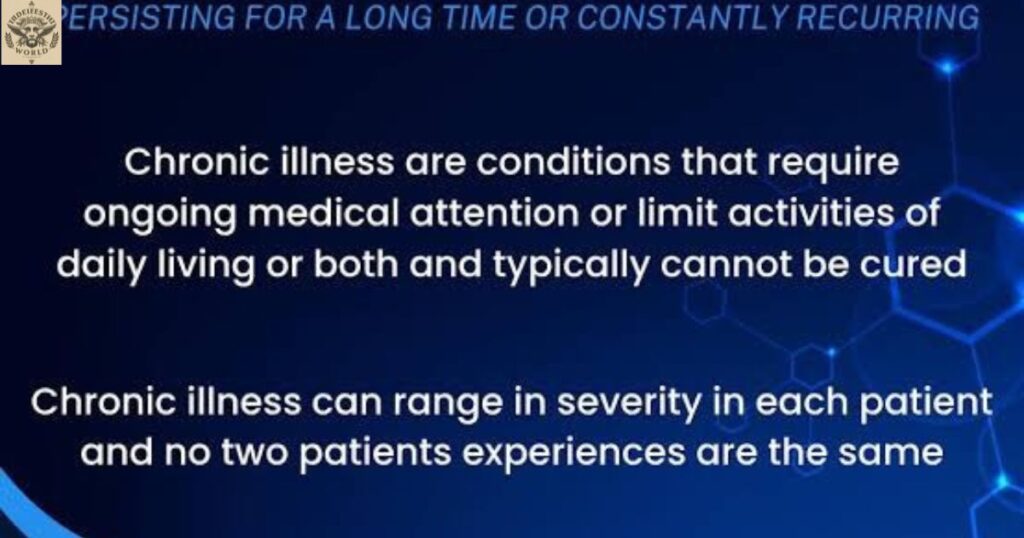
In medicine, chronic describes a health condition that lasts for a long time or continues to recur. Some chronic diseases develop gradually,Chronic Meaning while others involve symptoms that come and go.
A chronic condition may require ongoing medical care, regular monitoring, lifestyle changes, or long-term treatment. However, the word does not automatically mean that a condition is incurable, severe, or life-threatening.Doctors may use the term when discussing several health conditions.
Common examples of chronic conditions
Chronic asthma
Asthma is a long-term condition affecting the airways. Symptoms can vary and may include wheezing, coughing, and breathing difficulties.
Chronic arthritis
Some forms of arthritis cause ongoing joint inflammation, pain, stiffness, or reduced movement.
Chronic pain
Chronic pain continues or recurs over an extended period. It can affect daily activities, sleep, mood, and quality of life.
Chronic bronchitis
Chronic bronchitis involves persistent inflammation of the bronchial tubes. It is commonly associated with a long-term productive cough and is often discussed in connection with chronic obstructive pulmonary disease (COPD).
Chronic kidney disease
Chronic kidney disease involves abnormalities in kidney structure or function that persist for at least three months and have implications for health.
These examples show how the chronic meaning in medical terms focuses on duration and persistence. The diagnosis and treatment of a particular condition depend on medical assessment,Chronic Meaning not simply on how long a symptom has existed.
Chronic vs. Acute: What Is the Difference?
Chronic and acute are commonly used medical terms, but they describe different patterns of illness or health problems.
| Feature | Chronic | Acute |
| Basic meaning | Long-lasting or recurring | Often sudden in onset or short-term |
| Duration | May continue for months or years | Often develops over a short period |
| Development | May develop gradually or persist over time | May develop rapidly |
| Examples | Chronic arthritis, chronic asthma | Acute infection, acute injury |
| Treatment | May require ongoing management | Depends on the cause and severity |
An important point is that acute does not always mean mild or brief, and chronic does not always mean severe. An acute condition can be a medical emergency, while a chronic condition can sometimes be well controlled with appropriate care.
Some illnesses can also have both acute and chronic aspects. For example, a person with chronic asthma may experience an acute asthma attack. Understanding this distinction makes the chronic meaning easier to Recognize in medical reports and everyday discussions.
Read More: Humble Brag Meaning: Definition, Examples, Synonyms, and Usage
Chronic Meaning in a Sentence
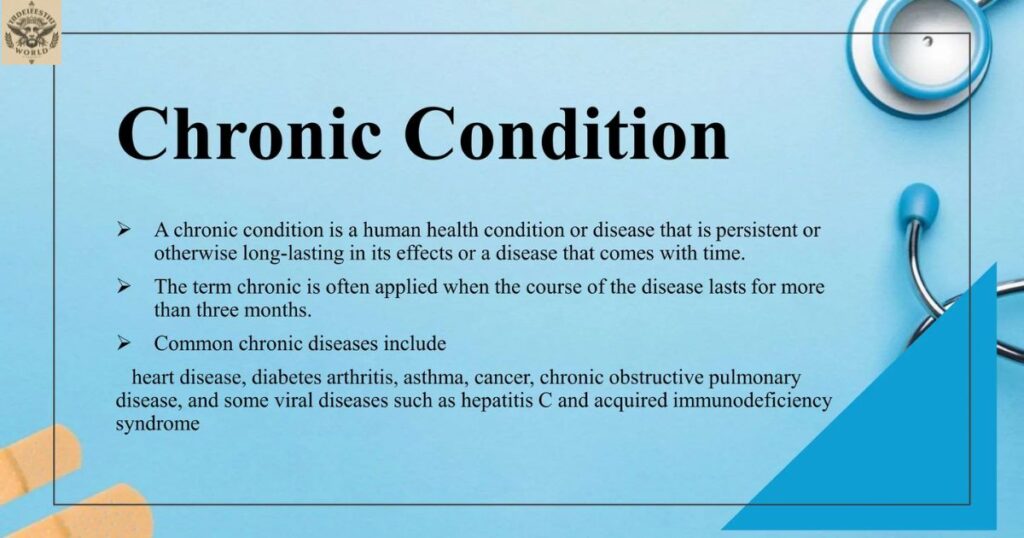
The easiest way to understand a word is to see how it works in real sentences. The following examples demonstrate different uses of chronic in medical, personal, professional, and social contexts.
She suffers from chronic back pain.
- Urdu: وہ کافی عرصے سے کمر کے درد میں مبتلا ہے۔
Meaning: Her back pain has continued for a long time.
Chronic stress can affect sleep.
- Urdu: مسلسل ذہنی دباؤ نیند کو متاثر کر سکتا ہے۔
Meaning: Stress that continues over time may interfere with sleep.
The country faces chronic unemployment.
- Urdu: ملک کو طویل عرصے سے بے روزگاری کے مسئلے کا سامنا ہے۔
Meaning: Unemployment remains a persistent problem.
He is a chronic complainer.
- Urdu: وہ مسلسل شکایتیں کرنے والا شخص ہے۔
Meaning: He complains frequently or habitually.
My grandfather has chronic arthritis.
- Urdu: میرے دادا کو دیرینہ گٹھیا ہے۔
Meaning: His arthritis is a long-term health condition.
The hospital treats patients with chronic illnesses.
- Urdu: ہسپتال دیرینہ بیماریوں میں مبتلا مریضوں کا علاج کرتا ہے۔
Meaning: The hospital provides care for long-term medical conditions.
The school has a chronic shortage of books.
- Urdu: اسکول میں کتابوں کی مسلسل کمی ہے۔
Meaning: The school has faced a shortage for an extended period.
She has struggled with chronic insomnia.
- Urdu: وہ طویل عرصے سے بے خوابی کا سامنا کر رہی ہے۔
Meaning: She has experienced persistent difficulty sleeping.
Chronic delays have affected the project.
- Urdu: مسلسل تاخیر نے منصوبے کو متاثر کیا ہے۔
Meaning: Repeated delays have caused problems for the project.
The film was described as chronic in British slang.
- Urdu: برطانوی غیر رسمی بول چال میں فلم کو انتہائی خراب کہا گیا۔
Meaning: In this informal British usage, chronic means very bad.
These examples demonstrate that the word can describe health conditions, habits, social issues, and repeated difficulties. The context determines which meaning is intended.
Chronic Meaning in British Slang
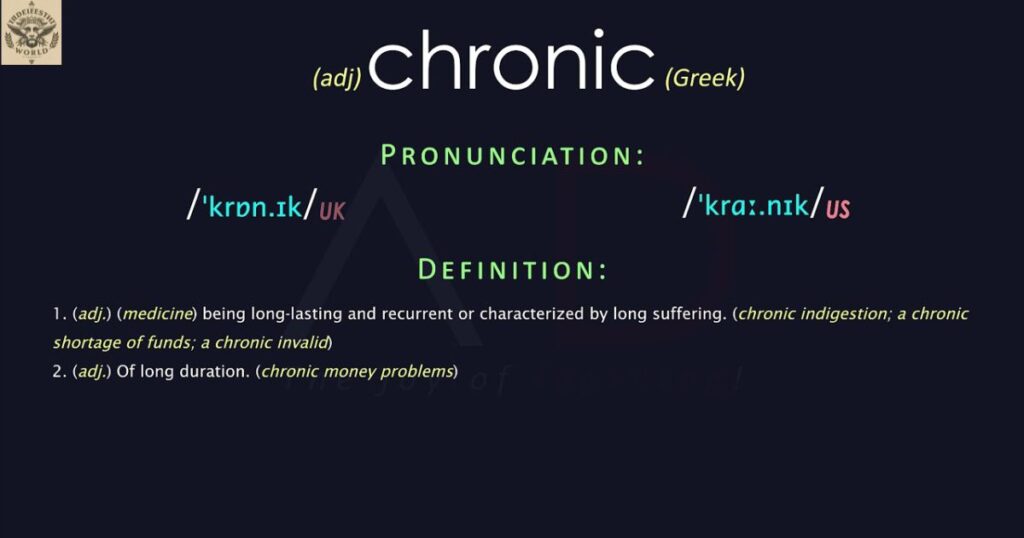
In informal British English, chronic can sometimes mean very bad. This usage differs from the more familiar meaning of something long-lasting or recurring.
For example:
- “The film was absolutely chronic.”
In this sentence, the speaker means that the film was extremely bad, rather than that it lasted a long time.
Another example is:
- “The weather has been chronic all week.”
Depending on the context, this could mean that the weather has been very unpleasant throughout the week.This informal usage is more likely to appear in casual conversation than in formal writing. English learners should recognise it but avoid using it in professional or academic writing unless the context specifically calls for informal British English.
When reading British media, the surrounding words can help readers identify whether chronic means persistent or very bad.
Chronic Pain Meaning
Chronic pain is pain that persists or repeatedly occurs over an extended period. It may be associated with an underlying medical condition, an injury, or changes in the nervous system.Unlike pain that resolves as a short-term injury heals, chronic pain may continue after the original cause has improved. It can affect movement, concentration, sleep, work, and emotional well-being.
For example, Chronic Meaning a person may experience ongoing lower back pain that interferes with daily activities. Another person may have recurring pain associated with arthritis.
Chronic pain does not have the same cause or treatment for everyone. A healthcare professional can help assess persistent pain and identify suitable management options.
Chronic Illness Meaning
A chronic illness is a long-term health condition that may require continuing care or management. Some chronic illnesses remain relatively stable, while others change over time.
Examples include diabetes, certain forms of arthritis, asthma, and chronic kidney disease. The effects vary from person to person,Chronic Meaning and many people with chronic illnesses continue to study, work, travel, and participate in everyday activities.
The phrase does not necessarily mean that a person is constantly experiencing symptoms. Some conditions have periods when symptoms improve or become less noticeable.Understanding this distinction can help people discuss chronic illness more accurately and respectfully.
Chronic Stress Meaning
Chronic stress refers to stress that continues over an extended period rather than appearing only during a brief challenge. It may be linked to ongoing work pressure, financial difficulties, family responsibilities, or other continuing sources of strain.
For example, a person who faces heavy workloads every day without enough time to recover may experience persistent stress.
Long-term stress can affect sleep, concentration, mood, and physical well-being. However, its effects differ between individuals, and not every stressful situation leads to a medical condition.Recognising ongoing stress and seeking appropriate support may help people manage its effects.
Chronic Shortage Meaning
A chronic shortage is a continuing lack of something needed or wanted. The phrase often appears in discussions about housing, water, healthcare workers, food supplies, funding, and other public resources.
For example, The region has a chronic shortage of clean water” means that the region has experienced an ongoing lack of clean water.
The shortage is not simply a temporary problem. It persists over time or repeatedly returns, often because the underlying causes have not been resolved.This example shows that the chronic meaning is not limited to medicine. It can also describe economic, social, and organisational problems.
Chronic Synonyms
Synonyms are words that have similar meanings. The most suitable synonym for chronic depends on whether the word describes a medical condition, a repeated habit, or a persistent problem.
| Synonym | Meaning | Example |
| Persistent | Continuing over time | Persistent pain |
| Long-term | Lasting for an extended period | Long-term illness |
| Prolonged | Continuing longer than expected | Prolonged stress |
| Recurring | Happening repeatedly | Recurring problems |
| Ongoing | Continuing at present | Ongoing difficulties |
| Habitual | Done regularly as a habit | Habitual lateness |
| Constant | Happening or existing continuously | Constant complaints |
| Enduring | Lasting for a long time | Enduring difficulties |
These words are related, but they are not always interchangeable. For instance, persistent and long-term often fit medical contexts, while habitual is more suitable for repeated behaviour.
Chronic Antonyms
Antonyms are words with opposite or contrasting meanings. The opposite of chronic depends on the sentence.
| Antonym or contrasting term | Meaning |
| Temporary | Lasting for a limited period |
| Short-term | Continuing for a relatively short time |
| Brief | Lasting only a short time |
| Occasional | Happening sometimes rather than regularly |
| Intermittent | Stopping and starting at intervals |
| Acute | Often referring to a condition with sudden onset or a short course |
Acute is a particularly important contrasting term in medicine. However, it is not a perfect opposite in every situation because acute and chronic describe different patterns and durations of conditions.
For example, a temporary shortage may end quickly, whereas a chronic shortage continues over time.
Chronic Pronunciation and Word Origin
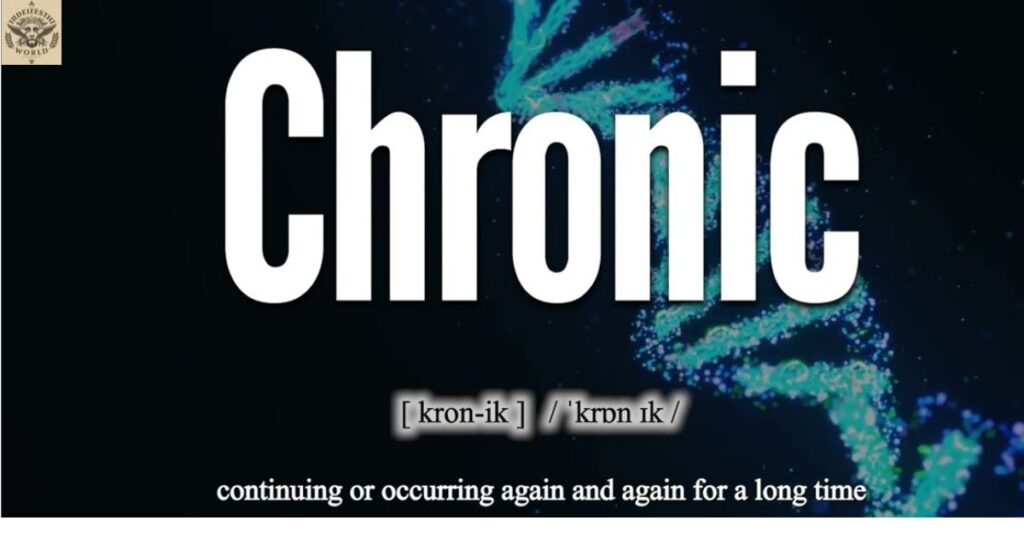
The word chronic is commonly pronounced KRON-ik in American English and KRON-ik in British English, although the vowel sound differs slightly between accents.
- Part of speech: Adjective
- American pronunciation: /ˈkrɑː.nɪk/ or /ˈkrɒn.ɪk/, depending on accent
- British pronunciation: /ˈkrɒn.ɪk/
- Related word: Chronically
The word entered English through French and Latin and ultimately comes from the Greek word chronic,meaning related to time. The Greek root chronos also means time.
This origin helps explain why chronic describes conditions or problems that continue over time. Related English words include chronology, chronicle, and chronological.
Chronic vs. Chronically
Chronic and chronically are related words, but they have different grammatical roles.
Chronic is an adjective that describes a noun.
Examples:
- Chronic pain
- Chronic illness
- Chronic unemployment
Chronically is an adverb that describes a verb, adjective, or another adverb.
Examples:
- She is chronically ill.
- He is chronically late.
- The organisation is chronically underfunded.
In “chronic illness,” chronic describes the illness. In “chronically ill,” chronically modifies the adjective ill.Using the correct form helps make English sentences clearer and grammatically accurate.
Common Mistakes When Using Chronic
English learners sometimes misunderstand chronic because the word is frequently associated with serious diseases. However, it can also describe habits, repeated behaviour, and long-term social problems.
Mistake 1: Assuming chronic always means incurable.
Correction: A chronic condition lasts for a long time or recurs, but some chronic conditions can be managed effectively.
Mistake 2: Using chronic to describe every short-term problem.
Correction: A problem that happens once and disappears quickly is not normally described as chronic.
Mistake 3: Treating chronic and acute as identical.
Correction: These terms describe different patterns of conditions, although an individual illness may have both chronic and acute aspects.
Mistake 4: Ignoring context.
Correction: Chronic pain refers to a long-term pain condition, while chronic in informal British slang may mean very bad.
Mistake 5: Using chronic as a noun in every sentence.
Correction: Chronic is primarily an adjective. Chronically is the related adverb. A noun use exists in specialised or informal contexts, but it is less common.
Frequently Asked Questions
What is the simple meaning of chronic?
Chronic means lasting for a long time, happening repeatedly, or continuing to cause a problem. It is often used for long-term illnesses, persistent pain, and ongoing difficulties.
What is the chronic meaning in Urdu?
The chronic meaning in Urdu includes دیرینہ, طویل المدت, and مسلسل, depending on context. For example, chronic pain means دیرینه درد, or pain that continues for a long time.
Does chronic mean serious or permanent?
Not necessarily. Chronic describes duration or recurrence, not automatically the severity of a condition.
What is the difference between chronic and acute?
Chronic usually describes a long-lasting or recurring condition. Acute often describes a condition that develops suddenly or has a short course.
What are the synonyms of chronic?
The best choice depends on the sentence and whether chronic describes a health condition, a habit, or an ongoing problem.
Conclusion
Understanding the chronic meaning makes it easier to read medical information, follow everyday conversations, and express long-term problems in English. The word generally describes something that persists, lasts for an extended period, or happens repeatedly.
In Urdu, it can mean دیرینہ or طویل المدت, while Hindi translations include दीर्घकालिक and लंबे समय से बना हुआ. In medical contexts, Chronic Meaning chronic often refers to a long-term health condition, but it can also describe stress, shortages, habits, and other persistent problems.
The key is to understand the context before choosing a definition or translation. Learning the difference between chronic and acute, along with practising original example sentences, can help English learners use the word more confidently.

