


Understanding the hedge fund meaning is useful for anyone interested in investing, financial markets, or wealth management. A hedge fund is an investment fund that pools money from eligible investors and uses different strategies to try to generate returns. These strategies may include buying stocks, selling borrowed securities, trading currencies, investing in bonds, or using derivatives.
Unlike many traditional investment funds, hedge funds often have greater flexibility in how they invest. Depending on their strategy and legal structure, they may use leverage, short selling, and complex financial instruments. These methods can create opportunities, but they can also increase the risk of losing money.
The hedge fund meaning can seem complicated at first, especially for beginners who are more familiar with ordinary savings accounts or mutual funds. However, the basic idea is straightforward: professional managers collect investment capital and make decisions according to a specific investment strategy. This guide explains how hedge funds work, their types, fees, benefits, and risks in simple English.
What Is the Hedge Fund Meaning in Simple English?
A hedge fund is a privately organised investment fund that pools money from investors and invests it using a particular strategy. A professional fund manager usually makes investment decisions with the aim of earning returns for the fund’s investors.
For example, imagine a fund that receives money from several eligible investors. Its manager might buy shares in companies expected to grow and take short positions in companies believed to be overvalued. If the strategy works, the fund may earn a profit. If the market moves in the opposite direction, the fund may lose money.
The hedge fund meaning does not mean that every fund protects investors from losses. The word hedge refers to reducing or offsetting certain risks, but modern hedge funds use many different approaches. Some focus on protecting capital, while others pursue aggressive growth or specialised trading opportunities.
Hedge Fund Meaning and Definition
In financial terms, a hedge fund is an investment vehicle that brings together capital from multiple investors and invests it according to an established mandate. The fund may use traditional assets, Hedge Fund Meaning alternative investments, or more complex trading techniques, depending on its objectives and restrictions.
Hedge funds are commonly associated with professional investment management, flexible strategies, performance-based fees, and limited access for ordinary retail investors. However, their structures, fees, investment restrictions, Hedge Fund Meaning and eligibility requirements vary across funds and jurisdictions.
A fund’s legal documents normally explain its investment objectives, risks, withdrawal rules, management fees, and other conditions. Investors need to understand these details before committing money.
Key Features of a Hedge Fund
- Professional management: Investment decisions are generally made by experienced fund managers and their teams.
- Pooled capital: Money from multiple investors is managed within a fund structure.
- Flexible strategies: Some funds can invest in different asset classes or take both long and short positions.
- Potential use of leverage: Borrowed money or derivatives may increase market exposure and potential losses.
- Special access requirements: Many hedge funds accept only eligible or qualified investors, depending on local laws.
- Different withdrawal rules: Some funds restrict withdrawals to specific dates or impose lock-up periods.
- Performance-related fees: Certain funds charge a fee linked to investment performance in addition to management fees.
These features help explain why hedge funds differ from many ordinary investment products. They also explain why investors should review each fund individually rather than assuming all hedge funds operate in the same way.
Read More: Hypocrite Meaning: Definition, Examples, Synonyms, and Usage
How Does a Hedge Fund Work?
A hedge fund generally follows a structured process, from collecting investor capital to making investments and calculating results. The exact process depends on the fund’s legal structure, investment strategy, and agreement with its investors.
Eligible investors commit money to the fund under its investment terms. Investors may include wealthy individuals, family offices, pension funds, and other institutions.
The manager studies financial markets and decides how to allocate capital. The plan may focus on stocks, bonds, currencies, commodities, or other assets.The fund buys and sells assets according to its strategy. Some funds also use short selling, derivatives, or borrowed money to change their market exposure.
Hedge Fund Example With Numbers
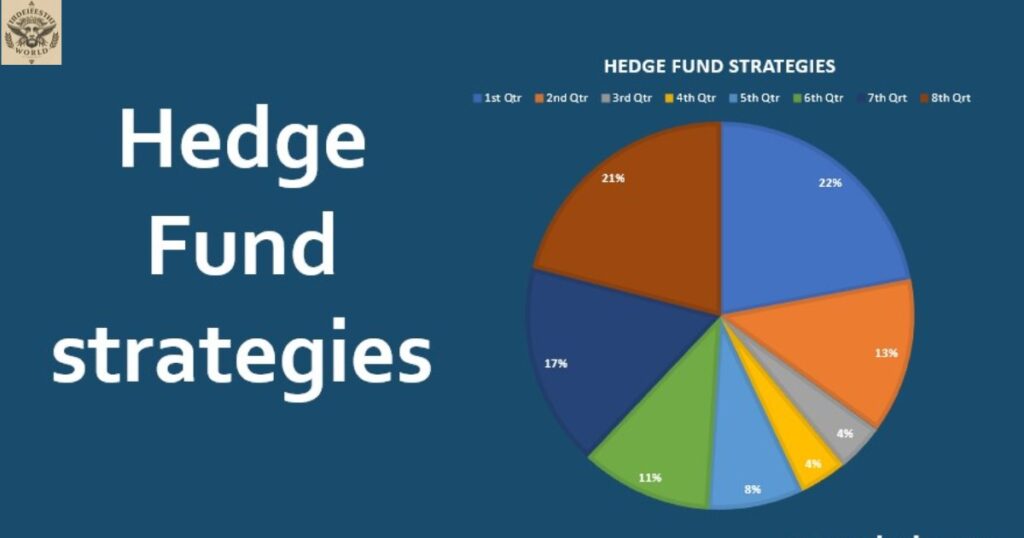
Suppose a hypothetical fund starts with $1 million in investor capital. The manager invests in several assets and earns a 10% gross return over a year.
| Item | Amount |
| Starting capital | $1,000,000 |
| Gross investment profit (10%) | $100,000 |
| Capital before fees | $1,100,000 |
The $100,000 is the profit before management fees, performance fees, trading costs, and other expenses. The actual amount remaining for investors depends on the fund’s fee agreement and expenses.
If the fund loses money instead, the value of the investment can fall below the original capital. A hedge fund does not guarantee a profit.
Common Types of Hedge Funds
Hedge funds follow different strategies based on their investment goals, market outlook, and risk limits. The following are some common categories.
1. Equity Hedge Funds
These funds invest mainly in company shares. Some buy stocks expected to rise while short-selling stocks are considered overvalued. Their results depend on stock selection, market conditions, and the strategy used.
These funds analyse interest rates, inflation, currency movements, economic growth, and government policies. They invest based on expectations about broad economic changes across countries.
3. Quantitative Hedge Funds
Quantitative funds use mathematical models, statistical analysis, and computer programs to identify potential trading opportunities. Some use algorithms to process large amounts of market data.
These funds look for opportunities connected to events such as mergers, acquisitions, restructurings, or corporate financial changes. Returns can depend on whether the expected event happens and on what terms.
These funds combine multiple approaches within one organisation or portfolio. The aim may be to spread investments across different opportunities, although combining strategies does not eliminate risk.
The hedge fund meaning becomes easier to understand when these categories are compared. Two funds can both be called hedge funds yet have very different holdings, investment periods, fee structures, and risk levels.
Hedge Fund Strategies Explained
A hedge fund’s strategy describes how it tries to generate returns. Some strategies seek to benefit from rising prices, while others try to profit from falling prices, price differences, or changes in economic conditions.
Long and Short Strategy
A long position means buying an asset with the expectation that its value will rise. A short position generally involves selling a borrowed asset in the hope of buying it back later at a lower price.
For example, a manager may buy shares in one company and short-sell shares in another. If the first performs better than the second, the relative difference may benefit the strategy. However, both positions can move against the manager, and short selling can produce substantial losses.
Market-Neutral Strategy
A market-neutral approach attempts to reduce exposure to broad market movements by balancing certain long and short positions. Its results may depend more on the relative performance of selected investments than on the overall direction of the market.
Market neutrality is an objective, not a guarantee. Unexpected price movements, financing costs, and imperfect hedges can still create losses.
Arbitrage Strategy
Arbitrage strategies seek to benefit from price differences between related assets or markets. For example, a manager may identify a temporary price difference between closely related securities.
These opportunities may be small, difficult to execute, or affected by transaction costs. Some forms of arbitrage also involve leverage, liquidity risk,Hedge Fund Meaning or the possibility that prices will not converge as expected.
Leverage and Derivatives

Leverage means using borrowed funds or financial arrangements to increase market exposure. Derivatives, such as options and futures, can also change the amount and type of risk in a portfolio.These tools can magnify profits, but they can magnify losses as well. Investors need to understand how a fund uses them before assessing its risk.
Hedge Fund vs. Mutual Fund
Hedge funds and mutual funds both pool money from investors, but they often differ in access, investment flexibility, costs, and withdrawal rules. In the United States, traditional mutual funds generally operate under stronger retail-investor protections than private hedge funds. Rules differ in other countries.
| Feature | Hedge fund | Traditional mutual fund |
| Investor access | Often restricted to eligible investors | Generally available to retail investors |
| Investment approach | May use complex or alternative strategies | Often follows a stated stock, bond, or mixed-asset strategy |
| Short selling | May be permitted by the fund’s mandate | Depends on the fund and applicable rules |
| Leverage | May use substantial leverage | Generally subject to more restrictions |
| Fees | May include management and performance fees | Usually charges operating or management expenses |
| Withdrawals | May be restricted to specific periods | Many open-end funds offer business-day redemptions |
| Risk | Can be high and strategy-dependent | Varies according to the investments held |
| Regulation | Depends on fund structure and jurisdiction | Traditional regulated mutual funds generally have specific investor protections |
A mutual fund may be more accessible for a beginner who wants a conventional investment product. A hedge fund may appeal to eligible investors seeking a specialised strategy, but access alone does not make it a better investment.
Neither type of fund guarantees profits. Investors should compare costs, holdings, risks, and investment objectives before choosing.
Hedge Fund Fees Explained
Fees are an important part of the hedge fund meaning because they affect how much of an investment’s return an investor actually keeps. Many hedge funds charge a management fee, and some also charge a performance fee based on profits. The exact arrangement depends on the fund agreement.
What Does the 2 and 20 Fee Structure Mean?
The traditional phrase “2 and 20” refers to a management fee of 2% of a specified asset base and a performance fee of 20% of eligible profits. It is a well-known example, not a universal rule. Some funds charge less, use different calculations, or include protections such as hurdle rates and high-water marks.
Consider this simplified example:
| Fee item | Calculation | Amount |
| Initial investment | — | $100,000 |
| Annual gross profit | 10% of investment | $10,000 |
| Management fee | 2% of $100,000 | $2,000 |
| Performance fee | 20% of $10,000 | $2,000 |
| Amount after these fees | Before other expenses and taxes | $106,000 |
This example assumes that the performance fee applies to the entire gross profit and that the management fee is calculated on the initial capital. Actual fund agreements may calculate fees differently. Trading costs, other expenses, and taxes can also reduce the final result.
What Is a High-Water Mark?
A high-water mark is a contractual measure used by some funds to limit when a performance fee can be charged again after losses.Hedge Fund Meaning In simple terms, the manager may need to recover previous losses and exceed the relevant high-water mark before earning another performance fee.
A hurdle rate, Hedge Fund Meaning when included, sets a minimum return that must be achieved before a performance fee becomes payable. Both terms depend on the fund’s specific agreement.
Advantages of Hedge Funds
Hedge funds can offer certain advantages to eligible investors, depending on their strategy, management quality, and costs.
- Access to specialised strategies: Some funds use approaches that are not commonly available in traditional retail funds.
- Portfolio diversification: Certain strategies may provide exposure to different assets or return sources.
- Flexible investment methods: A fund may be able to take long and short positions or trade multiple asset classes.
- Professional management: Investment decisions are handled by a dedicated team.
- Potential opportunities in different markets: Some strategies seek returns from falling prices, relative values, or economic events rather than relying only on a rising stock market.
These are potential benefits, not guaranteed outcomes. A fund can underperform traditional investments, and diversification does not remove all risk.
Risks and Disadvantages of Hedge Funds
Understanding the hedge fund meaning also requires understanding the possibility of losing money. These funds can involve risks that are difficult to assess without reviewing their investment methods and legal documents.
- Investment losses: The fund’s assets can fall in value, and investors may lose some or all of their invested capital.
- Leverage risk: Borrowing can magnify losses and may create additional financing obligations.
- Limited liquidity: Investors may not be able to withdraw their money whenever they want.
- High costs: Management and performance fees can reduce net returns.
- Complex strategies: Derivatives, short selling, and other techniques can be difficult for inexperienced investors to evaluate.
- Valuation uncertainty: Some holdings may be difficult to sell or value accurately.
- Manager risk: Results can depend heavily on the decisions, discipline, and controls of the fund manager.
The US Securities and Exchange Commission’s investor guidance advises people to examine the fund’s strategy, fees, withdrawal restrictions,Hedge Fund Meaning valuation methods, and manager background before investing.
Who Can Invest in Hedge Funds?
Hedge funds are often designed for investors who meet specific financial or professional eligibility requirements. In the United States, the relevant category may include accredited investors or qualified purchasers, depending on the fund structure and applicable securities laws. Requirements are different in other jurisdictions.
Potential investors may include:
- High-net-worth individuals who meet the applicable requirements.
- Family offices managing wealth for families.
- Pension funds and other institutional investors.
- Certain trusts, foundations, and investment organisations.
Being eligible does not automatically make an investment suitable. An investor must also consider the possibility of loss,Hedge Fund Meaning liquidity restrictions, fees, time horizon, and the role the fund would play in a wider portfolio.
Can Beginners Invest in Hedge Funds?
Beginners can learn about hedge funds, but direct investment may be unavailable to them or unsuitable for their circumstances. Eligibility rules,Hedge Fund Meaning minimum investments, and fund terms vary.
Someone new to investing can start by learning about stocks, bonds, diversified mutual funds, and exchange-traded funds.Hedge Fund Meaning Understanding basic concepts such as risk, diversification, fees, and compound growth provides a useful foundation before considering complex private funds.
Hedge Funds in the USA and UK
Hedge funds operate in major financial centres around the world, including the United States and the United Kingdom. However, each country has its own financial regulations, investor eligibility rules, and reporting requirements.
Hedge Funds in the USA
The United States has a large private-fund market. Hedge funds may be subject to federal securities laws, investment adviser requirements,Hedge Fund Meaning and other rules depending on their structure and activities. Some private offerings are limited to accredited investors or other eligible purchasers.
Investors should review the fund’s offering documents and check the manager’s regulatory background where relevant.Hedge Fund Meaning Official resources such as explain important risks and considerations.
Hedge Funds in the UK

The UK also has a hedge fund industry, with regulation shaped by the fund’s legal structure, manager, marketing activities, and investor type. The Financial Conduct Authority (FCA) is a key financial regulator.
UK investors should check the relevant rules, the status of the firm, and the fund’s legal documents before committing capital. A fund available to professional investors may not be appropriate or accessible to every retail investor.
Can Investors in Pakistan Access Hedge Funds?
Access depends on the fund’s eligibility rules, the investor’s circumstances, and the laws that apply in Pakistan and the fund’s home jurisdiction. Cross-border investments can involve currency risk, tax considerations, Hedge Fund Meaning transfer restrictions, and additional regulatory requirements.
Anyone considering such an investment should verify the fund and its manager independently and seek advice from an appropriately qualified professional. Avoid sending money to an unverified person promising guaranteed hedge fund returns.
Hedge Fund Meaning: Related Financial Terms
Several financial terms are closely connected to hedge funds. Understanding them makes investment discussions easier to follow.
| Term | Simple meaning |
| Investment fund | A structure that pools money to invest in assets |
| Portfolio | The collection of investments owned by a person or fund |
| Asset management | Managing investments to meet specific objectives |
| Short selling | Selling a borrowed asset with the intention of buying it back later |
| Leverage | Using borrowed money or financial instruments to increase exposure |
| Derivatives | Contracts whose value depends on an underlying asset or financial measure |
| Liquidity | How easily an asset can be converted into cash |
| Capital gains | Profit made when an asset is sold for more than its purchase cost |
| Diversification | Spreading investments across different assets to manage risk |
| Performance fee | A fee linked to a fund’s investment results |
These terms often appear in discussions about the hedge fund meaning, fund performance, and investment risk. Learning them can help beginners understand financial news and investment reports.
Frequently Asked Questions :
What is the hedge fund meaning in simple words?
A hedge fund is a privately organised investment fund that pools money from eligible investors and uses a specific strategy to pursue returns. It may invest in stocks, bonds, currencies, derivatives, or other assets.
How do hedge funds make money?
Hedge funds may earn money through rising asset prices, short selling, trading price differences, income from investments, or other strategies. Their results depend on market conditions, investment decisions, costs, and risks. Profits are not guaranteed.
What is the difference between a hedge fund and a mutual fund?
Hedge funds often have more flexible investment strategies, restricted investor access, and potentially higher or more complex fees. Traditional mutual funds are generally more accessible to retail investors and operate under specific regulatory protections.
What does 2 and 20 mean in hedge funds?
The phrase usually refers to a 2% management fee and a 20% performance fee on eligible profits. It is a common example of a fee structure, not a requirement for every hedge fund.
Are hedge funds risky?
Yes. Hedge funds can involve market risk, leverage, short-selling losses, high fees, and withdrawal restrictions. Investors should understand the strategy and legal terms before investing, and they can lose some or all of their capital.
Conclusion
The hedge fund meaning describes a private investment fund that pools capital from eligible investors and uses specialised strategies to pursue financial returns. These funds may invest in stocks, bonds, currencies, derivatives, and other assets, sometimes using leverage or short selling.
Hedge funds can offer access to flexible investment approaches and alternative sources of returns, but they also carry significant risks.Hedge Fund Meaning Fees, liquidity restrictions, manager decisions, and complex strategies can affect the final outcome. A hedge fund is not automatically more profitable or safer than a mutual fund.
For beginners, the most important lesson is to understand how an investment works before putting money into it. Reviewing the strategy, legal documents,Hedge Fund Meaning fees, withdrawal conditions, and potential losses can help investors make more informed decisions.

