

The word hierarchy describes a system in which people, things, or ideas are arranged according to their rank, level, importance, or authority. The term appears in workplaces, schools, governments, families, technology, and many other areas of everyday life. Understanding the hierarchy’s meaning makes it easier to explain who has authority, how responsibilities are divided, and how different levels relate to one another.
For example, a company may have employees, supervisors, managers, and a chief executive officer working at different levels.
A hierarchy can help people understand their positions and responsibilities within an organisation. It can also make decision-making easier because everyone knows who is responsible for particular tasks. However, a strict hierarchy may sometimes slow communication or make lower-level employees feel that their opinions are less important. The effects depend on how the system works and whether people at different levels can share ideas openly.
In simple English, hierarchy means an arrangement of people or things from the highest level to the lowest level, or according to another clear order of importance. Learning the hierarchy meaning, its types, and its practical uses can improve communication in professional, academic, and personal situations.
What Is the Hierarchy Meaning?
The hierarchy meaning refers to a system in which people, groups, objects, or ideas are organised into different levels. Each level has a particular position within the overall structure. In many organisations, the higher levels have more authority, responsibility, or decision-making power than the lower levels.
For instance, a school may have a principal, vice principal, teachers, administrative staff, and students. These roles form a hierarchy because each group has different responsibilities and levels of authority. A similar structure exists in hospitals, businesses, government departments, and many other institutions.
Hierarchy does not always mean that one person is better than another. It usually describes an organised arrangement rather than a person’s value or ability. A junior employee may have excellent skills, while a senior manager may have greater authority. Understanding this difference helps explain the term accurately.
Hierarchy Meaning in Simple Words
In simple words, hierarchy means putting people or things into levels or ranks. These levels may show authority, importance, status, or order. A school class list arranged by student rank, a company management chart, and a list of government officials can all demonstrate different forms of hierarchy.
Imagine a company with a team leader, a department manager, and a director. The team leader reports to the manager, while the manager reports to the director. This arrangement shows who supervises whom and how decisions move through the organisation.
The easiest way to understand hierarchy is to picture a pyramid. A few positions may sit at the top, while more people occupy the levels below. Although not every hierarchy has this shape, the pyramid provides a useful example of how different levels can connect.
Dictionary Definition of Hierarchy
A hierarchy is generally defined as a system of people or things arranged in levels according to rank, authority, status, or importance. Dictionaries commonly use the term to describe organised structures in workplaces, institutions, and social systems.
The word can also describe an ordered classification of ideas or objects. For example, a computer file system may organise folders,Hierarchy Meaningsubfolders, and individual files into levels. Similarly, a biological classification system groups living things into categories based on their relationships and characteristics.
Therefore, hierarchy is not limited to management or leadership. Its meaning depends on the subject being discussed, but the central idea remains an organised arrangement of levels or ranks.
Origin and History of the Word Hierarchy
The word hierarchy has historical roots in terms associated with sacred authority and religious organisation. It entered English through French and Latin forms connected with Greek words referring to sacred rule or sacred offices. Over time, its meaning expanded beyond religious institutions.
Historically, many societies organised religious leaders, rulers, nobles, officials, and ordinary citizens into ranked systems. These structures influenced how authority, duties, and privileges were distributed. Different societies developed different arrangements based on their traditions, laws, and political systems.
Today, hierarchy is used much more broadly. It describes corporate management, government administration, scientific classification, computer systems, educational institutions, and social relationships. This wider use makes the term important in both everyday English and specialised subjects.
Hierarchy Meaning in Different Contexts
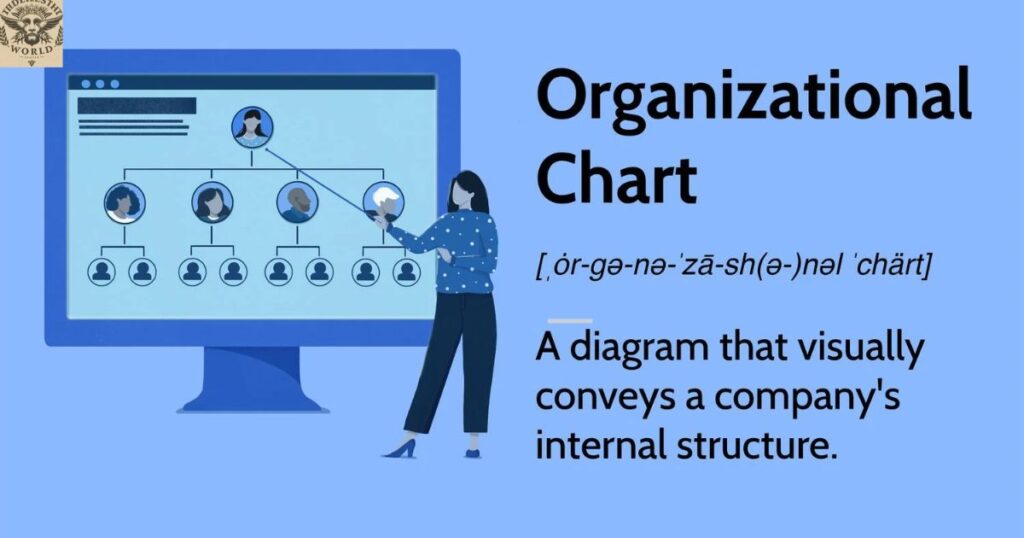
The hierarchy’s meaning can change slightly depending on the situation. In a business, it often refers to levels of authority. In education, Hierarchy Meaning it may describe school administration or levels of learning. In technology, it commonly refers to the organisation of data, files, or systems.
Understanding the context is important because hierarchy does not always involve people giving orders to others. Sometimes it simply explains how information or objects are grouped. For example, a website’s navigation structure can have main categories, subcategories, and individual pages.
Hierarchy Meaning in Business
In business, hierarchy means the arrangement of employees and managers according to their roles, authority, and responsibilities. A typical company may include junior employees, team leaders, department managers, Hierarchy Meaning senior managers, and executives. Each level has its own duties and decision-making powers.
A clear business hierarchy helps employees understand reporting relationships. It can also make it easier to assign work, approve budgets,Hierarchy Meaning solve problems, and measure performance. When everyone knows their responsibilities, teams can coordinate their work more effectively.
However, a business hierarchy works best when communication moves in both directions. Employees should be able to raise concerns, suggest improvements, and share important information with managers. A well-managed structure combines clear authority with respect and collaboration.
Read More:New Jaguar Electric Car: Type 01, Design, Features, Performance, Range, Price, and Release Date
Hierarchy Meaning in Education
In education, hierarchy can refer to the levels of authority within a school, college, or university. A school may have a principal, vice principal, department heads, teachers, and support staff. Each role contributes to the institution’s daily operation and educational goals.
The term can also describe levels of learning. Students often begin with basic knowledge before moving towards more advanced understanding, analysis, and problem-solving. In this context, hierarchy describes an ordered progression rather than a ranking of people’s worth.
For example, a student first learns basic mathematical operations before studying algebra and calculus. These topics build on earlier knowledge. This illustrates how a hierarchy can organise ideas from foundational concepts to more complex ones.
Hierarchy Meaning in Government
Government hierarchy describes the different levels of authority and administration within a political system. Depending on the country, these levels may include national,Hierarchy Meaning regional, provincial, state,Hierarchy Meaning district, and local authorities. Their exact powers depend on the constitution and applicable laws.
For example, a country may have a national government responsible for national policies, while provincial or state governments manage certain regional matters. Local councils may deal with community services. These levels often cooperate, although their responsibilities vary from one political system to another.
Understanding government hierarchy helps citizens identify which office or department handles a particular issue. It is important to remember that not every government follows the same structure, and local authorities may have powers that differ considerably across countries.
Hierarchy Meaning in Technology
In technology, hierarchy means organising digital information or components into levels. A computer may store files inside folders and subfolders, while a website may arrange its pages under main categories. These structures make information easier to locate and manage.
For example, a website about education might contain a main Education category, followed by School,Hierarchy Meaning College, and University sections. Individual articles can sit inside those sections. This creates a hierarchy that helps visitors understand the website’s organisation.
Hierarchy is also important in programming, databases, and network design. Developers use hierarchical structures to represent relationships between elements. A well-planned structure can improve navigation, maintenance, and the clarity of complex systems.
Hierarchy Meaning in Society

Social hierarchy refers to the way people or groups are arranged according to factors such as wealth, status, authority, occupation, or influence. Different societies have developed different social structures throughout history, and these structures can change over time.
For instance, social position may be influenced by education, professional status, family background, or economic resources. These factors can affect access to opportunities, although their influence differs across communities and countries.
Studying social hierarchy can help people understand inequality, social mobility, and power relationships. It is a descriptive concept, not proof that people in a higher social position have greater human worth or deserve more respect.
Examples of Hierarchy in Everyday Life
Hierarchy is present in many ordinary situations, even when people do not use the word directly. Families, workplaces, sports teams,Hierarchy Meaning schools, and digital platforms all organise responsibilities or information in different ways. Recognising these arrangements makes the hierarchy meaning easier to understand.
A family may divide responsibilities between parents and children, while a sports team may have a captain, coach, and players. A supermarket may have store managers, supervisors, cashiers, and stock workers. Each example illustrates a structure with different roles.
The following table provides additional examples.
| Setting | Example of hierarchy | Purpose |
| Workplace | Director, manager, team leader, employee | Organises authority and tasks |
| School | Principal, teacher, student | Coordinates education and administration |
| Government | National, regional, local authorities | Divides administrative responsibilities |
| Hospital | Medical director, department head, medical team | Coordinates care and operations |
| Website | Main page, category, subcategory, article | Organises digital information |
| Computer | Main folder, subfolder, file | Makes files easier to manage |
| Sports team | Coach, captain, players | Defines leadership and team roles |
| Retail business | Regional manager, store manager, staff | Coordinates stores and daily work |
These examples show that hierarchy can serve several purposes. It can organise authority, simplify information, establish responsibilities, and create a predictable system. Its effectiveness depends on whether the structure suits the task and whether the people involved can communicate clearly.
Types of Hierarchy
There are several types of hierarchy, and each serves a different purpose. Some systems focus on authority, while others organise information, classify objects, or describe relationships. Understanding these types helps explain how the same concept applies across different fields.
The most common types include organisational hierarchy, social hierarchy, authority hierarchy, classification hierarchy, Hierarchy Meaning and digital hierarchy. Some structures are formal and written down, while others develop naturally through relationships or social practices.
Organisational Hierarchy
An organisational hierarchy shows how roles and responsibilities are arranged within an organisation. It often identifies who reports to whom and which positions have authority over particular decisions. Businesses, charities, schools, and public institutions may all use organisational hierarchies.
For example, a marketing department may include a marketing director, a marketing manager, team leaders, and specialists. Each person contributes to the department’s objectives, but their responsibilities and authority differ.
A clear organisational hierarchy can prevent confusion and help managers allocate resources. However, organisations may use flatter structures when they want employees to collaborate more directly and make decisions with less managerial approval.
Social Hierarchy
Social hierarchy describes differences in social status, influence, or access to resources among individuals or groups. It may be shaped by income, occupation, education, family background, or cultural expectations.
For example, a society may give certain professions greater status because they require specialised training or involve important public responsibilities. Economic differences can also influence access to education,Hierarchy Meaning housing, and other opportunities.
Social hierarchy is useful for understanding how power and opportunity are distributed. It should not be confused with natural differences in human value. Every person deserves dignity and fair treatment regardless of social position.
Authority Hierarchy

An authority hierarchy arranges people according to their power to make decisions, give instructions, or approve actions. It is common in the military, police services, government agencies, and large companies.
For example, a manager may approve an employee’s leave request, while a senior manager handles decisions involving several departments. The hierarchy establishes which person has the authority to make each decision.
Authority structures can improve accountability because responsibilities are clearly assigned. At the same time, organisations need safeguards to prevent the misuse of authority and ensure that decisions follow relevant rules.
Classification Hierarchy
A classification hierarchy organises things into categories and subcategories. It is frequently used in science, libraries, education,Hierarchy Meaning and information management. Each level helps describe how a particular item fits into a broader system.
For example, a library may organise resources by subject, then by topic, and finally by individual title. A biological classification system also groups living organisms into increasingly specific categories.
This type of hierarchy helps people manage large amounts of information. By moving from broad categories to narrower ones, users can identify relationships and locate specific items more easily.
Digital Hierarchy
A digital hierarchy arranges information or components into levels within a computer system, application, database, or website. It can include folders, menus, navigation categories, and parent-child relationships between data elements.
For example, an online shop might organise products under Clothing, then Men’s Clothing, and finally Shirts. Customers can follow the structure to find the products they need.
A well-designed digital hierarchy reduces confusion and improves navigation. Poorly organised levels, however, can make information difficult to find. Designers therefore need to create clear categories and avoid unnecessary complexity.
Learning Hierarchy
A learning hierarchy organises knowledge and skills from basic to advanced levels. It recognises that complex tasks often depend on understanding simpler concepts first.
For example, someone learning English may begin with individual words, progress to sentence structure, and then practise writing paragraphs and essays. Each stage builds on earlier learning.
Teachers can use a learning hierarchy to plan lessons and assess progress. Students can also use it to identify which foundational skills they need to strengthen before tackling more difficult topics.
Hierarchy vs. Hierarchical Structure
The words hierarchy and hierarchical describe related ideas, but they have different grammatical roles. Hierarchy is a noun that names the system or arrangement. Hierarchical is an adjective that describes something organised according to levels or ranks.
For example, a company can have a hierarchy, while its management system can be described as hierarchical. Both words refer to levels, but they are used differently in sentences.
Understanding the distinction can improve writing and help people choose the correct word.
| Word | Part of speech | Meaning | Example |
| Hierarchy | Noun | A system of ranked or organised levels | The company has a clear hierarchy. |
| Hierarchical | Adjective | Arranged according to levels or ranks | The company uses a hierarchical structure. |
| Hierarchically | Adverb | In a way that follows a hierarchy | The information is organised hierarchically. |
These words are common in business, education, technology, and academic writing. Choosing the correct form makes a sentence clearer and more grammatically accurate.
Synonyms and Antonyms of Hierarchy
Learning synonyms and antonyms can improve vocabulary and help explain the hierarchy meaning in different situations. A synonym has a similar meaning, while an antonym expresses an opposing idea. The best alternative depends on the context because no single word matches every use of hierarchy.
For example, rank and chain of command work well when discussing authority. Order or classification may be more suitable when talking about information. In contrast, equality and a flat structure may describe arrangements with fewer distinctions between levels.
Synonyms of Hierarchy
Common synonyms and related expressions include:
- Ranking: An arrangement according to position or importance.
- Order: An organised arrangement of people or things.
- Chain of command: A sequence of authority and reporting relationships.
- Pecking order: An informal ranking of status or dominance.
- Grading: The process of arranging things into grades or levels.
- Classification: The grouping of items according to shared features.
- Structure: The way parts of a system are organised.
- Rank: A person’s or thing’s position within an ordered system.
These words are related but not always interchangeable. For example, classification usually focuses on categories, while a chain of command specifically concerns authority. Using the most precise term helps communicate the intended meaning.
Antonyms of Hierarchy
Hierarchy does not have one perfect antonym for every context, but several terms express contrasting ideas.
- Equality: A condition in which people have equal status, rights, or opportunities in a particular respect.
- Flat structure: An organisational arrangement with fewer management levels.
- Egalitarianism: The principle that people should have equal rights or opportunities.
- Non-hierarchical structure: A system that does not organise roles into a traditional ranking.
- Peer-based organisation: An arrangement that emphasises relationships among people at similar levels.
These alternatives do not necessarily mean that all responsibilities are identical. A flat organisation may still have team leaders, and an egalitarian community may still assign specialised duties. The main difference is how strongly the system separates people into ranked levels.
Hierarchy in the Workplace

Workplace hierarchy is one of the most familiar uses of the term. It defines the relationships between employees, supervisors, managers, and senior executives. In many organisations, these levels help determine who assigns tasks, evaluates performance, approves spending, and makes strategic decisions.
A traditional corporate structure may place a chief executive officer at the top, followed by senior executives, department managers,Hierarchy Meaning supervisors, and other employees. The exact arrangement depends on the organisation’s size and industry. A small business may have only two or three management levels.
Workplace hierarchy can provide clarity and accountability, but it should not prevent employees from communicating with leaders. When managers listen to staff and explain decisions, the structure can support cooperation rather than create unnecessary barriers.
Advantages of Workplace Hierarchy
A well-designed hierarchy makes responsibilities easier to understand. Employees know who supervises their work, where to request approval, and who can help resolve a problem. This clarity can reduce duplicated work and improve coordination.
It can also support accountability. When a decision has a clearly assigned owner, the organisation can review its results and identify where improvements are needed. Managers can monitor progress and ensure that important tasks receive appropriate attention.
Another advantage is professional development. Employees may understand which skills and achievements are required to progress into more senior positions. Transparent promotion criteria can encourage learning and provide a clearer path for career growth.
Disadvantages of Workplace Hierarchy
A strict hierarchy can create communication delays when every decision must pass through several levels of management. Employees may need multiple approvals for simple tasks, making the organisation less flexible when circumstances change quickly.
It can also discourage people from sharing ideas if they believe that senior employees will dismiss their opinions. Excessive differences in status may cause staff to remain silent about mistakes or risks, even when speaking up could benefit the organisation.
Another possible problem is an excessive focus on job titles. A person’s position may receive more attention than their practical knowledge or contribution. Organisations can reduce these problems by encouraging respectful communication, delegating suitable decisions, and evaluating ideas fairly.
Hierarchy in SEO and Website Structure
Hierarchy also has a practical meaning in search engine optimization. A website hierarchy describes how pages are organised and how they relate to one another. A clear structure helps visitors understand a site and move between its main topics and supporting pages.
For example, a website about word definitions may have a main Meaning category containing articles about individual words. Another website might use broader sections such as Technology, Health, Education, and Business, with narrower topics beneath each section.
A logical hierarchy can improve navigation and help search engines discover relationships between pages. Internal links should connect related content naturally, while menus and breadcrumbs can show visitors where they are within the site. Good structure supports usability, although it does not guarantee higher rankings by itself.
Example of a Website Hierarchy
Consider an educational website with the following structure:
- Home
- English
- Vocabulary
- Hierarchy Meaning
- Leadership Meaning
- Responsibility Meaning
- Vocabulary
- Business
- Management
- Organisational Structure
- Team Leadership
- Management
- English
This example shows how a website can organise broad subjects into narrower categories. Visitors can start with a general topic and move towards a specific article.
A useful website hierarchy should be logical, consistent, and easy to navigate. Pages should belong to relevant sections, and internal links should help readers discover related information without forcing them through unnecessary levels.
Hierarchy in Computer Science
In computer science, a hierarchy is a structure in which elements are organised through parent-child relationships or different levels. This arrangement appears in file systems, data structures, software design, network architecture, and many other technical areas.
A familiar example is a computer’s file system. A main folder can contain subfolders, and each subfolder can contain files. The arrangement helps users group related information and locate particular documents.
Hierarchical structures can make complex systems easier to understand. However, their usefulness depends on the task. Some problems are better handled by networks or other structures in which an item can have several relationships rather than just one parent.
Hierarchy in Programming
Programming languages and software systems may use hierarchical relationships to organise classes, components, or data. In object-oriented programming, for example, a class can inherit features from another class,Hierarchy Meaning creating a hierarchy of related types.
A simple example might include a general Vehicle class and more specific Car and Motorcycle classes. The general class can describe features shared by vehicles, while the more specific classes define additional details.
This approach can encourage code reuse and make relationships clearer. Nevertheless, overly complicated hierarchies can make software harder to maintain, so developers should choose structures that reflect genuine relationships rather than create unnecessary levels.
Hierarchy in Biology and Science
In biology, hierarchy is used to organise living organisms into classification levels. Scientists group organisms according to shared characteristics and evolutionary relationships. This helps researchers describe biodiversity and understand how different organisms are related.
A familiar biological classification system includes domain, kingdom, phylum, class, order, family, genus, and species. The system moves from broad groups towards more specific categories. The exact classification of an organism depends on its biological characteristics and current scientific understanding.
Hierarchical classification is also used in other sciences. Researchers may organise chemical substances, geological formations, or categories of evidence into structured groups. In these contexts, hierarchy helps people manage complex information and communicate findings consistently.
Hierarchy of Needs
The phrase hierarchy of needs is commonly associated with psychologist Abraham Maslow. His theory presents human needs in an ordered framework, often illustrated as a pyramid. Basic physical needs are traditionally shown near the bottom, while higher-level psychological and personal-growth needs appear above them.
The commonly presented categories include physiological needs, safety, love and belonging, esteem, and self-actualisation.
For example, food and shelter relate to physiological needs, while friendship relates to belonging. Esteem concerns include feelings of competence and respect.
Maslow’s model is influential in education, psychology, management, and discussions about motivation. However, people do not always meet needs in a fixed order, and researchers continue to discuss how well the pyramid represents human motivation across different circumstances and cultures.
Hierarchy vs. Equality
Hierarchy and equality describe different ideas, although they can exist together in the same organisation or society. Hierarchy concerns levels, ranks, or authority, while equality concerns equal rights, status, treatment, or opportunities in a particular context.
For example, a hospital may have a hierarchy of professional responsibilities, with doctors, nurses, administrators, and support workers performing different tasks. At the same time, every worker should receive fair treatment and have access to appropriate workplace protections.
The existence of different roles does not automatically mean that people have unequal human worth. An effective system can recognise professional responsibilities while treating everyone with dignity. Problems arise when rank is used to justify unfair treatment or prevent people from raising legitimate concerns.
How to Use Hierarchy in a Sentence
Using the word hierarchy correctly becomes easier when it is placed in familiar situations. It often appears with words such as organisational, social, corporate, management, and authority. These combinations help identify the kind of structure being discussed.
Hierarchy is usually a countable noun. A writer may refer to “a hierarchy,” “the hierarchy,” or “several hierarchies,” depending on the sentence. The adjective hierarchical describes a structure that follows ranked or ordered levels.The following examples demonstrate how to use the word naturally.
Example Sentences Using Hierarchy
- The company has a clear hierarchy that defines each employee’s responsibilities.
- The manager explained the hierarchy during the new staff orientation.
- A strict hierarchy can sometimes slow down decision-making.
- The school follows a hierarchy of leadership and administration.
- The website uses a simple hierarchy to organise its articles.
- Social hierarchy can influence access to opportunities.
- The team reviewed its management hierarchy after the merger.
- A computer’s folder hierarchy helps users organise their files.
- The organisation wants to reduce unnecessary levels in its hierarchy.
- Understanding the hierarchy made the reporting process easier.
These sentences show that hierarchy can refer to management, social relationships, information, or technical systems. The surrounding words usually make the intended meaning clear.
Short Conversations Using Hierarchy
Conversation 1: At work
Ayesha: Who should approve this project?
Hamza: Check the management hierarchy. The department manager handles approvals of this kind.
Conversation 2: At school
Student: What does the school hierarchy mean?
Teacher: It describes the different leadership and administrative roles within the school.
Conversation 3: Website design
Designer: Why are these pages arranged into categories?
Developer: The hierarchy helps visitors find information without searching through every page.
These conversations demonstrate how people might use the word in everyday communication. They also show that the term is not restricted to formal academic writing.
Common Phrases That Include Hierarchy
Certain expressions appear frequently in professional and academic English. Learning these phrases can make it easier to recognise the hierarchy’s meaning in articles, meetings, reports, and conversations.
| Phrase | Meaning | Example |
| Organisational hierarchy | Levels of roles within an organisation | The new policy changed the organisational hierarchy. |
| Corporate hierarchy | Ranks and authority within a company | The corporate hierarchy includes several executive roles. |
| Social hierarchy | Levels of social status or influence | Researchers examined the effects of social hierarchy. |
| Hierarchy of needs | An ordered framework of human needs | The lesson introduced Maslow’s hierarchy of needs. |
| Chain of command | A sequence of authority and reporting | Staff followed the established chain of command. |
| Hierarchical structure | An arrangement organised into levels | The department uses a hierarchical structure. |
| Power hierarchy | A structure showing differences in authority | The study explored the organisation’s power hierarchy. |
| File hierarchy | The organisation of folders and files | The file hierarchy makes documents easier to locate. |
Although some phrases overlap,Hierarchy Meaning their meanings are not identical. For instance, a chain of command focuses specifically on authority, while a file hierarchy describes the organisation of digital information.
Common Mistakes When Using the Word Hierarchy
One common mistake is assuming that hierarchy always means superiority. In many situations, the word simply describes an arrangement of levels. A senior position may carry more responsibility, but it does not automatically make the person more knowledgeable in every subject.
Another mistake is using hierarchy when the intended meaning is simply teamwork or cooperation. A group of colleagues may collaborate without following a strict ranking system. In such cases, terms like team structure or working relationship may communicate the idea more accurately.
Writers sometimes confuse hierarchy with hierarchical. Remember that hierarchy is a noun, while hierarchical is an adjective. For example, “The company has a hierarchy” is correct, as is “The company has a hierarchical structure.” Using the right form makes the sentence easier to understand.
Why Is Hierarchy Important?
Hierarchy can be important because it helps people organise responsibilities, relationships, and information. In a workplace, it can clarify who makes decisions and who handles particular tasks. In education, it can help teachers arrange knowledge into manageable stages. In technology, it can make complex data easier to navigate.
A clear structure can also support accountability. When roles are defined, people can understand their responsibilities and identify the right person to contact when a problem arises. This can save time and reduce confusion, especially in large organisations.
However, hierarchy is most effective when it serves a useful purpose. Too many levels may create delays, while unclear authority may cause disagreements. Organisations and systems should therefore review their structures regularly and make changes when the existing arrangement no longer meets their needs.
Frequently Asked Questions
What is the simple meaning of hierarchy?
Hierarchy means a system in which people or things are arranged into levels according to rank, authority, importance, or another organising principle.
What is an example of hierarchy?
A school with a principal, vice principal, teachers, and students is an example of hierarchy. Each group has different roles and responsibilities within the institution.
What is the synonym of hierarchy?
Common synonyms or related terms include ranking, order, structure, classification, and chain of command. The best choice depends on whether the context concerns authority, social status, or the organisation of information.
What is the opposite of hierarchy?
There is no single perfect opposite in every context. Equality, a flat structure, and a non-hierarchical organisation can describe systems with fewer distinctions between levels or less emphasis on rank.
What does hierarchy mean in business?
In business, hierarchy describes the arrangement of employees and leaders according to their roles, authority, and responsibilities. It helps establish reporting relationships and clarify who makes particular decisions.
Conclusion
The hierarchy meaning refers to an organised system of levels or ranks. It can describe authority in a workplace, leadership in a school, social status in a community, or categories within a computer system. Although the details vary, the central idea is that people or things are arranged according to a particular structure.
Understanding hierarchy can improve communication, make responsibilities clearer, and help people organise complex information. It is important, however, to distinguish a person’s position from their personal worth and to recognise that not every task requires a strict ranking system. A well-designed hierarchy supports its purpose without creating unnecessary barriers.
Whether the term appears in business, education, technology, biology, or everyday conversation, knowing how to use hierarchy correctly can strengthen vocabulary and make explanations more precise.

