

Donald Trump is one of the most recognized and debated political figures in modern American history. He became widely known as a businessman, real estate developer, author, and television personality before entering national politics. His move from business and entertainment into the White House changed the political conversation in the United States and attracted worldwide attention.
Donald J. Trump was born on June 14, 1946, in Queens, New York. He later built a major business career, became the host of The Apprentice, and entered presidential politics in 2015. He won the 2016 election and became the 45th president of the United States. After losing the 2020 election, he returned to the White House after winning the 2024 election and became the 47th president.
Today, Trump remains an important figure in American and international politics. His policies affect discussions about immigration, trade, taxes, energy, foreign relations, technology, and the US economy. His second presidency has also created new debates about America’s role in global affairs and domestic government.
Who Is Trump?
Trump is an American businessman and politician who has served as president of the United States twice. His two terms are non-consecutive, meaning he served one term, left office, and later returned to the presidency. Only one other American president, Grover Cleveland, had previously achieved this.
Trump first became president in January 2017 after defeating Democratic candidate Hillary Clinton in the 2016 election. His political campaign used the slogan “Make America Great Again,” which became closely associated with his political movement.
After leaving office in January 2021, Trump remained highly active in American politics. He announced another presidential campaign in November 2022 and eventually became the Republican nominee again. In November 2024, he defeated Vice President Kamala Harris and won 312 Electoral College votes.
Trump Early Life and Childhood
Donald John Trump was born in Queens, New York, on June 14, 1946. His parents were Fred Trump and Mary Trump. He grew up in a family connected to the real estate business, which later influenced his own career.
Trump attended the New York Military Academy before studying at the University of Pennsylvania’s Wharton School. His education and family background gave him an early connection to business, finance, property development, and entrepreneurship.
His early life was closely connected with New York City. The city later became an important part of his public image because many of his early business projects were located there.
Trump Education
Trump attended the New York Military Academy during his school years. He later transferred to the University of Pennsylvania, where he studied at the Wharton School of Finance and Commerce.Wharton is widely known for its business and finance programs. After completing his education, Trump entered the family real estate business.
His career eventually expanded beyond property development into hotels, resorts, entertainment, golf courses, books, and television.His education is often mentioned when discussing how Trump developed his business identity before entering politics.
Trump Business Career
Trump began working in the family real estate business and took control of the company in 1971. He later renamed it the Trump Organization. The business became involved in hotels, residential buildings, commercial properties, casinos, resorts, and golf courses. Over time, the Trump name became a major commercial brand. His business activities helped him develop a strong public identity long before his political career began.
Trump also became known for using his name as a brand. This approach extended beyond real estate and became part of his television career, books, hotels, golf properties, and political campaigns.
Trump and The Art of the Deal
One of Trump’s best-known books is The Art of the Deal, published in 1987. The book helped strengthen his public image as a successful businessman and negotiator.The book became closely associated with Trump’s business persona. It discussed business experiences, negotiations, property projects, and his approach to making deals.Trump later published several other books. The White House biography says he has written more than fourteen books.
Read More:Bigot Meaning: Definition, Examples, Synonyms, Antonyms, and How to Use It
Trump and The Apprentice
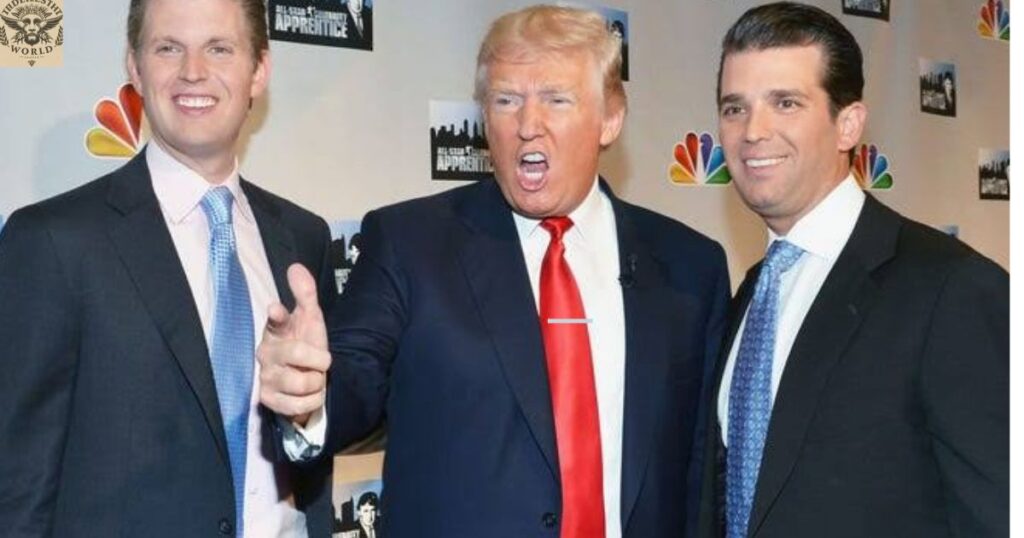
Trump expanded his public profile through television. In 2004, he became associated with the reality television program The Apprentice.The show presented Trump as a business executive who evaluated contestants competing for business opportunities.
His television presence introduced him to a much larger audience, including people who were not familiar with his real estate career.The phrase “You’re fired” became strongly associated with his television persona. His time on television later helped him communicate with voters who already recognized him as a public figure.
Trump Enters Politics
Trump had discussed American politics for many years before officially running for president. However, his political career changed dramatically in 2015 when he announced his presidential campaign.He entered the Republican primary with a message focused on immigration, trade, national security, economic policy, and American jobs.
His campaign attracted large crowds and significant media attention.Trump’s communication style was different from many traditional politicians. He frequently used social media, television appearances, rallies, and direct statements to communicate with supporters.
Trump and the 2016 Presidential Election
Trump won the Republican nomination in 2016 and selected Indiana Governor Mike Pence as his running mate.In the November 2016 election, Trump defeated Hillary Clinton in the Electoral College and became the 45th president. He was inaugurated on January 20, 2017.
The election was significant because Trump had never previously held elected political office. His victory demonstrated how a businessman and television personality could successfully enter presidential politics.His campaign also created a political movement that continued to influence the Republican Party after the 2016 election.
Trump First Presidency
Trump’s first presidency lasted from January 2017 until January 2021. During this period, his administration focused on taxes, trade, immigration, energy, military spending, deregulation, the federal judiciary, and foreign policy.
One of the major domestic achievements of his administration was a large tax reform law. His administration also reduced or changed various federal regulations.Trump also placed considerable attention on border security and immigration enforcement. These policies became some of the most debated parts of his presidency.
Trump Tax and Economic Policies
Tax reform was an important part of Trump’s first-term economic agenda. His administration supported reductions in federal taxes and argued that lower taxes could encourage business investment and economic growth.
Supporters viewed the tax changes as a way to make American businesses more competitive. Critics argued about the distribution of the benefits and their effect on government finances.Economic policy continued to be an important part of Trump’s political identity during his later campaigns.
Trump and Immigration
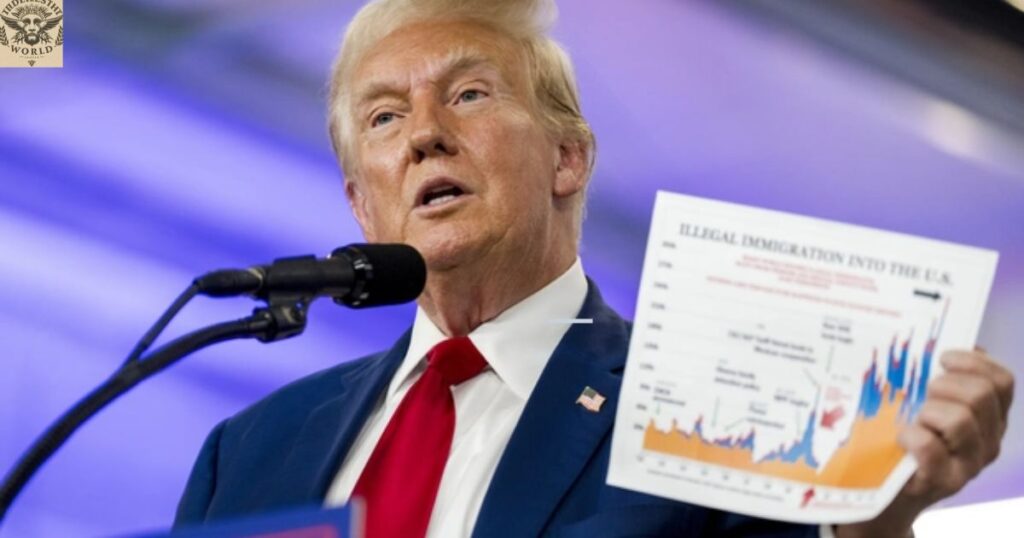
Immigration has been one of the central issues associated with Trump.During his first campaign and presidency, Trump emphasized stronger border controls and tighter immigration policies. His administration increased attention on the US-Mexico border and pursued policies intended to reduce unauthorized immigration.
Immigration remained a major issue during the 2024 campaign. Trump’s second presidential campaign again emphasized border security, immigration enforcement, and changes to federal immigration policy.The issue is also important internationally because immigration policies in the United States can affect workers, families, businesses, and migrants from countries including Mexico, India, Pakistan, China, and many other nations.
Trump and Trade
Trade policy became another major part of Trump’s political platform.During his first presidency, his administration imposed tariffs on products including steel, aluminum, and goods connected to major trading relationships. The administration also renegotiated trade agreements involving Mexico and Canada.
Trump has generally argued that tariffs can protect American industries and encourage companies to manufacture products inside the United States.Critics have argued that tariffs can also increase costs for businesses and consumers. The debate over tariffs therefore remains an important part of discussions about the US economy and international trade.
Trump and China
The relationship between the United States and China became more complicated during Trump’s first presidency.Trade, technology, tariffs, manufacturing, national security, and intellectual property were major issues. The Trump administration placed tariffs on a wide range of Chinese goods and pushed for changes in the economic relationship.
China remains one of the most important international relationships during Trump’s second presidency. In September 2026, Trump hosted Chinese President Xi Jinping in Washington for another summit. Reuters reported that trade, Taiwan, Iran, and artificial intelligence were among the major issues surrounding the relationship.
This relationship matters not only to the US and China but also to countries such as India, Pakistan, the UK, and other major economies because changes in US-China trade can affect global supply chains.
Trump and India
The United States and India have an important relationship involving trade, technology, defense, energy, and strategic cooperation.Trump’s approach to India has attracted attention because India is one of the world’s largest economies and a major US strategic partner in the Indo-Pacific region.
For Indian businesses and consumers, US trade policies can matter because tariffs and changes in international supply chains can influence exports, technology partnerships, investment, and manufacturing.The broader US-India relationship is also important because both countries have an interest in technology, defense cooperation, and regional stability.
Trump and the UK
The United States and the United Kingdom have a long-standing political, economic, and security relationship.Trump’s policies can affect the UK through trade, NATO, international security, technology, energy markets, and financial markets.For British readers, understanding Trump’s political approach is useful because decisions made by the US president can influence global markets and diplomatic relationships well beyond America.
Trump and Pakistan
Pakistan also follows American presidential politics closely because US policies can affect South Asian security, trade, diplomacy, immigration, and regional relations.
Trump’s foreign-policy decisions can therefore have indirect consequences for Pakistan. Changes in US relations with India, Afghanistan, China, and other countries may also influence the wider South Asian environment.
For Pakistani readers, Trump’s policies are especially relevant when they involve regional security, international trade, technology, and relations between the United States and China.
Trump and the Supreme Court
Trump had a major influence on the US Supreme Court during his first presidency.He nominated three Supreme Court justices: Neil Gorsuch, Brett Kavanaugh, and Amy Coney Barrett. His administration also appointed more than 200 federal judges, according to the Trump Presidential Library and White House Historical Association.
These appointments became one of the most lasting effects of his first presidency because federal judges can serve for many years.Interestingly, Trump’s relationship with the Supreme Court has not always been straightforward. In October 2026, Reuters reported that Trump expressed regret about appointing Gorsuch, Kavanaugh, and Barrett after several decisions went against his administration’s position.
Trump and Foreign Policy
Foreign policy was another major part of Trump’s first presidency.His administration changed America’s approach to several international issues. It increased pressure on Iran, focused heavily on relations with China and North Korea, and moved the US embassy in Israel from Tel Aviv to Jerusalem.
Trump also met North Korean leader Kim Jong Un in 2018. It was the first meeting between a sitting US president and a North Korean leader. His approach was often described as more direct and transactional than the style used by many previous presidents.
Trump and NATO
NATO and defense spending became recurring subjects during Trump’s presidency.Trump repeatedly argued that other NATO members should contribute more to collective defense. His position created debates among US allies in Europe about burden sharing and America’s role in the alliance.
For European countries, including the UK, Germany, France, and others, Trump’s approach to NATO remains an important foreign-policy issue.
Trump and His First Impeachment
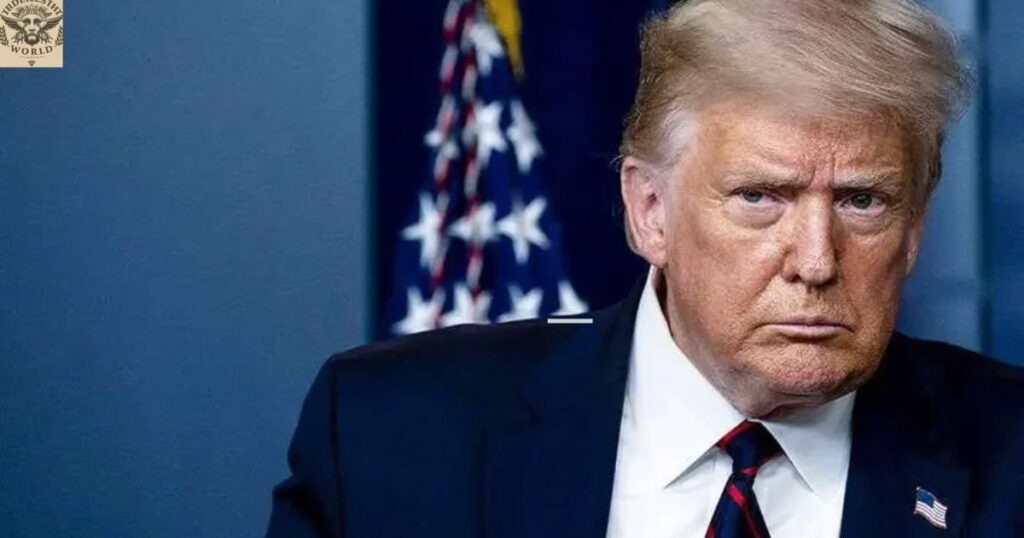
Trump was impeached by the US House of Representatives in 2019.The charges involved abuse of power and obstruction of Congress. The case centered on Trump’s dealings with Ukraine and related congressional investigations.The US Senate later acquitted Trump, meaning he was not removed from office.The impeachment became one of the major political events of his first presidency.
Trump and His Second Impeachment
Trump was impeached for a second time in January 2021.The House charged him with incitement of insurrection following the events surrounding the US Capitol on January 6, 2021. The Senate later acquitted him again.
This made Trump the only US president to have been impeached twice and acquitted twice by the Senate.The second impeachment became an important part of the historical discussion surrounding the end of his first presidency.
Trump and the 2020 Election
Trump lost the 2020 presidential election to Democrat Joe Biden.Trump disputed the result and made claims about election fraud. His claims were widely challenged, and the election results ultimately remained in place.The aftermath of the election became one of the most controversial periods in modern American political history.
Trump and January 6
On January 6, 2021, a large group of Trump’s supporters gathered in Washington, DC, while Congress was meeting to certify the Electoral College results.The crowd later breached the US Capitol, disrupting the certification process. The event resulted in deaths, injuries, arrests, and extensive property damage.The White House Historical Association records the event as a major turning point at the end of Trump’s first presidency.
Trump Returns to Politics
After leaving the White House in January 2021, Trump remained an influential Republican figure.In November 2022, he formally announced another presidential campaign. His campaign focused strongly on immigration, taxes, tariffs, manufacturing, regulation, and changes to the federal government. Trump eventually secured the Republican nomination again.His political comeback became one of the most notable developments in recent US political history.
Trump and the 2024 Election
Trump defeated Democratic candidate Kamala Harris in the 2024 presidential election.According to official Electoral College results, Trump won 312 electoral votes while Harris received 226. Trump therefore secured the required majority of Electoral College votes. The victory returned Trump to the White House after a four-year gap.His second inauguration took place on January 20, 2025. He became the 47th president of the United States.
Trump Second Presidency
Trump’s second presidency began in January 2025.The administration has continued to emphasize border security, economic policy, manufacturing, trade, energy, government regulation, and foreign policy.The second term is different from the first because Trump entered office with previous presidential experience and a political movement that had developed over several years.
The White House describes his second-term agenda as focused on economic growth, national borders, energy, and ending what it characterizes as unnecessary foreign conflicts. These are
Trump and the US Economy in 2026
The economy remains one of the biggest political issues surrounding Trump’s second term.Recent Reuters reporting shows a complicated economic picture. The US unemployment rate was reported at 4.2%, but hiring had slowed and inflation continued to affect household purchasing power.
Manufacturing employment also had not shown the improvement that Trump’s administration had hoped to achieve. This creates a difficult political situation. A low unemployment rate can indicate a relatively strong labor market, but voters may still feel economic pressure when everyday prices remain high.For Trump, the cost of living has therefore become an important political challenge.
Trump Approval Rating in 2026
Trump’s approval rating has become an important part of the 2026 political discussion.A Reuters/Ipsos poll reported on October 5, 2026, found Trump’s approval at 32%, with Democratic candidates leading Republicans among registered voters in the poll. Hispanic voter support for Trump was also reported to have fallen compared with the 2024 election.
Approval polls measure public opinion at a particular moment. They do not determine election results by themselves.The November 2026 midterm elections are therefore an important test of the political environment surrounding Trump’s second presidency.
Trump and the 2026 Midterm Elections
Trump has become highly involved in the 2026 midterm election campaign. Reuters reported that Trump was campaigning in Republican-leaning states and encouraging voters to view the congressional elections as a judgment on his administration.
His October 5 Nebraska rally was part of a wider campaign effort ahead of the November 3 elections. Midterm elections are important because they determine control of Congress.If the president’s party loses congressional majorities, passing new legislation can become more difficult. If the president’s party maintains control, the administration may have a clearer path for its legislative priorities.
Trump and Artificial Intelligence
Artificial intelligence has also become an important policy area during Trump’s second presidency.AI affects national security, technology companies, jobs, data centers, energy consumption, education, and international competition.
The US relationship with China is particularly important in this area because both countries are competing for leadership in advanced technology.Trump’s administration has therefore had to balance innovation with questions about safety, national security, regulation, and international competition.
Read More: Bilateral Meaning: Definition, Examples, Agreements, Relations, and How to Use It
Trump and American Manufacturing
American manufacturing is another major theme of Trump’s economic message.Trump has argued that tariffs and other economic policies can encourage companies to manufacture products inside the United States.
Supporters say stronger domestic production can protect American jobs and reduce dependence on overseas supply chains.Critics argue that tariffs can raise costs for businesses that rely on imported materials and components. The long-term effect depends on how companies, consumers, and trading partners respond.
Trump Family
Trump has five children: Donald Jr., Ivanka, Eric, Tiffany, and Barron. He married Melania Trump in 2005, and they have one son, Barron. His adult children have been publicly involved in business, politics, and public life.The Trump family has therefore remained a visible part of American political and media coverage for many years.
Trump and Melania Trump
Melania Trump is Trump’s wife and became First Lady during his first presidency.The couple married in 2005 and have one son, Barron. During Trump’s political career, Melania has maintained a separate public identity while also participating in official events connected with the White House.
Trump Facts at a Glance
| Fact | Details |
| Full name | Donald John Trump |
| Born | June 14, 1946 |
| Birthplace | Queens, New York |
| Education | New York Military Academy; University of Pennsylvania |
| Business | Real estate, hospitality, entertainment and other ventures |
| Famous book | The Art of the Deal |
| TV show | The Apprentice |
| Political party | Republican Party |
| First presidency | 2017–2021 |
| Second presidency | Began January 20, 2025 |
| First presidential number | 45th President |
| Current presidential number | 47th President |
| 2016 opponent | Hillary Clinton |
| 2020 opponent | Joe Biden |
| 2024 opponent | Kamala Harris |
| 2024 Electoral College | 312 votes |
| Wife | Melania Trump |
| Children | Five |
The basic biographical information above is supported by the White House Historical Association, Trump Presidential Library, White House, and official Electoral College records.
Trump Timeline
| Year | Major Event |
| 1946 | Donald Trump was born in Queens, New York |
| 1971 | Took control of his father’s real estate company |
| 1987 | Published The Art of the Deal |
| 2004 | The Apprentice began |
| 2015 | Announced presidential campaign |
| 2016 | Won the presidential election |
| 2017 | Became the 45th president |
| 2019 | First impeachment |
| 2020 | Lost presidential election to Joe Biden |
| 2021 | Second impeachment after January 6 |
| 2022 | Announced another presidential campaign |
| 2024 | Defeated Kamala Harris |
| 2025 | Began second presidential term |
| 2026 | Remained active in US politics and midterm campaigning |
Why Is Trump So Influential?
Trump’s influence comes from several parts of his public career. First, he had a large public profile before entering politics. His business career and television appearances made him familiar to millions of Americans. Second, Trump developed a direct communication style. He often speaks to supporters through rallies, interviews, social media, and public statements.
Third, his political movement has remained influential inside the Republican Party. His views on immigration, trade, taxes, government regulation, and foreign policy continue to shape political debates.Finally, Trump’s return to the White House after losing the 2020 election made his political career historically unusual.
Trump’s Global Impact
Trump’s policies matter outside the United States because America plays a major role in global trade, finance, defense, technology, and diplomacy.A change in US tariffs can affect exporters in China, India, Pakistan, Europe, and other regions. Changes in immigration rules can affect international students and workers. Changes in US foreign policy can affect allies and rivals.
For the UK, India, China, Pakistan, Canada, Mexico, and European countries, Trump’s decisions can therefore have economic and diplomatic consequences. His second presidency is being closely watched because it can influence global markets, international alliances, energy prices, technology competition, and trade relationships.
Frequently Asked Questions :
Who is Trump?
Trump, whose full name is Donald John Trump, is an American businessman and politician. He served as the 45th president from 2017 to 2021 and became the 47th president in 2025.
How old is Trump?
Trump was born on June 14, 1946. As of October 2026, he is 80 years old.
How many times has Trump been president?
Trump has served as president twice. His first term began in 2017, while his second term began on January 20, 2025. His two terms are non-consecutive.
Did Trump win the 2024 election?
Yes. Trump defeated Kamala Harris in the 2024 presidential election and received 312 Electoral College votes.
What is Trump known for?
Trump is known for his real estate career, television show The Apprentice, books such as The Art of the Deal, two US presidencies, and his influential role in American politics.
Conclusion
Trump’s career has moved through business, entertainment, politics, and the presidency. His rise from New York real estate to the White House made him one of the most recognizable political figures in the world.His first presidency introduced major changes in US tax policy, trade, immigration, foreign relations, the judiciary, and government regulation.
His 2020 election defeat and the events surrounding January 6 became major chapters in his political history.Trump’s return to the White House in 2025 created another significant chapter. During his second presidency, issues such as inflation, immigration, tariffs, manufacturing, technology, foreign policy, and relations with China remain central to public debate.
Meta Description:
Trump biography, presidency, political career, family, policies, elections, business life, and latest 2026 news explained in simple, clear English.

