

The biodegradable meaning is easy to understand when we look at everyday objects around us. A biodegradable material is one that can naturally break down through the action of living organisms such as bacteria, fungi, and other microorganisms. Over time, these organisms can turn suitable biodegradable materials into simpler natural substances.
Many common things we use every day can be biodegradable. Food scraps, leaves, paper, cardboard, cotton, and untreated wood are familiar examples. Other materials, such as many conventional plastics, can remain in the environment for a very long time. Knowing the difference can help people make more informed choices about waste and environmental protection.
The biodegradable meaning is especially important when discussing pollution, recycling, packaging, waste management, and sustainable living. A biodegradable product does not automatically mean that it disappears quickly in every environment. Temperature, moisture, oxygen, microorganisms, and the material itself can all affect the breakdown process.
What Is the Biodegradable Meaning?
The biodegradable meaning refers to a material that can be broken down naturally by microorganisms into simpler substances under suitable environmental conditions.
In simple English, biodegradable means capable of being naturally broken down by living organisms.The organisms involved can include bacteria, fungi, and other microorganisms. During biodegradation, a suitable organic material may eventually become substances such as water, carbon dioxide, biomass, and other natural products, depending on the conditions and material.
For example, a fallen leaf can gradually decompose on the ground. Microorganisms help break down the organic matter, returning nutrients to the surrounding environment.
A piece of ordinary paper can also break down naturally under suitable conditions. By contrast, conventional plastic packaging may persist for a much longer period.
Biodegradable Meaning in Simple English
The easiest way to understand the biodegradable meaning is:
- Biodegradable means able to break down naturally through the action of microorganisms.
The prefix bio- relates to life, while degradable relates to something being capable of breaking down.
Some everyday biodegradable examples include:
- Fruit peels
- Vegetable waste
- Leaves
- Grass
- Paper
- Cardboard
- Cotton
- Untreated wood
- Some natural fibres
- Certain biodegradable food packaging materials
However, not every item made from a natural-looking material will behave in exactly the same way. Additives, coatings, processing, and environmental conditions can affect biodegradation.
Biodegradable Meaning in Urdu
The biodegradable meaning in Urdu can be explained as:
- قدرتی طور پر گلنے سڑنے یا جراثیم کے ذریعے ٹوٹنے والا مادہ
In Roman Urdu, biodegradable ka matlab hai:
- Aisi cheez jo bacteria, fungi aur doosray microorganisms ki madad se waqt ke sath qudrati tor par toot sakay.
For example, food waste and leaves can naturally decompose under suitable conditions.
- A simple Roman Urdu explanation is:
Biodegradable cheez ka case is mere saath ko nahi hai, only microorganisms can help naturally breakdown biodegradable cheez.
Read More: Bankruptcy Meaning: Definition, Types, Process, Effects and UK vs USA Guide
What Does Biodegradable Mean?
What does biodegradable mean in everyday life? It means that a material has the ability to undergo biological decomposition rather than remaining unchanged for an extremely long period.Imagine two shopping bags.One is made from conventional plastic. The other is made from a material designed to biodegrade under suitable conditions.The two bags may look similar, but their environmental behaviour can be very different.
The biodegradable material is intended to be broken down through biological activity, while conventional plastic generally does not biodegrade in the same way.This difference is one reason the word is important in discussions about sustainable packaging and waste.
How Does Biodegradation Work?
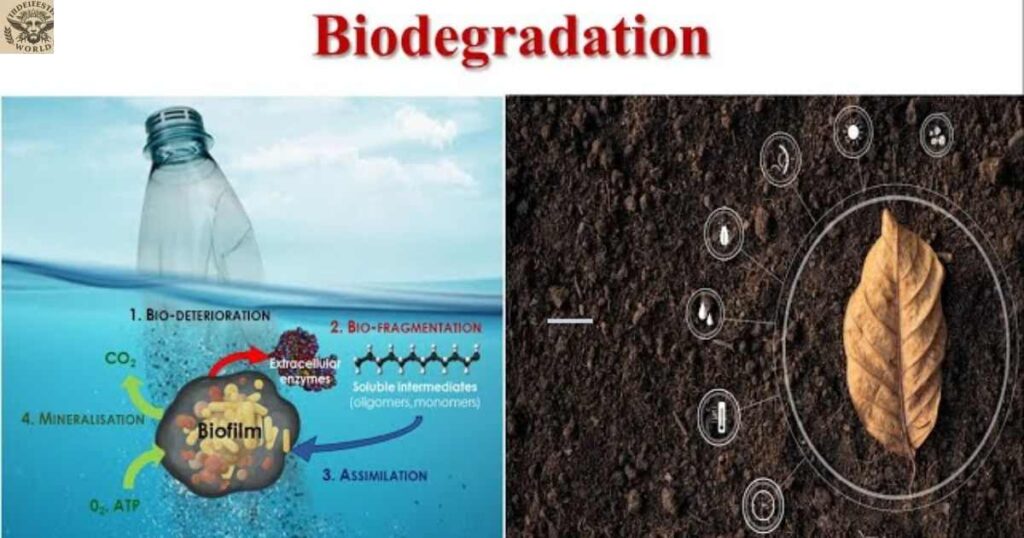
Biodegradation is a natural process involving microorganisms.
Bacteria and fungi can use suitable organic substances as sources of nutrients and energy. Enzymes produced by microorganisms can help break complex organic materials into smaller molecules.
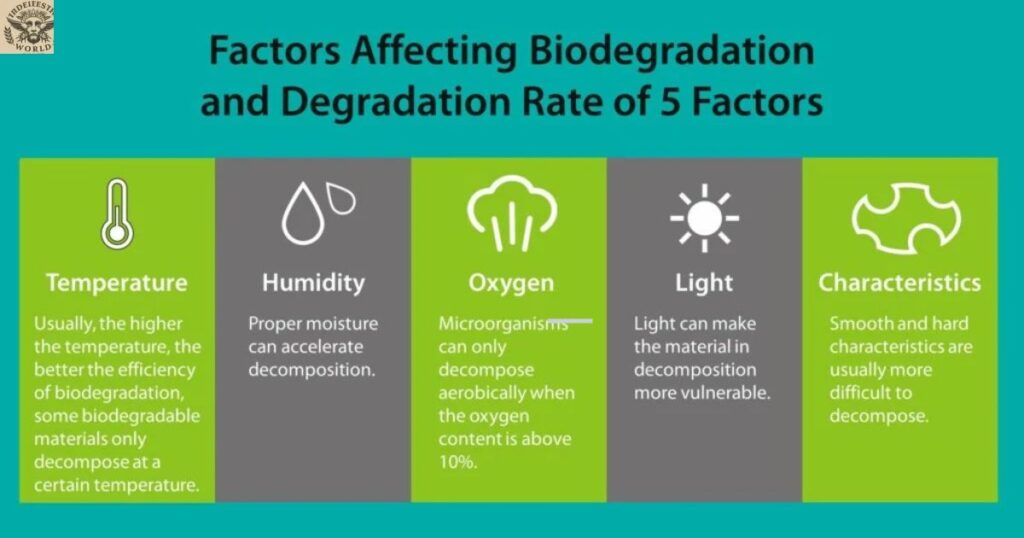
The process depends on several factors, including:
- Temperature
- Moisture
- Oxygen
- Microbial activity
- Material composition
- Surface area
- Environmental conditions
- Time
A material may biodegrade much faster in one environment than another.
For example, food waste in a suitable composting environment can decompose relatively quickly. A similar organic material placed in a dry or oxygen-poor environment may behave differently.
Biodegradable vs Non-Biodegradable
One of the most useful ways to understand the biodegradable meaning is to compare biodegradable and non-biodegradable materials.
| Biodegradable | Non-biodegradable or highly persistent |
| Can be biologically broken down | Does not readily biodegrade |
| Often includes organic materials | Often includes conventional synthetic materials |
| Microorganisms can play a major role | Microorganisms generally cannot easily break it down |
| Examples include food waste and paper | Conventional plastic is a common example |
| Can return components to natural cycles | Can remain in the environment for long periods |
The terms should not be treated as a perfect “good versus bad” division. Environmental impact depends on production, use, disposal, recycling, transport, and many other factors.
Biodegradable Examples in Daily Life
Many biodegradable materials are already part of everyday life.
Food Scraps
Fruit peels, vegetable scraps, coffee grounds, and many other food leftovers can biodegrade under suitable conditions.
Leaves
Leaves naturally decompose after falling from trees. Microorganisms help break down the organic matter.
Paper
Uncoated paper can generally biodegrade because it is primarily made from plant-based cellulose.
Cardboard
Plain cardboard can also break down biologically under suitable conditions.
Cotton
Natural cotton fibres are biodegradable under suitable environmental conditions.
Untreated Wood
Natural untreated wood can gradually decompose through biological activity.
These examples show that biodegradability is not a new invention. Nature has been breaking down organic materials for millions of years.
Plastic vs Paper: Which One Is Biodegradable?
The comparison between plastic vs paper is one of the easiest ways to understand the biodegradable meaning.Ordinary paper is generally made from cellulose derived from plants. Under suitable environmental conditions, microorganisms can break it down.
Conventional plastic, however, is generally made from synthetic polymers that do not readily biodegrade. A plastic bag may fragment into smaller pieces over time, but physical breakdown into smaller pieces is not the same thing as complete biodegradation.
| Feature | Paper | Conventional Plastic |
| Main material | Plant-based cellulose | Synthetic polymers |
| Biodegradable? | Generally yes under suitable conditions | Generally not readily biodegradable |
| Natural breakdown | Can occur through microorganisms | Very slow and limited compared with organic materials |
| Recycling | Often recyclable when clean and suitable | Depends on polymer and local recycling system |
| Common use | Bags, boxes, books, packaging | Bottles, bags, containers, packaging |
| Environmental concern | Production and waste still matter | Persistence and plastic pollution are major concerns |
Paper is therefore a common example when explaining biodegradable materials. However, paper products with plastic coatings, synthetic layers, heavy treatments, or certain additives may behave differently.
Is Paper Biodegradable?
Yes, ordinary untreated paper is generally biodegradable.Paper is primarily made from cellulose fibres. Cellulose is an organic material that microorganisms can break down under suitable conditions.A paper sheet left in a suitable natural environment can gradually become softer, weaker, and eventually decompose.
However, not every paper product behaves identically. Glossy coatings, plastic layers, inks, adhesives, and other treatments can affect how easily a particular product breaks down.
Is Plastic Biodegradable?
Most conventional plastic is not readily biodegradable.Common plastics such as polyethylene and polypropylene are designed to be durable. Their resistance to biological breakdown is one reason plastic products can persist in the environment for long periods.
Plastic can break apart because of sunlight, heat, physical forces, or weathering. However, breaking into smaller fragments does not necessarily mean microorganisms have completely biodegraded the material.Tiny plastic particles are often referred to as microplastics when they fall within the relevant size range. Their persistence creates environmental concerns.
Is Cardboard Biodegradable?

Plain cardboard is usually biodegradable. Cardboard contains cellulose Fibre that can decompose if provided the right conditions.
For example, an untreated cardboard box can gradually decompose in a suitable composting or natural environment.
However, cardboard with plastic films, wax coatings, heavy laminations, or other treatments may not behave like simple untreated cardboard.
Is Cotton Biodegradable?
Natural cotton is biodegradable because it is a plant-derived fibre mainly composed of cellulose.Cotton clothing can eventually break down under suitable environmental conditions.However, dyes, synthetic blends, coatings, and other components can influence the overall biodegradability of a finished textile product.
For example, a shirt made from 100% natural cotton is different from a fabric blend containing substantial amounts of polyester.
Is Glass Biodegradable?
Glass is generally considered non-biodegradable because microorganisms do not naturally break it down into simpler biological substances.However, glass has an important environmental advantage: it can often be recycled repeatedly without the same type of biological degradation requirement.Therefore, “non-biodegradable” does not automatically mean “bad.” Recycling, durability, manufacturing energy, transportation, and reuse all matter when evaluating a material.
Is Metal Biodegradable?
Metals are generally not biodegradable in the normal biological sense.Iron, aluminium, steel, and other metals do not simply disappear through microbial action in the same way food waste or paper can.However, many metals are recyclable.
For example, Biodegradable Meaning, an aluminum can may be collected, processed and converted into new aluminum products. Recycling can lessen the dependence on new raw materials.
Read More:B2B Meaning: Business-to-Business Definition, Examples, Models, Sales and Marketing
Biodegradable Waste Meaning
Biodegradable waste is waste that microorganisms can naturally break down under suitable conditions.
Common examples include:
- Food waste
- Fruit and vegetable scraps
- Leaves
- Grass
- Some paper products
- Natural cotton
- Untreated wood
Biodegradable waste can often be managed through composting or other biological treatment methods.
Proper waste separation is important because biodegradable waste mixed with plastic, chemicals, or other unsuitable materials can make treatment more difficult.
Biodegradable Waste Examples
- Consider a typical kitchen.
- A banana peel is biodegradable.
- Vegetable scraps are biodegradable.
- Coffee grounds are generally biodegradable.
- A clean paper napkin may also be biodegradable.
- A conventional plastic wrapper is generally not readily biodegradable.
- A glass bottle is not biodegradable, although it may be recyclable.
- This simple comparison makes the biodegradable meaning easier to understand in everyday life.
Biodegradable Products
A biodegradable product is designed or made from materials capable of biological breakdown under specified conditions.
Examples can include:
- Certain food packaging
- Some natural-fibre products
- Certain biodegradable bags
- Compostable food-service products
- Paper-based products
- Products made from selected plant-based materials
It is important to read product claims carefully. “Biodegradable” does not always mean “breaks down quickly anywhere.”
Some products require industrial composting facilities or specific conditions.
Biodegradable Packaging
Biodegradable packaging is designed to break down through biological processes under appropriate conditions.Traditional packaging can include plastic, glass, metal, paper, or combinations of different materials.Newer packaging approaches may use plant-based materials or specially developed polymers.
However, packaging should be evaluated beyond one label. Important questions include:
- Can it be recycled?
- Can it be composted?
- Does it biodegrade naturally?
- Under what conditions?
- Does the local waste system accept it?
- Does it contain coatings or mixed materials?
Understanding these details helps prevent confusion around environmental claims.
Biodegradable Plastic
The phrase biodegradable plastic can sound confusing because conventional plastic is usually persistent.Biodegradable plastics are specially designed polymers that can undergo biological degradation under suitable conditions.
Some may require controlled environments, such as industrial composting facilities, rather than ordinary soil or household compost.Therefore, biodegradable plastic should not automatically be treated as a material that will disappear quickly after being thrown outdoors.
The exact polymer, certification,Biodegradable Meaning, disposal conditions, temperature, moisture, microorganisms, and other factors matter.
Biodegradable vs Compostable
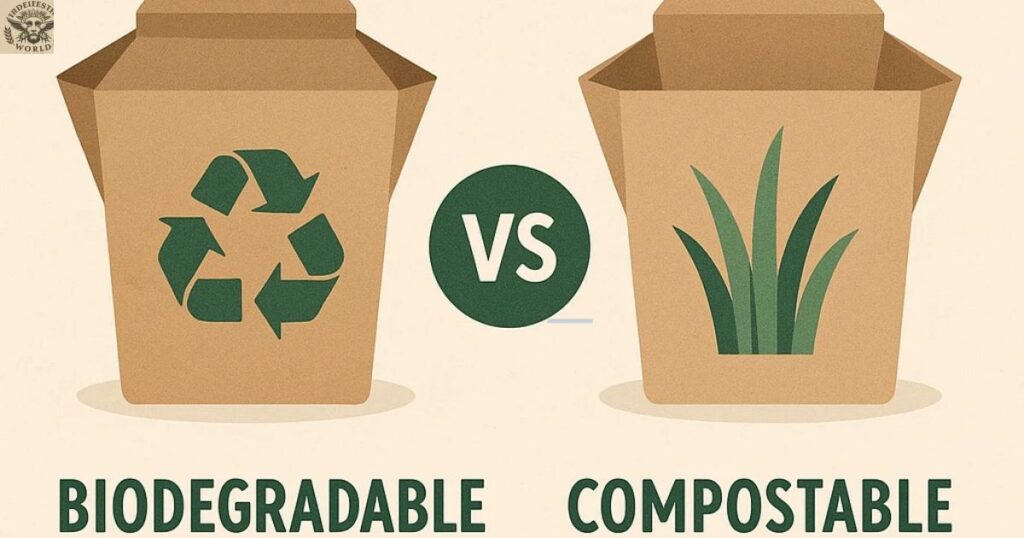
Biodegradable and compostable are related terms, but they are not identical.
Biodegradable means a material can be broken down by biological processes.
Compostable generally refers to a material that can break down under defined composting conditions and produce compost-like outputs without leaving unacceptable residues, according to the relevant standard or specification.
A compostable product therefore has more specific requirements than the broad word biodegradable.
| Term | Basic idea |
| Biodegradable | Can undergo biological breakdown |
| Compostable | Designed to break down under defined composting conditions |
| Recyclable | Can be collected and processed into useful material |
| Reusable | Can be used multiple times |
A product may fit one category without fitting all four.
Biodegradable vs Recyclable
These concepts are often confused.A biodegradable material can be broken down biologically.A recyclable material can be collected and processed for another use.
For example, glass is not biodegradable, but it can be highly recyclable.
- Paper can be both biodegradable and recyclable, depending on its condition and local recycling system.
- The best option depends on the material and the available waste-management system.
Benefits of Biodegradable Materials
Biodegradable materials can provide several environmental advantages when they are properly designed, used, and managed.
Reduced Persistence
Materials that biodegrade under suitable conditions may not remain intact for extremely long periods.
Organic Waste Management
Biodegradable waste can often be treated through composting or other biological processes.
Potential Reduction in Persistent Waste
Replacing certain persistent materials with suitable biodegradable alternatives can reduce some forms of long-lasting waste.
Support for Circular Biological Systems
Organic materials can return components to natural biological cycles through decomposition.
Alternative Packaging Options
Biodegradable materials can provide alternatives for certain packaging applications.
However, the environmental benefits depend on the full life cycle of a product.
Disadvantages of Biodegradable Materials
Biodegradable products are not automatically environmentally perfect.
Special Conditions May Be Required
Some materials only biodegrade efficiently under specific conditions.
Confusion With Compostable Products
Consumers may assume that any biodegradable product can go into a home compost bin.
Potential Contamination
Some biodegradable or compostable products can create problems if placed in recycling streams.
Production Impacts
Manufacturing a biodegradable product still requires energy, water, raw materials, and transportation.
Misleading Environmental Claims
Unclear labels can make it difficult for consumers to understand proper disposal.Therefore, responsible waste management remains important even when a product is biodegradable.
Why Biodegradable Materials Matter
The importance of the biodegradable meaning becomes clear when considering waste accumulation.Modern societies produce large amounts of packaging, food waste, textiles, and other discarded materials.
Some materials can naturally return to biological cycles, while others can remain persistent for long periods.Using appropriate biodegradable materials can be part of a broader waste-management strategy. However, Biodegradable Meaning, reducing unnecessary consumption, reusing products, recycling suitable materials, and disposing of waste correctly are also important.
Biodegradable Materials and the Environment
Biodegradable materials interact with the environment through natural biological processes.When organic matter decomposes, microorganisms transform complex substances into simpler compounds.The resulting materials can become part of natural cycles.
For example, leaves decompose and contribute organic matter to soil. Food scraps can also become compost under suitable controlled conditions.
This process is different from simply leaving waste to accumulate.
Factors That Affect Biodegradation
The speed and extent of biodegradation depend on environmental conditions.
Temperature
Microbial activity can change significantly with temperature.
Moisture
Many microorganisms require adequate moisture to remain active.
Oxygen
Aerobic and anaerobic environments support different biological processes.
Microorganisms
The presence and activity of suitable bacteria and fungi affect decomposition.
Material Structure
A complex or durable material may take longer to break down than a simple organic substance.
Surface Area
Smaller pieces can sometimes expose more material to microbial activity.
Chemical Additives
Coatings and additives can influence degradation behaviour.
Because of these variables, it is difficult to assign one universal decomposition time to every biodegradable product.
Does Biodegradable Mean It Disappears Quickly?
No.This is one of the most important points when learning the biodegradable meaning.
Biodegradable means capable of biological breakdown under suitable conditions. It does not automatically mean that the product disappears within days or weeks.
Some materials can biodegrade relatively quickly, while others may require much longer.The environment also matters.A material placed in a controlled composting facility may behave very differently from the same material buried in a dry landfill or left in a cold outdoor environment.
Does Biodegradable Mean Environmentally Friendly?
Not necessarily.
Biodegradability is only one environmental characteristic.
A product’s overall environmental impact can also involve:
- Raw material extraction
- Manufacturing
- Energy use
- Water consumption
- Transportation
- Packaging
- Product lifespan
- Reuse
- Recycling
- Disposal
A biodegradable product can still have environmental costs.
Therefore, consumers should look at the complete life cycle rather than relying on one environmental label.
Biodegradable Materials at Home
People can identify many biodegradable materials in ordinary homes.
- The kitchen may contain food scraps and paper products.
- The garden may contain leaves, grass, branches, and plant material.
- The wardrobe may contain cotton or wool products.
- The challenge is separating biodegradable materials from mixed or synthetic materials.
For example, a clean paper bag may be biodegradable, while a plastic-lined paper package may require different disposal.
Everyday Example: Plastic Bag vs Paper Bag
A plastic bag and a paper bag can look similar in purpose, but their material properties differ. A conventional plastic bag is generally made from synthetic polymers that do not readily biodegrade. A simple paper bag is mainly made from cellulose fibers and can biodegrade under suitable conditions.
While there are environmental costs to paper production, paper bags can be disposed of more easily than plastic bags. There are also the costs of transportation of the bags. The best environmental choice can be context dependent on if the bag is designed for reusability, how it is manufactured and processed, and how it is disposed of.
Everyday Example: Plastic Bottle vs Paper Cup
A conventional plastic bottle is generally persistent and is not readily biodegradable.A plain paper cup may contain paper but can also include a plastic or polymer lining. That lining can affect recyclability and biodegradability.
Therefore, simply seeing the word “paper” does not guarantee that every part of a product is biodegradable.Checking the material composition is important.
Everyday Example: Food Waste vs Plastic Wrapper
A banana peel can naturally biodegrade under suitable conditions.A conventional snack wrapper may contain plastic or multiple layers that are not readily biodegradable.This is why separating food waste from packaging waste is useful in waste-management systems.
Biodegradable Meaning in Science
In scientific contexts, biodegradability describes the ability of a substance or material to undergo degradation through biological activity.Researchers may test biodegradation under controlled conditions.
Scientific testing can be much more precise than everyday claims such as “eco-friendly” or “green.”A proper assessment may consider how much of the material is converted, under which conditions, and over what period.
Biodegradable Meaning in Chemistry
From a chemistry perspective, biodegradation involves chemical changes driven or assisted by biological organisms and their enzymes.Large molecules may be transformed into smaller molecules.The exact pathway depends on the chemical structure of the material.Natural substances such as cellulose have established biological degradation pathways. Some synthetic polymers are much more resistant to microbial attack.
This is one reason the chemical structure of a material matters when evaluating biodegradability.
Biodegradable Meaning in Waste Management
Waste-management systems classify materials according to how they can be collected, treated, recycled, composted, or disposed of.Biodegradable organic waste can often be directed toward biological treatment.Food waste, garden waste, and other organic materials may be suitable for composting or anaerobic digestion, depending on local facilities.
However, biodegradable packaging should not automatically be placed in an organic-waste bin unless the local system accepts it.Local rules are important.
Biodegradable Meaning in Agriculture
Biodegradable materials can also be used in agriculture.Some agricultural products are designed to break down after serving their purpose. Certain mulch films, plant pots, and other materials may use biodegradable components.The exact environmental behaviour depends on the material and soil conditions.
Farmers and growers therefore need clear product information before choosing biodegradable agricultural products.
Biodegradable Textiles
Textiles can be made from natural fibres or synthetic materials.Natural fibres such as cotton, linen, hemp, and wool can generally biodegrade under suitable conditions.Synthetic fibres such as polyester are much more persistent.Blended fabrics can be more complicated because they contain multiple fibre types.A garment’s end-of-life options therefore depend on its composition.
Biodegradable Food Packaging
Food packaging is an important area for biodegradable materials.Researchers and manufacturers have explored materials based on cellulose, starch, plant fibres, and other substances.The challenge is creating packaging that provides adequate strength, moisture resistance, Biodegradable Meaning, food safety, shelf life, and practical disposal options.A packaging material must perform its job before its environmental benefits can be evaluated.
How to Identify Biodegradable Products
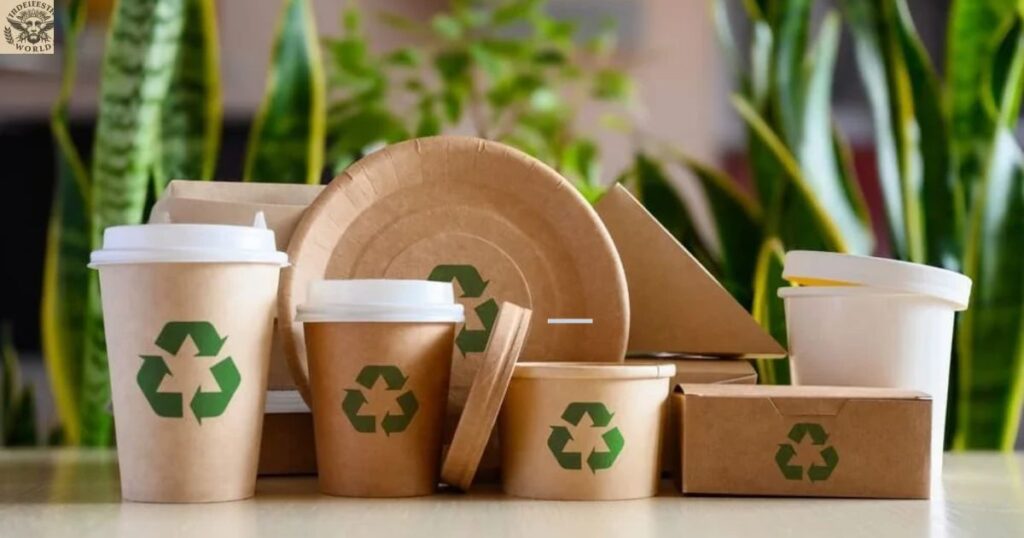
Consumers can look for clear product information rather than relying only on marketing language.
Check:
- Material composition
- Disposal instructions
- Certification where applicable
- Whether the product is biodegradable or compostable
- Required temperature or facility
- Local waste-management rules
- Whether coatings or mixed materials are present
A product labelled biodegradable may have specific conditions attached to the claim.
Common Misunderstandings About Biodegradable
- “Biodegradable Means Instant”
False. Biological breakdown takes time.
- “Biodegradable Means Compostable Everywhere”
False. Some products require specific composting conditions.
- “Biodegradable Means No Environmental Impact”
False. Production and disposal still matter.
- “Plastic Never Breaks Down”
This statement is too broad. Plastics can weather and fragment, and some specially designed plastics can biodegrade under defined conditions. Conventional plastics, however, generally do not readily biodegrade.
- “All Paper Is Identical”
False. Coatings, laminations, adhesives, and additives can change how paper products behave.
How to Reduce Non-Biodegradable Waste
People can reduce persistent waste through practical habits.
Use Reusable Products
Reusable bags, bottles, and containers can reduce the need for disposable products.
Avoid Unnecessary Packaging
Choosing products with less packaging can reduce waste.
Recycle Correctly
Follow local recycling rules and keep unsuitable materials out of recycling streams.
Compost Organic Waste
Where facilities exist, suitable food and garden waste can be composted.
Choose Durable Products
Products that last longer can reduce replacement and disposal.
Learn Local Waste Rules
Waste systems differ by city and country, so local guidance matters.
Biodegradable Meaning for Students
Students can remember the concept with one simple sentence:
Biodegradable means able to break down naturally through microorganisms.
Easy examples:
Paper → generally biodegradable
Food scraps → biodegradable
Leaves → biodegradable
Untreated cotton → biodegradable
Conventional plastic → generally not readily biodegradable
Glass → not biodegradable but recyclable
This comparison is useful for school assignments, environmental studies, and everyday vocabulary.
Biodegradable Meaning in a Sentence
Here are useful examples:
- Paper is generally a biodegradable material.
- Food waste is biodegradable under suitable conditions.
- The company introduced biodegradable packaging.
- Some biodegradable products require industrial composting.
- Leaves are naturally biodegradable.
- Conventional plastic is generally not readily biodegradable.
- The label explains how to dispose of the biodegradable product.
- Biodegradable materials can help reduce some forms of persistent waste.
- The school teaches students about biodegradable waste.
- Cotton is a natural fibre that can biodegrade under suitable conditions.
Short Examples of Biodegradable Materials
| Everyday item | Generally biodegradable? |
| Banana peel | Yes |
| Vegetable scraps | Yes |
| Leaves | Yes |
| Plain paper | Yes |
| Plain cardboard | Yes |
| Natural cotton | Yes |
| Untreated wood | Yes |
| Conventional plastic bag | Generally no |
| Glass bottle | No |
| Aluminium can | No, but recyclable |
These are general examples. The exact behaviour can change when products contain coatings, mixed materials, additives, or special treatments.
Biodegradable Meaning: Quick Comparison
| Term | Simple meaning |
| Biodegradable | Can be broken down by biological activity |
| Non-biodegradable | Does not readily break down biologically |
| Compostable | Breaks down under defined composting conditions |
| Recyclable | Can be processed into useful material again |
| Reusable | Designed for repeated use |
| Sustainable | Designed to reduce environmental impact over the longer term |
These terms overlap in environmental discussions but should not be treated as interchangeable.
Frequently Asked Questions :
Is cardboard biodegradable?
Plain cardboard is generally biodegradable because it contains cellulose fibres. Coatings and plastic layers can change its behaviour.
What is the opposite of biodegradable?
The opposite is commonly described as non-biodegradable or not readily biodegradable. Such materials do not easily undergo biological breakdown.
Is glass biodegradable?
No. Glass is generally not biodegradable because microorganisms do not break it down through normal biological processes. However, glass can often be recycled.
Is cotton biodegradable?
Natural cotton is generally biodegradable under suitable conditions because it is primarily composed of cellulose.
Is a paper cup always biodegradable?
Not necessarily. Some paper cups have plastic or polymer coatings that can affect their biodegradability and recycling. The product’s exact material composition matters.
Conclusion
The biodegradable meaning refers to the ability of a material to break down through biological activity under suitable conditions. Everyday examples include food scraps, leaves, plain paper, cardboard, natural cotton, and untreated wood. Conventional plastic, glass, and metals generally do not biodegrade in the same way, although some can be recycled or managed through other waste systems.
The easiest comparison is plastic vs paper. Ordinary paper is generally biodegradable because it contains cellulose, while conventional plastic is usually not readily biodegradable. Still, biodegradability alone does not determine whether a product is environmentally friendly. Responsible production, Biodegradable Meaning reuse, recycling, composting, and correct disposal all play important roles in reducing waste and protecting the environment.

