

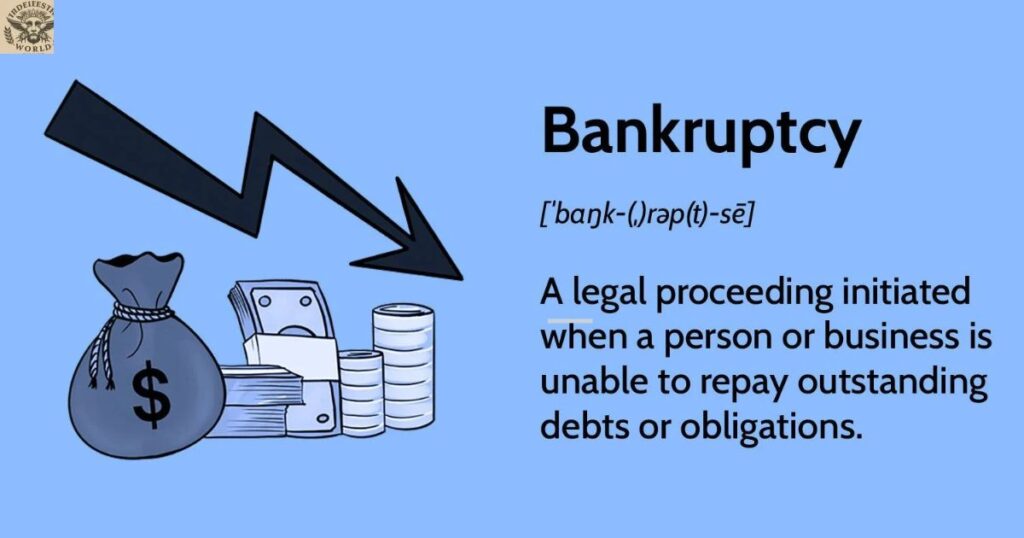
The bankruptcy meaning describes a formal legal process used when a person or business cannot pay debts as they become due. Bankruptcy can provide a structured way to deal with overwhelming debt, Bankruptcy Meaning, but the process and legal consequences depend on the country and type of bankruptcy involved.
In simple terms, bankruptcy is a legal procedure that can help deal with debts when normal repayment is no longer manageable. Depending on the circumstances, assets may be sold, debts may be reorganised, or eligible debts may eventually be discharged. Bankruptcy does not automatically mean that every debt disappears.
The rules are different in the United States and the United Kingdom. In the USA, bankruptcy cases are handled under federal law and commonly include Chapter 7, Chapter 11, and Chapter 13. In England and Wales, bankruptcy is mainly an insolvency procedure for individuals who cannot pay their debts. Scotland and Northern Ireland have different legal arrangements.
What Does Bankruptcy Mean?
The bankruptcy meaning can be understood as a formal legal status or process connected with serious financial difficulty. It is generally used when an individual or business has debts that cannot reasonably be paid under normal arrangements.
Bankruptcy involves more than simply having a large amount of debt. A person can have significant debt without becoming bankrupt. Bankruptcy usually requires a formal legal process, application, court involvement, or an official order depending on the jurisdiction.
The process can place restrictions on the debtor while also providing legal protections and a structured method for dealing with creditors.
For example, an individual with credit card debt, personal loans, and other unpaid bills may reach a point where regular payments are no longer possible. Depending on local law and their circumstances, bankruptcy may become one of the legal options available for dealing with the debt.
Bankruptcy Meaning in Simple Words
In simple words, bankruptcy is a legal process for dealing with debts that a person or business cannot realistically repay.
Think of it as a formal financial reset process rather than simply “not paying a bill.” Once a bankruptcy case begins,Bankruptcy Meaning specific legal rules determine how creditors can collect money, how assets are treated, and what happens to qualifying debts.
The exact result depends on several factors, including:
- Country
- State or legal jurisdiction
- Type of bankruptcy
- Income
- Assets
- Type of debt
- Business structure
- Previous bankruptcy history
Because bankruptcy can affect property, credit, contracts, and future financial decisions, anyone considering it should obtain advice from a qualified legal or debt professional in the relevant jurisdiction.
Read More:B2B Meaning: Business-to-Business Definition, Examples, Models, Sales and Marketing
Bankruptcy vs Insolvency
Bankruptcy and insolvency are related terms, but they are not always interchangeable.
Insolvency generally describes a financial situation in which a person or organisation cannot meet its financial obligations. Bankruptcy is a formal legal process or status that may arise from serious financial difficulty.
For example, a company may become insolvent because it cannot pay suppliers or other debts when they are due. Bankruptcy or another formal insolvency procedure may then be considered, depending on the country’s laws and the company’s circumstances.
A useful way to remember the difference is:
| Term | General Meaning |
| Insolvency | Financial inability to meet debts or obligations |
| Bankruptcy | A formal legal process for dealing with qualifying debts |
| Creditor | Person or organisation owed money |
| Debtor | Person or organisation that owes money |
| Trustee | Person appointed to administer certain bankruptcy matters |
| Discharge | Legal release from qualifying debts under applicable law |
The precise legal definitions can vary by jurisdiction.
How Does Bankruptcy Work?
The general bankruptcy process involves several stages, although the details differ between countries.
A person or business first assesses its financial position. This may include listing debts, income, assets, expenses,Bankruptcy Meaning, contracts, and other obligations.
The debtor may then explore alternatives. Depending on the jurisdiction, these could include repayment arrangements, debt management, restructuring, or other insolvency procedures.
If bankruptcy is appropriate and legally available,Bankruptcy Meaning, the required application or petition is filed. A court or authorised authority then processes the case according to applicable law.
Once the bankruptcy process begins, creditors may be subject to restrictions on collection activity. A trustee or other appointed professional may examine financial information and administer assets or payments where required.
At the end of the applicable process, qualifying debts may be discharged, reorganised, or otherwise dealt with according to the relevant legal rules.
Main Types of Bankruptcy in the USA
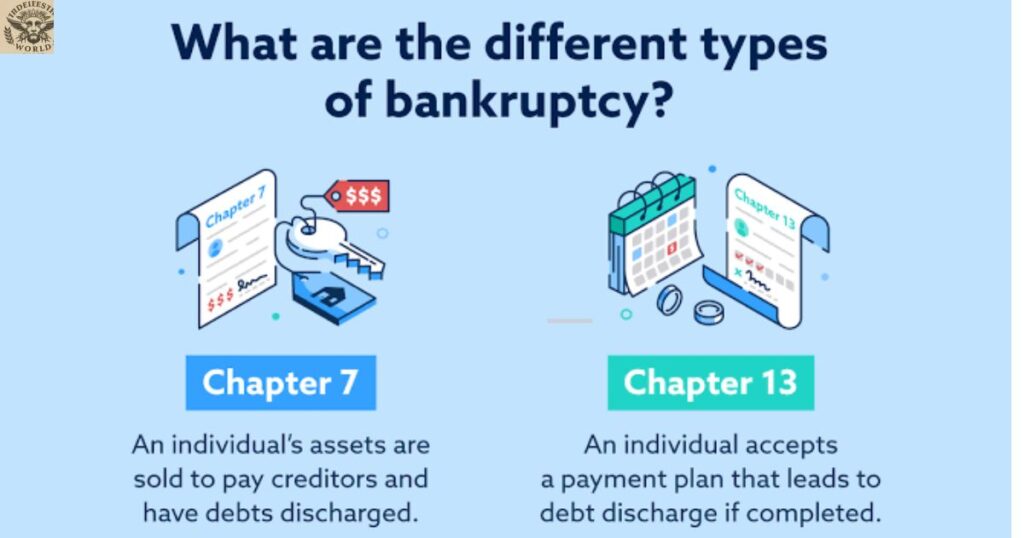
The United States has several bankruptcy chapters. The most commonly discussed are Chapter 7, Chapter 11, and Chapter 13.
Chapter 7 Bankruptcy
Chapter 7 is commonly known as liquidation bankruptcy.
It can apply to eligible individuals and businesses. A trustee is generally appointed to administer the bankruptcy estate. Certain non-exempt assets may be sold and the proceeds distributed according to legal priorities.
Many individual Chapter 7 cases involve no distribution of non-exempt assets because the debtor’s property may be protected by applicable exemptions. However, the exact treatment depends on federal and state law.
Chapter 7 can provide a discharge of many qualifying debts, although some debts are not dischargeable under the law.
Read More: Arrogant Meaning: Definition, Examples, Synonyms, and How to Use It
Chapter 11 Bankruptcy
Chapter 11 is commonly associated with business reorganisation.
It allows eligible businesses and, in some circumstances, individuals to reorganise financial obligations while continuing operations. The process can involve restructuring debts, negotiating with creditors, selling assets,Bankruptcy Meaning, or developing a plan.
Large corporations have used Chapter 11, but the process is not limited exclusively to huge companies.
The objective is generally to provide a legal framework for restructuring rather than simply closing the business.
Chapter 13 Bankruptcy
Chapter 13 is generally designed for eligible individuals with regular income who want to repay some or all of their debts through a court-approved repayment plan.
The debtor usually makes payments over a defined period. The plan must comply with applicable bankruptcy requirements.
Chapter 13 can therefore differ significantly from Chapter 7 because it focuses on repayment through a structured plan rather than primarily on liquidation.
Bankruptcy in the UK
The meaning of bankruptcy in the UK depends partly on the jurisdiction.
In England and Wales, bankruptcy is an insolvency procedure generally used by individuals who cannot pay their debts. It is not the same process as corporate insolvency.
Scotland uses a different system, while Northern Ireland has its own rules.
In England and Wales,Bankruptcy Meaning, a person can apply for their own bankruptcy, and a creditor may also take steps to make someone bankrupt if legal requirements are met.
Once a bankruptcy order is made,Bankruptcy Meaning, an official receiver or trustee may become involved in administering the bankruptcy.
The person’s assets and income may be assessed under the applicable rules. Certain assets may be sold or otherwise dealt with, while some property or income can receive different treatment depending on the circumstances.
Bankruptcy in the USA vs UK
Although the underlying idea is similar, bankruptcy law is not identical in the UK and USA.
| Feature | USA | England & Wales |
| Main framework | Federal Bankruptcy Code | UK insolvency law |
| Individual bankruptcy | Yes | Yes |
| Business reorganisation | Chapter 11 can apply | Different corporate insolvency procedures |
| Chapter 7 | Yes | No equivalent chapter |
| Chapter 13 | Yes | No equivalent chapter |
| Trustee involvement | Common in many cases | Official receiver/trustee may be involved |
| Discharge | Available for qualifying debts under applicable chapters | Bankruptcy has defined legal effects and restrictions |
| Scotland | Separate from US system | Separate Scottish insolvency framework |
This comparison is simplified because both countries have detailed rules, exceptions, and jurisdiction-specific requirements.
Common Causes of Bankruptcy
Financial problems can arise for many reasons. There is no single cause that applies to every bankruptcy case.
Common causes may include:
- Loss of employment
- Business failure
- Excessive borrowing
- Unexpected expenses
- Poor cash flow
- High-interest debt
- Failed investments
- Economic downturns
- Divorce or major household changes
- Medical expenses
- Falling business revenue
- Unexpected legal or contractual costs
For businesses, cash-flow problems can become particularly serious. A company may own valuable equipment or have strong sales but still struggle if customers pay late while suppliers require immediate payment.
Personal Bankruptcy
Personal bankruptcy relates to an individual’s debts rather than the financial failure of a separate corporation.
A person considering bankruptcy may have debts such as:
- Credit cards
- Personal loans
- Certain tax obligations
- Utility arrears
- Medical bills
- Business-related personal liabilities
- Other unsecured debts
Not every debt is necessarily treated in the same way. Some obligations may receive special legal treatment or remain payable after bankruptcy.
Before making a decision, a person needs to understand which debts may be discharged and which may not.
Business Bankruptcy
Business bankruptcy can involve significantly more complex financial issues.
A company may have:
- Employees
- Suppliers
- Customers
- Leases
- Equipment
- Inventory
- Loans
- Taxes
- Intellectual property
- Contracts
The appropriate legal procedure depends on the business structure and jurisdiction.
In the USA, Chapter 11 can provide a restructuring framework for eligible businesses. Chapter 7 can also apply to businesses,Bankruptcy Meaning, although the consequences differ from individual bankruptcy.
In the UK,Bankruptcy Meaning, companies normally use separate corporate insolvency procedures rather than the individual bankruptcy process.
What Happens to Assets?
One of the most important questions about the bankruptcy meaning concerns assets.
Bankruptcy does not automatically mean that every possession will be taken or sold.
The treatment of property depends on the applicable law and bankruptcy chapter. In the USA, exemption rules can protect certain property from liquidation. Exemptions vary depending on the law being applied.
In England and Wales, the treatment of assets is governed by bankruptcy rules. Certain property can be transferred to or controlled by the trustee, while some assets may receive different treatment.
Examples of assets that may be considered include:
- Homes
- Vehicles
- Savings
- Investments
- Valuable personal property
- Business interests
- Equipment
Anyone considering bankruptcy should obtain specific advice before assuming that a particular asset is protected or at risk.
What Is a Bankruptcy Trustee?
A bankruptcy trustee is a person appointed to perform specific responsibilities in a bankruptcy case.
The trustee’s duties vary according to the type of case and jurisdiction. Responsibilities can include reviewing financial information,Bankruptcy Meaning, identifying assets, dealing with creditors, administering property, and distributing funds where required.
In the USA, trustees play important roles in Chapter 7 and Chapter 13 cases. Chapter 11 cases can involve different types of professionals and oversight structures.
In England and Wales, an official receiver or trustee can administer relevant aspects of an individual’s bankruptcy.
What Is Bankruptcy Discharge?
A discharge generally refers to the legal release of a debtor from personal liability for certain qualifying debts.
A discharge does not necessarily eliminate every financial obligation. Certain debts may be excluded by law or may continue to be enforceable.
For example, different legal rules can apply to some taxes, Bankruptcy Meaning,support obligations, student loans, fraud-related debts, or debts connected to particular legal circumstances.
The exact list varies according to the jurisdiction and type of bankruptcy.
Automatic Stay in the USA
One important feature of many US bankruptcy cases is the automatic stay.
When a bankruptcy case is filed, the automatic stay generally stops or restricts many collection actions against the debtor. It can affect activities such as collection calls,Bankruptcy Meaning, certain lawsuits, wage garnishments, and some enforcement actions.
However, the stay has exceptions and limitations. Some actions may continue or require special treatment under the Bankruptcy Code.
The automatic stay is therefore an important part of the US bankruptcy system, but it should not be understood as a permanent protection from every type of legal or financial action.
Effects of Bankruptcy
Bankruptcy can have significant financial and legal effects.
Potential effects may include:
- Changes to credit records
- Restrictions on certain financial activities
- Loss or sale of some assets
- Public records
- Difficulty obtaining certain forms of credit
- Changes to financial relationships
- Restrictions on operating or managing certain businesses in some circumstances
The duration and severity of these effects depend on the jurisdiction and individual circumstances.
Bankruptcy is therefore not simply a way to erase debt without consequences.
Bankruptcy and Credit Scores
A bankruptcy can have a substantial impact on a person’s credit history.
Lenders may view a bankruptcy record as evidence of significant past financial difficulty. This can make borrowing more difficult or expensive for a period of time.
However, the effect is not necessarily permanent. People can rebuild their financial position through responsible money management,Bankruptcy Meaning, timely payments, realistic borrowing, and careful budgeting.
The specific period that bankruptcy remains on a credit report depends on the country and applicable reporting rules.
Does Bankruptcy Erase All Debt?
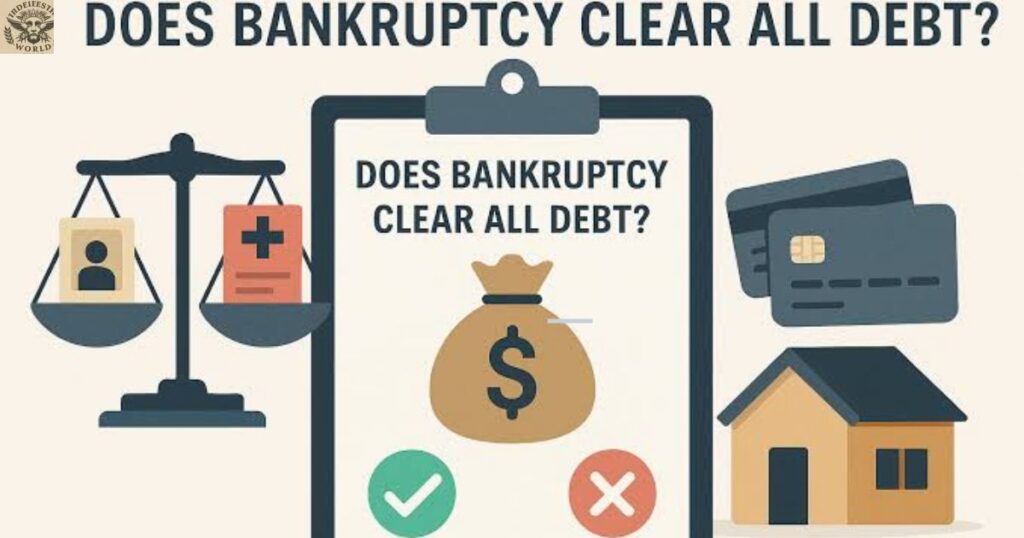
No. Bankruptcy does not automatically erase every type of debt.
The legal treatment depends on the debt and the relevant bankruptcy procedure.
Some debts may be discharged. Others may be excluded from discharge or receive special treatment.
Examples can include certain:
- Child support obligations
- Alimony or maintenance
- Certain taxes
- Fraud-related debts
- Student loan obligations
- Court-ordered financial obligations
Because exceptions can be complicated, Bankruptcy Meaning,a person should not assume that bankruptcy will eliminate a particular debt without professional advice.
Bankruptcy Alternatives
Bankruptcy is not always the only option.
Depending on the country and circumstances, alternatives may include:
- Debt management plans
- Informal repayment arrangements
- Formal repayment plans
- Debt consolidation
- Individual voluntary arrangements in England and Wales
- Administration or restructuring procedures for businesses
- Negotiations with creditors
- Asset sales
- Other insolvency procedures
The suitability of an alternative depends on income, debt levels, assets, creditor agreements, and local law.
Bankruptcy vs Debt Consolidation
Debt consolidation generally combines multiple debts into one payment, often through a new loan or financial arrangement.
Bankruptcy is a formal legal process with much broader legal consequences.
For example, debt consolidation may help simplify payments when a person still has sufficient income to manage the debt. Bankruptcy may become relevant when debt cannot realistically be repaid under normal arrangements.
These are fundamentally different financial solutions.
Bankruptcy vs Insolvency
The terms are sometimes used together, but they describe different concepts.
Insolvency generally describes the financial condition of being unable to meet obligations. Bankruptcy is a formal legal process that can address qualifying debts.
A business may be insolvent without entering bankruptcy. A company may instead use another restructuring or insolvency procedure.
Bankruptcy vs Liquidation
Liquidation usually refers to selling assets and closing or winding up a business.
Bankruptcy can involve liquidation in some cases,Bankruptcy Meaning but the concepts are not identical.
For example, Chapter 7 in the USA is commonly associated with liquidation, while Chapter 11 is generally associated with reorganisation.
The terminology becomes especially important when comparing individual and business insolvency procedures.
Pros and Cons of Bankruptcy
The consequences of bankruptcy depend heavily on the individual situation.
Potential Advantages
Bankruptcy may provide:
- A formal structure for dealing with overwhelming debts
- Protection from certain creditor actions
- A possible discharge of qualifying debts
- A legal framework for restructuring in certain cases
- An opportunity to move forward financially
Potential Disadvantages
Possible disadvantages include:
- Damage to credit history
- Loss of some assets
- Public financial records
- Legal restrictions
- Difficulty obtaining credit
- Impact on future financial opportunities
- Costs associated with the process
The advantages and disadvantages must be considered within the applicable legal framework.
How Bankruptcy Affects Businesses
A business facing financial distress may need to decide whether to restructure, negotiate with creditors, sell assets, or close.
The impact can extend beyond the company itself. Employees, suppliers, customers, lenders, landlords, shareholders, and other stakeholders may all be affected.
For a company, professional insolvency advice can help identify available procedures before the financial position becomes impossible to manage.
Bankruptcy and Small Businesses
Small businesses can face unique financial challenges because owners may have limited cash reserves and fewer financing options.
A small business owner should distinguish between company debts and personal debts. The legal position depends heavily on the business structure.
A sole trader, partnership, and limited company can have very different legal consequences.
For example, Bankruptcy Meaning,an incorporated company is legally separate from its owners in many respects, while a sole trader’s business liabilities may generally be personal liabilities.
Bankruptcy and Home Ownership
Home ownership can be a major concern in bankruptcy cases.
The treatment of a home depends on jurisdiction, equity, ownership structure, exemptions, and the type of bankruptcy involved.
In some situations, a person may be able to keep a home. In other circumstances, the property may be at risk if it contains significant equity or is otherwise subject to applicable bankruptcy rules.
Anyone worried about losing a home should obtain jurisdiction-specific professional advice before filing.
Bankruptcy and Employment
Bankruptcy does not automatically mean that someone cannot work.
People can generally continue working, Bankruptcy Meaning,but specific legal restrictions may apply to certain professions, financial roles, or business activities.
Employment income can also be relevant to bankruptcy calculations or repayment arrangements.
Rules vary between the UK and USA, so a person should check the requirements that apply to their profession and location.
Bankruptcy and Business Owners
Business owners should understand whether their personal finances and business finances are legally separate.
An incorporated company can have a separate legal identity, while sole traders generally have a closer connection between personal and business finances.
Personal guarantees can also create personal liability for business borrowing.
For that reason, the meaning of bankruptcy for a business owner can be more complicated than simply looking at company debts.
How to Avoid Bankruptcy
Not every financial problem leads to bankruptcy. Early action can sometimes provide more options.
Useful financial practices can include:
- Creating a realistic budget
- Monitoring cash flow
- Reducing unnecessary expenses
- Contacting creditors early
- Avoiding unnecessary high-interest borrowing
- Building emergency savings
- Reviewing business contracts
- Improving invoice collection
- Seeking professional financial advice
Businesses should monitor cash flow carefully because accounting profit and available cash are not always the same.
Bankruptcy and Financial Recovery
Bankruptcy does not necessarily prevent future financial recovery.
After the legal process ends, rebuilding finances can involve:
- Creating a realistic budget
- Paying bills on time
- Building emergency savings
- Avoiding unnecessary debt
- Checking credit reports
- Using credit cautiously
- Maintaining stable income
- Setting long-term financial goals
The recovery process can take time, but responsible financial behaviour can help establish greater stability.
Frequently Asked Questions:
What is the basic meaning of bankruptcy?
The basic bankruptcy meaning is a formal legal process used to deal with debts that an individual or business cannot reasonably repay.
Can you keep your house after bankruptcy?
It may be possible in some circumstances, but there is no universal answer. Home equity, ownership, exemptions, and the applicable jurisdiction can affect the result.
Is bankruptcy available in the UK?
Yes. Bankruptcy is available for individuals in England and Wales, while Scotland and Northern Ireland have different insolvency systems.
Can bankruptcy remove every debt?
No. Some debts may not be discharged or may receive special treatment under applicable law.
Should everyone with debt file bankruptcy?
No single solution works for everyone. The appropriate option depends on income, assets, debt type, legal jurisdiction, and other circumstances. Professional advice can help explain the available choices.
Conclusion
The bankruptcy meaning is best understood as a formal legal process for dealing with serious debt problems when normal repayment is no longer practical. It can provide legal protection, a structured way to handle creditors, and, in qualifying cases,Bankruptcy Meaning a discharge or reorganisation of debts.
Understanding the process before taking action is essential. Anyone considering bankruptcy should review their debts, assets, income, Bankruptcy Meaning and alternatives and obtain advice from an appropriately qualified professional in their jurisdiction. A clear understanding of the bankruptcy meaning can help people distinguish bankruptcy from insolvency, liquidation, debt consolidation, and other debt solutions.

